



Consortium trials hydrogen shorepower
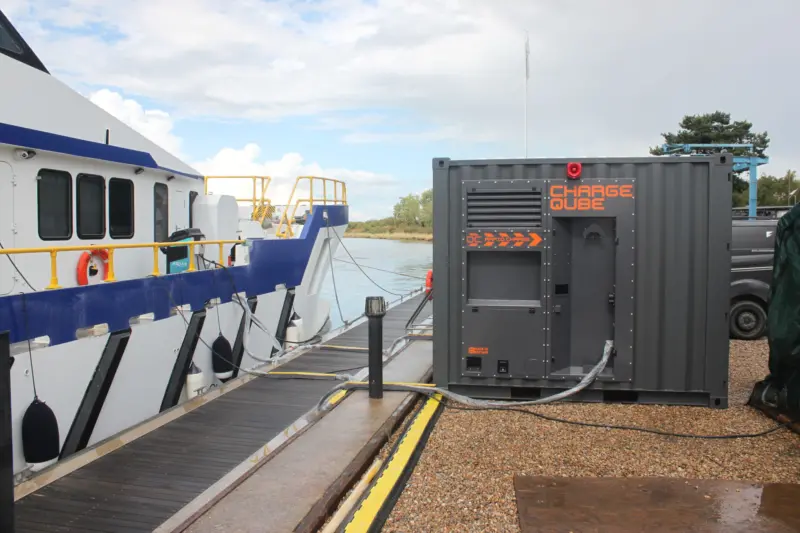
Port of Leith in Scotland is to trial a “highly innovative” UK-first approach to using clean hydrogen energy to reduce carbon emissions from vessels berthed in the port.
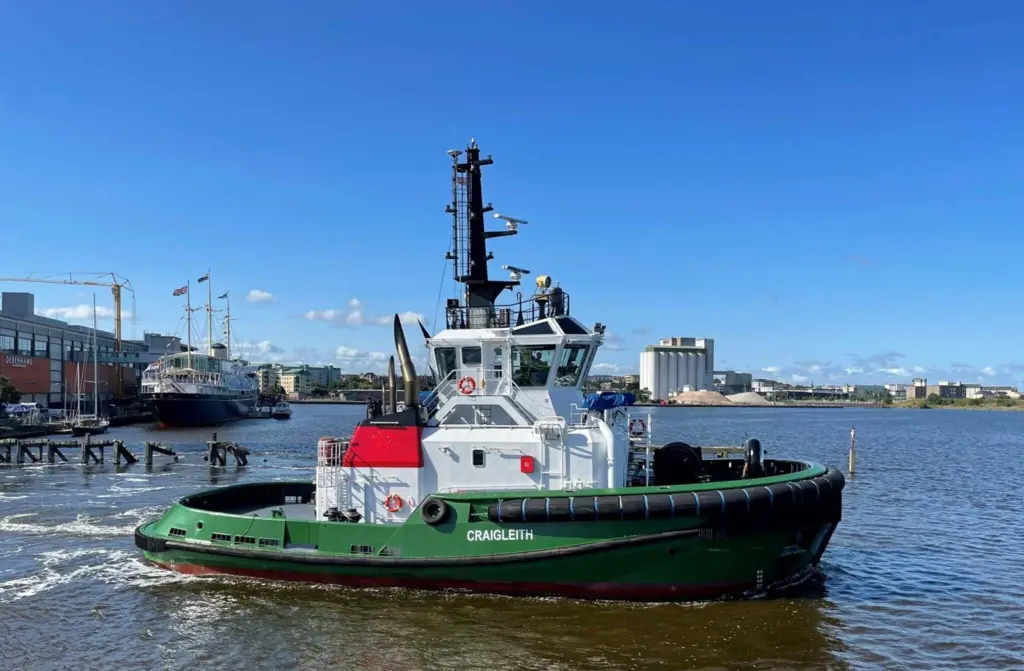
The UK Department for Transport has awarded a grant of more than £535,000 (€626,000) for the year-long trial to a consortium of four Scottish renewable and maritime companies comprising Forth Ports, Waterwhelm, Logan Energy and PlusZero.
Forth Ports says the large tugs that operate in Leith, including those of Targe Towing, part of Forth Ports Group, will develop the system leading the way for a “circular economy” approach to port decarbonisation, particularly in areas where connection to a mains electricity grid is unavailable.
“Our tug fleet currently uses diesel-powered generators to provide electricity when tied up in port,” said Alasdair Smith, Targe Towing commercial director. “This new green hydrogen system shows how tugs or other vessels can be completely emission-free whilst berthed.
“The project will also serve to widen our knowledge and experience of working with hydrogen, which provides a foundation for future endeavours towards a net zero future. We look forward to starting this project with our partners in the spring.”
Shiphandling tugs are but one sector of the wider shipping industry weighing up the choices when considering alternative fuels to reduce emissions.
Tugs may spend lengthy periods alongside, sometimes in built-up urban areas and between assignments, but they still require power to maintain essential on-board services.
Green energy to produce H2
Plugging in to the shoreside electricity grid eliminates the use of on-board generators but leaves the question of how this grid-sourced electricity is produced.
This trial will see the electricity produced by a combustion engine powered by hydrogen, produced in turn from waste water from a nearby water treatment works and thus replacing the diesel-powered system currently used.
Using water treatment technology provided by water utility company Waterwhelm, fresh re-use water is produced from waste water from the treatment works in Seafield, Edinburgh.
Next, using the electrolysis process, Scottish clean energy equipment and solutions provider Logan Energy will split the re-use water into oxygen and hydrogen.
Producing the gas using green energy is an important goal for the hydrogen industry and Scottish hydrogen energy producer PlusZero, who specialises in hydrogen production from renewable energy sources, will be involved in the final stage. Here the gas is used as a clean fuel for its combustion engine, which will generate electricity and provide shore power for the tugs when in port, replacing polluting diesel generators.
Targe Towing provides tug services in Leith and along with the local community through the elimination of carbon emissions will benefit from this project which, while it may be considered small scale, works on a principle that is scalable and has the potential to suit various situations.
At the other end of the spectrum and as just one example, Port of Rotterdam, along with developers, is building a ‘blue’ and ‘green’ hydrogen production system that will also include a pipeline carrying the gas to a national and international hydrogen network.
Related Articles
 ELECTRICAL SYSTEMS
 ENVIRONMENT
 ENVIRONMENT