![MaritimeJournal[Seawork]](https://www.maritimejournal.com/wp-content/uploads/2026/09/MaritimeJournalSeawork.svg)




Offshore energy islands hit delays despite funding
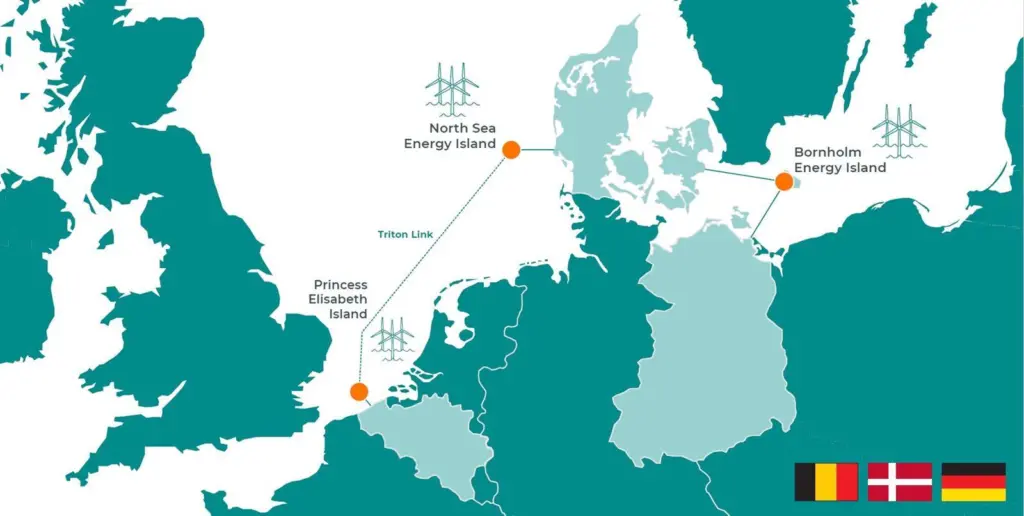
A Danish-German energy island project in the Baltic Sea has been handed a cool €645 million from the European Commission.
Yet in the small print, project leaders admit signing has been delayed on the contracts for converters, transformers and other substation technology, citing the need for ‘regulatory clarity’.
A ‘regulatory path’ will now be drawn up for the Bornholm Energy Island (BEI), which is being jointly developed by grid operators 50Hertz and Energinet.
It should harvest 3GW of power from offshore wind farms (themselves not yet built) to supply German and Danish electricity markets.
A power hub on the island will consist of two converters, direct current connections to the Danish and German mainland and additional converter systems for converting direct current into alternating current.
It is the first time Energinet and 50Hertz have issued a joint tender of cross-border electrical infrastructure, the project leaders say.
“BEI will pave the way to a future in which offshore wind energy is no longer harvested by individual countries alone,” they say. “Instead, in line with the offshore wind potential held by different countries and electricity demand in these, two or more countries will cooperate to efficiently integrate the green electricity generated by offshore wind farms into their energy systems.”
Princess Elisabeth Island postponed
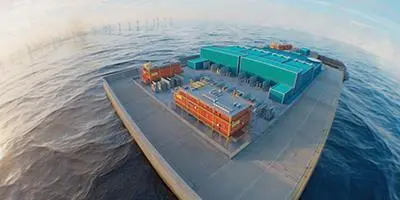
A different island project also called an ‘energy island’ was kickstarted in 2023 by Belgium, the main difference being that the island itself is being created.
However according to recent updates from EliaTransmission Belgium (ETB), the utility spearheading the project, there have been hiccups in the development because of a ‘changing market context’.
On February 4, the board of directors temporarily postponed signing HVDC contracts, causing a three-year delay to the delivery of the project, because of the rising costs of HVDC infrastructure.
“Postponing the signing of the contracts is not without consequences but provides extra time to weigh the current design against alternative concepts in the changing market context,” ETB says. “These alternatives are also feasible but require a joint action plan with all the parties involved, as there are currently too many uncertainties both in policy and regulation.
“Given the strategic importance of the Belgian energy island and its crucial role in the country’s electricity supply in the coming decades, Elia wishes to keep all options open by postponing the signing. The government bodies involved now have more time to make a final decision and possibly take additional measures.”
North Sea Energy Island delayed
According to a Reuters report in August 2024, an energy island being developed by the Nysted wind farm in the North Sea was also delayed by at least three years because of rising costs.
Initially a joint Danish/Belgian project, the artificial island was considered no longer viable because it could not be done without subsidies, Reuters quoted Energy minister Lars Aagaard as saying.
“The prerequisite was that it could be established without subsidies and that there would be a positive gain for both Belgium and Denmark, and reality has developed in such a way that we can no longer see such a case,” Aagaard said.
Aagaard has been contacted for the latest update.

Related Articles
 ENVIRONMENT
 DREDGING & FLOOD DEFENCE
 ENVIRONMENT