

Recent plastic spill one of worst ever in UK waters
If estimates are correct that one billion plastic pellets – around 25 tonnes – were spilled into the sea during a recent collision at port in northern England, the incident would be one of the worst ever recorded in UK waters.
There have also been questions raised about the speed – or lack – of response, which has meant pellets, known as nurdles, have been found some 35 miles away.
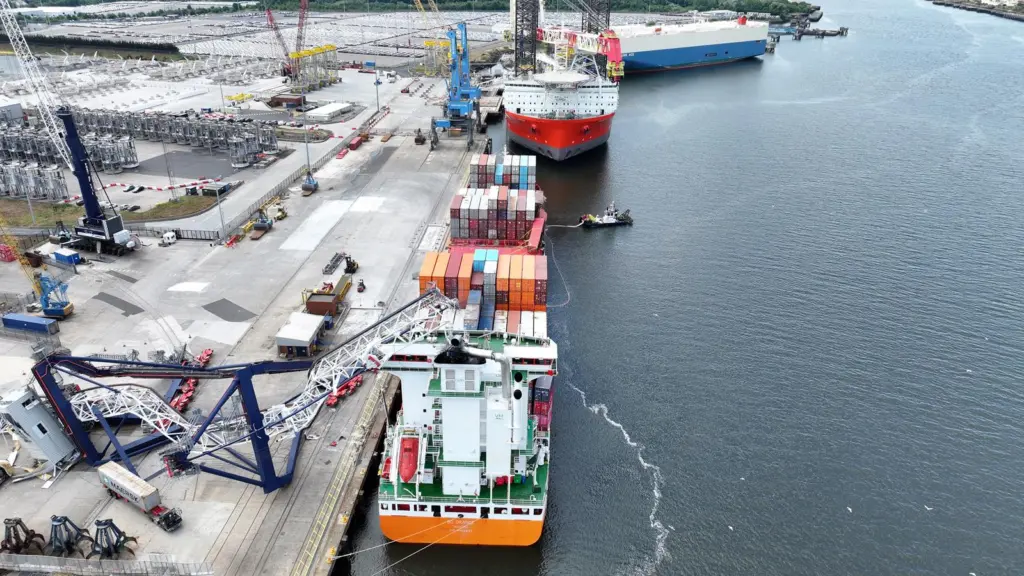
The incident happened at the Port of Tyne on July 19, when Cadeler’s Wind Turbine Installation Vessel Wind Orca crashed into the containership BG Orange, which was at berth at the port.
An investigation is under way to determine why that happened, but it resulted in a 750-tonne quayside gantry crane collapsing onto the containership and smashing two containers full of nurdles, the base ingredients of plastic products such as bottles.
At least one of the containers spilled its load, and it is still not clear if the same happened to the second one. The port says the containers, which each have capacity for 1 billion nurdles, have been stabilised, but it has not released much other information.
In total, five containers were damaged.
According to Rowan Stanforth, project officer with the environmental chairy FIDRA, pellets have been found as far north as Amble, some 35 miles away, and as far south as Sunderland, 20 miles to the south.
“It was only after they started getting reports of it on the beaches that they started giving advice and only then did they start arranging for contractors, first in the South Tyne, now in the north,” he told Maritime Journal.
“There are questions still left to be answered on the spill and the response, after over a week we still don’t have details of how many nurdles were lost, what type of plastic and chemicals are in the nurdles, and how far this plastic pollution might spread.
“They initially said it was one container full of pellets, and that’s where the one billion figure has come from, but yesterday they were talking about two containers, which means potentially half a billion more could have been spilled.
“We have seen in previous spills that when clean-up companies leave, communities are left to deal with nurdles on their beaches for months and years to come. As well as the immediate response longer term plans are needed for monitoring and clean up.”
Delayed response
Questions remain unanswered about why it took up to three days before booms were deployed to try and contain the spread of the nurdles.
A spokesman from the Port of Tyne said: “It’s important to note that the immediate aftermath of the collision and crane collapse, on Sunday 19th July, was a highly complex and dangerous environment. It was controlled by Northumbria Police for a number of days, which prevented us from being able to full access the site.
“We also had to wait until specialist experts assessed and secured the crane and ship before we could get to the damaged containers and assess what was happening.
“On Monday we deployed our emergency response team, which arrived on site on Tuesday and carried out assessments of affected areas in understanding what and how much product had been spilled into the river in preparation for cleanup.
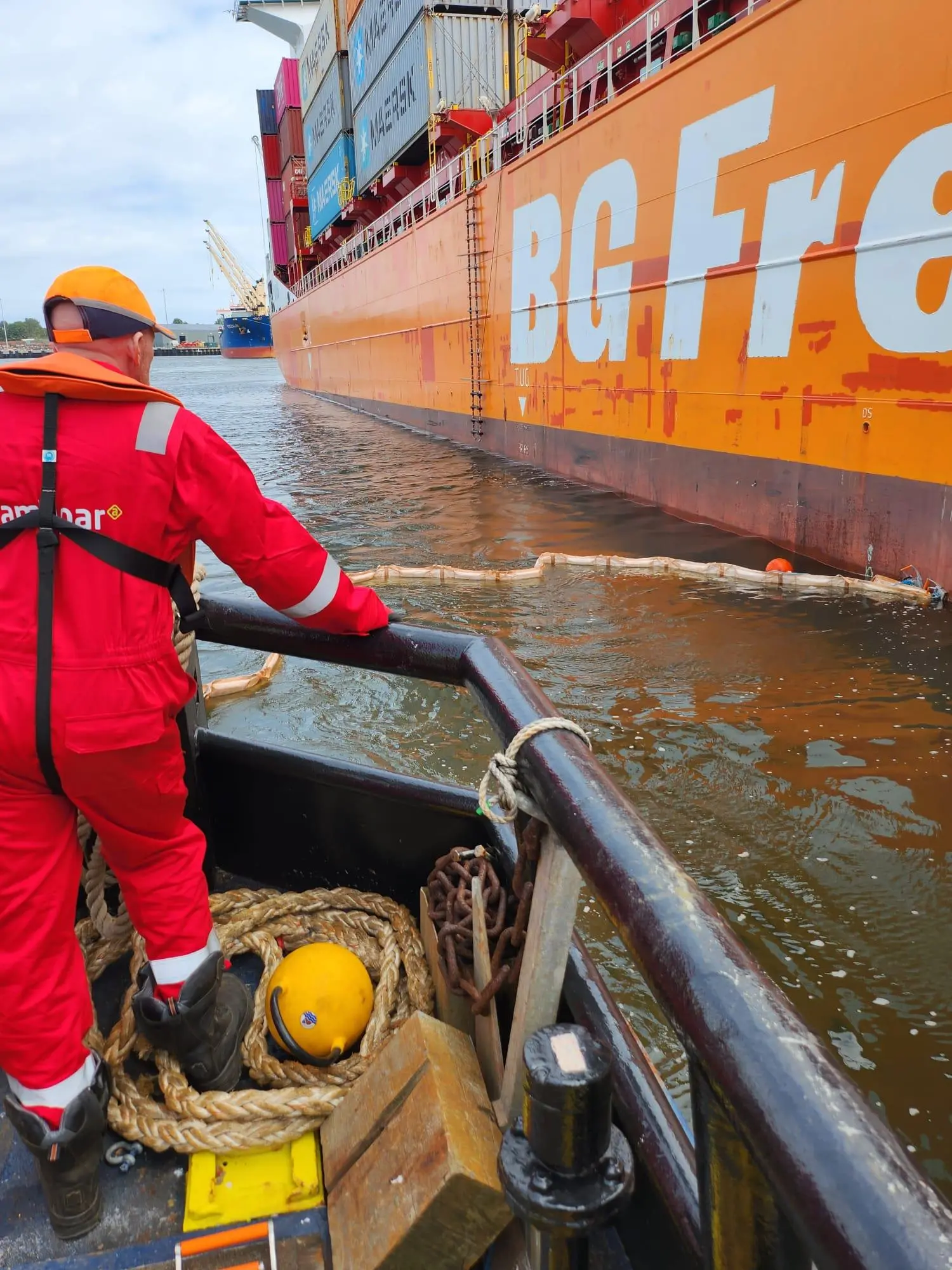
“On Wednesday morning we had boats and a skimmer on the river collecting pellets and on Wednesday we put a boom around the affected containers. The cleanup operation continued at pace with floating pontoons put on the river for workers to clear pellets using nets, and another boom put in place on the River Don.
“All of these actions were carried out at the earliest opportunity from the moment we were able to access the ship safely and we refute any suggestion that our response was anything other than swift and proportionate.”
The salvage company working on the clear-up is Ambipar, and it has not responded to requests for information on the works.
Salvage update
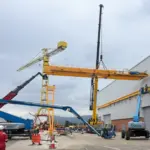
On Thursday morning, the Port of Tyne said the collapsed gantry crane’s boom had been removed ‘following extensive planning’ with the help of the Matador 3 floating crane owned by Dutch heavy-lift firm Hebo Maritiemservice, which recently merged with Bonn & Mees.
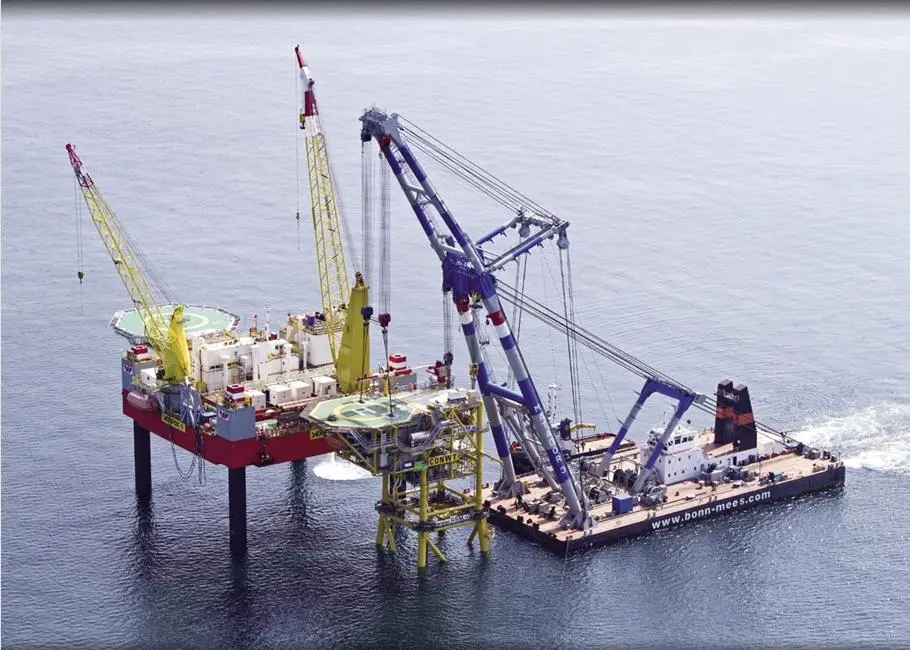
Matador 3 is a specialist sheerleg crane barge capable of lifts of up to 1,800 tonnes. The operation took more than 10 hours to complete, following extensive planning with salvage experts and the vessel owners.
The crane boom was lifted from the BG Orange and cut from the main crane before being moved to the quayside, where it will be cut into pieces.
BG Orange was moved into the middle of the River Tyne, turned and held until the boom was removed before being re-berthed with the damaged side alongside.
A stretch of the river was closed for 18 hours to facilitate the operation.
Galicia spill
One of the closest parallels to the incident occurred off the coast of north-west Spain in late 2023, when the container ship Toconao lost six containers during heavy seas off Portugal. One of them held around 26 tonnes of plastic resin pellets, or nurdles, packaged in approximately 1,000 sacks.
Within days, millions of the tiny plastic pellets began washing ashore along the Galician coastline, contaminating beaches, estuaries and rocky coves. Ocean currents later carried them further east along Spain’s northern coast and into Portuguese and French waters. The spill prompted a major clean-up effort involving local authorities, fishermen and thousands of volunteers, many of whom spent weeks painstakingly sieving pellets from the sand.
The incident highlighted the difficulty of responding to nurdle pollution once pellets enter the marine environment. Although many sacks were recovered intact, countless loose pellets dispersed over hundreds of kilometres of coastline, with some becoming buried in sand or repeatedly reappearing after storms. Environmental groups warned that the pellets could be ingested by seabirds, fish and marine mammals, while researchers stressed that complete recovery was effectively impossible.
Lessons need learning
“These spills are rare but a lot of councils will not have dealt with them before so that’s why we suggest procedures are in put place,” said FIDRA’s Rowan Stanforth. “They will have oil preparedness plans, that’s why they had booms, but not necessarily for nurdles.”
FIDRA is now lobbying for rule changes, such as better packaging and handling regulations.
One idea from the International Maritime Organisation is to transport the nurdles below deck, so that it would be impossible for a container to fall into the sea.
The Maritime & Coastguard Agency is saying little.
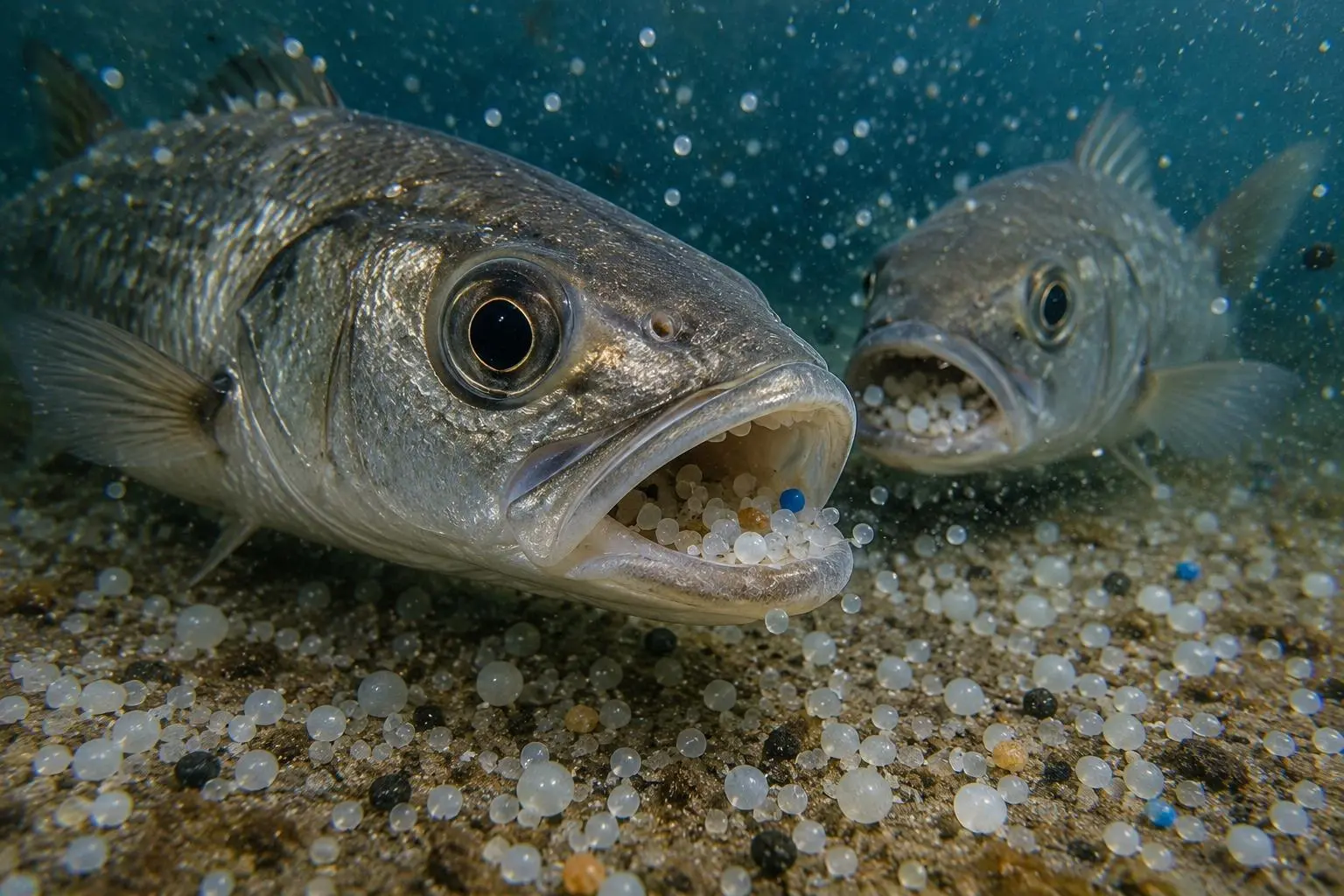
“HM Coastguard has supported local authorities in the initial response to reports of pollution along the North Tyneside coastline, including at Tynemouth Longsands, Cullercoats and King Edward’s Bay,” a spokesman said. “HM Coastguard continues to monitor the situation and provide advice and guidance to stakeholders on pollution response.”
Cadeler, the owner of the Wind Orca, said: “Cadeler reports that its wind installation vessel WIND ORCA (IMO: 9601326) has been involved in an allision with a third party vessel and shoreside crane at approx. 13.00pm local time) on 19 July 2026 at the Port of Tyne, UK.
“The shoreside crane operator was injured and has been taken to hospital where he is reported to be in a stable condition and receiving treatment.
“All crew on the Wind Orca are safe.
“Cadeler has activated its Emergency Response Procedure and is working closely with all relevant authorities and other stakeholders to manage the situation safely and efficiently.”
The containership line, BG Freight, has not responded to requests for comment.
Related Articles
 ELECTRICAL SYSTEMS
 ENVIRONMENT
 ENVIRONMENT