![MaritimeJournal[Seawork]](https://www.maritimejournal.com/wp-content/uploads/2026/09/MaritimeJournalSeawork.svg)




Trump vetoes “unreliable” and “foreign” energy
The US Trump Administration has effectively ended any preferential treatment for what it calls unreliable subsidy-dependent renewables – namely wind and solar energy.
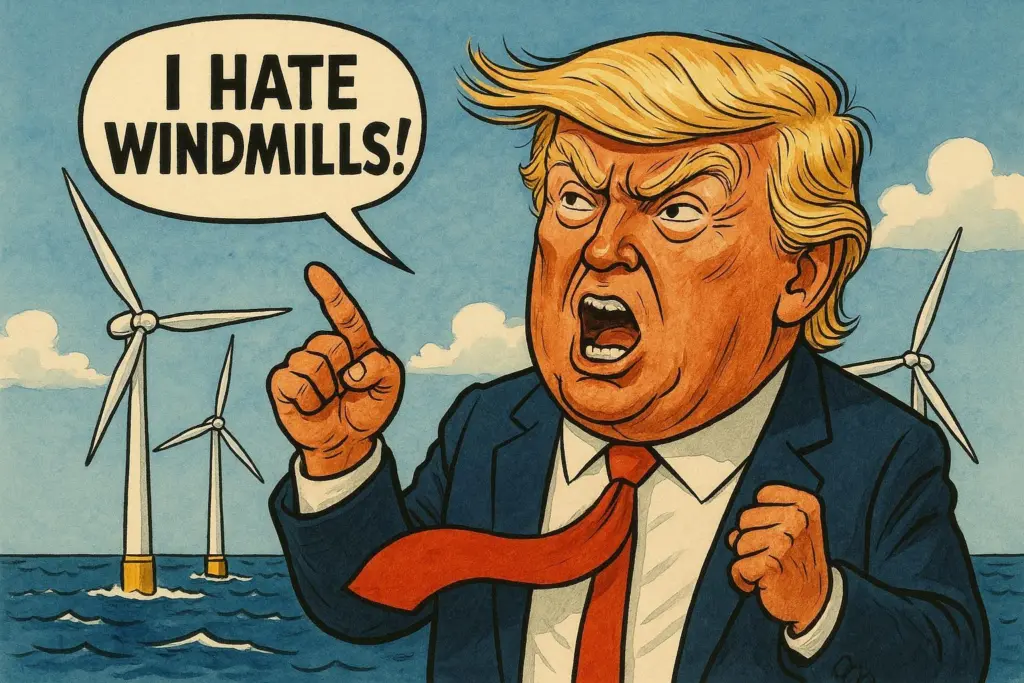
This will come as a further knock to the European offshore wind industry, which has long been waiting to tap into the emerging offshore wind market before Trump nailed his colours to the mast with his stance on any alternative to fossil fuel.
The move follows the signing of Executive Order 14315 ‘Ending Market Distorting Subsidies for Unreliable, Foreign-Controlled Energy Sources’ and the implementation of the One Big Beautiful Bill Act by the US Department of the Interior.
As part of this effort, the removal of long-standing right-of-way and capacity fee discounts for existing and future wind and solar projects will bring to an end to years of subsidies for renewable energy development.
Windmills aside
It must be said that President Trump’s stance on renewables is not agreed on by everyone and that includes many Americans.
“The Department of Interior’s latest directives continue a false narrative on an established American industry that will prevent an important source of baseload power generation from reaching the grid when ratepayers are already feeling the effects of rising electricity costs,” said Stephanie Francoeur, SVP of communications & external affairs at the Oceantic Network.
“This will result in higher energy costs, increased blackouts, job losses and billions of dollars in stranded investments, further delaying shovel-ready projects supported by a domestic heavy manufacturing supply chain renaissance that spans 40 states.”
There is then a wide awareness on how Trump’s directives are damaging and impacting the offshore sector and there is push back.
As early as January, reports suggested that shares in European energy companies fell after a speech made by president Trump in which he said there would be no new “windmills” on his watch.
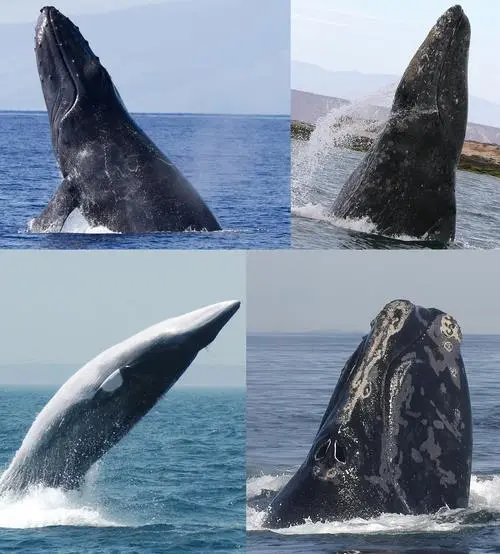
Trump’s comments at the time included that “windmills are driving whales crazy, nobody wants them, they’re expensive and they don’t work without subsidy.”
Opposition then started to gather a bit more momentum.
In May, eighteen US states took the Trump administration to court for attempting to place an indefinite halt on offshore wind developments.

The move was in response to Trump’s sweeping newly announced presidential directive to suspend all federal approvals for wind energy projects, freezing numerous projects in their tracks and devastating one of the nation’s fastest growing sources of clean, reliable and affordable energy.
Just recently, Trump has been at it again, but this time on the doorstep of the industry in Europe that he is trying so hard to damage.
He renewed his criticism of wind energy during his visit to Scotland, calling turbines “ugly, costly and harmful to wildlife.”
Then, during a press conference with UK prime minister Keir Starmer, Trump again attacked wind energy, calling turbines “ugly monsters” and urging Starmer to instead back North Sea oil and gas.
Trump’s opposition is nothing new, and his war on wind energy began during a long-running battle with Scottish authorities over 11 wind turbines that can be seen from his Turnberry luxury golf resort.
The legal challenge to that, launched in 2013, was ultimately dismissed by the UK Supreme Court in December 2015.
Opinion vs fact
However elaborate Trump’s claims are, they don’t always match the evidence.
He has called wind power the worst form of energy and the most expensive.
But a recent report on the costs of renewable energy from the International Renewable Energy Agency (IRENA) found that globally, wind power is now 53% cheaper than the lowest-cost fossil fuel alternative.
He has also called the whole thing a “con job,” pointing out that Germany has tried it and “wind doesn’t work.” But according to Ember’s 2024 report, wind power accounts for 28% of Germany’s electricity generation, making it the country’s largest single source of electricity.
Trump has also claimed that wind turbines “start to rust and rot in eight years” and then they cannot be disposed of properly.
But IRENA cites the average lifespan of a wind turbine as around 20 and 25 years, not eight, and even then there may be the potential to repower them.
When the turbines do come to the end of their life, around 80 to 95% of their mass, including materials like steel, concrete and copper, can be recycled, according to industry groups like WindEurope.
Trump also has a beef with the fact that many wind turbine components are made in China, which is currently the world’s biggest manufacturer of wind turbines and components, as per the Global Wind Energy Council.
But there are significant manufacturing hubs elsewhere in the world in Germany, Spain, France and Denmark – although they are still outside America.
Trump’s claim that wind turbines harm wildlife, including whales and birds, may be true but is to a large extent still undetermined.
The US National Oceanic and Atmospheric Administration said there is as yet no evidence linking offshore wind turbines to whale deaths. But despite this, many countries have regulations in place to protect marine creatures during surveying for windfarm construction.
It’s no wonder then that when the facts are on the table, the US renewable energy sector is holding up its hands in despair, along with most of Europe.
“Crippling, affordable and reliable wind energy makes no economic sense and undermines the administration’s energy strategy. We urge the Department to adopt policies which put all sources of American energy on an even playing field,” Francoeur said.
Related Articles
 FEATURES & VIDEOS
 ENVIRONMENT
 OTHER NEWS