![MaritimeJournal[Seawork]](https://www.maritimejournal.com/wp-content/uploads/2026/09/MaritimeJournalSeawork.svg)






UXO survey all-clear for North Sea CCS project
A ‘bomb hunt’ has been completed along a subsea pipeline route where CO2 will be sent to and stored in depleted gas fields in the North Sea near Rotterdam.
’Porthos’ is derived from the Port of Rotterdam CO₂ Transport Hub and Offshore Storage project, which is being run by the Port of Rotterdam and energy firms Gasunie and EBN to transport the amount of CO2 emitted by industry operating at the port to the subsea gas fields.
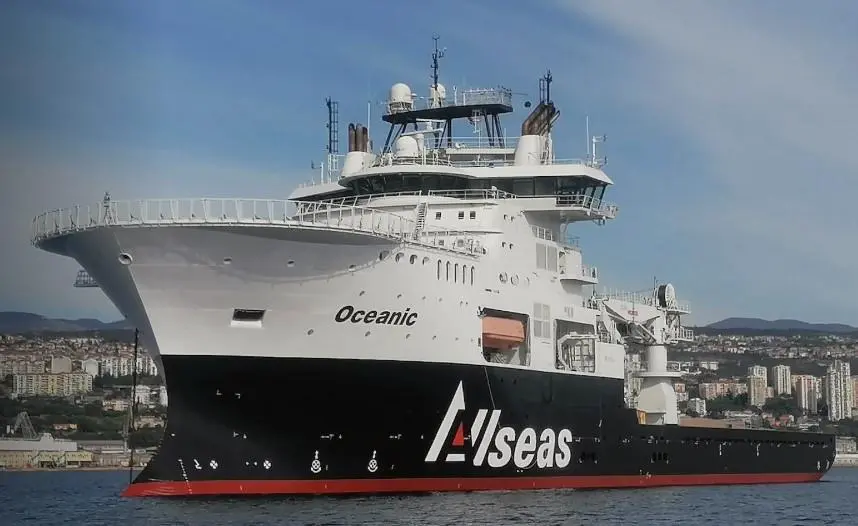
With the UXO work completed by hi-tech imaging and sonar spread technology onboard Allseas vessel Oceanic, cable-lay vessel Lorelay, also Allseas’, will now be able to install the 16-inch pipeline, which will stretch for 20 kilometres.
Oceanic is 129m long by 25m wide, can accommodate 120 persons and has two work-class ROVs to carry out the subsea work.
Offshore pipe-lay vessel Lorelay was built in 1974 and also has an ROV that can be used to a depth of 4,000 metres.
Allseas has been contracted to install, bury and commission the pipeline connecting the future compressor station at the Maasvlakte.
Plastic insulation will coat the pipe to retain the heat inside it, and a concrete weighted coating will increase its stability on the seabed.
Like buses, with none coming then a flurry all at once, this is the second carbon capture and storage (CCS) project to hit the headlines this week, with news that the Northern Lights project, in Norway, had agreed an expansion deal.
In the Porthos project, the emptied gas fields are estimated to have a capacity to store some 37 million tons of carbon dioxide. The gas was stored in the pores of the sandstone substratum, and once depleted it was encased in metal.
Once filled with CO2, in about 15 years’ time, plugs will seal the well, Porthos said.
According to statistics body Statista, the two largest carbon capture and storage sites currently operating in the world are tied at seven million tons per year: the Petrobras Santox Basin Pre-Salt Oil Field in Brazil and the Shute Creek Gas Processing Plant in the United States.
Related Articles
 FEATURES & VIDEOS
 ENVIRONMENT
 OTHER NEWS