![MaritimeJournal[Seawork]](https://www.maritimejournal.com/wp-content/uploads/2026/09/MaritimeJournalSeawork.svg)





Glasgow Canal Link Gets the Green Light
A thriving canal quarter in Glasgow could soon become a reality following the announcement at the World Canals Conference that a £ 5.6m regeneration project, restoring the canal link between two of the citys most historic canal side sites, will soon get under way.
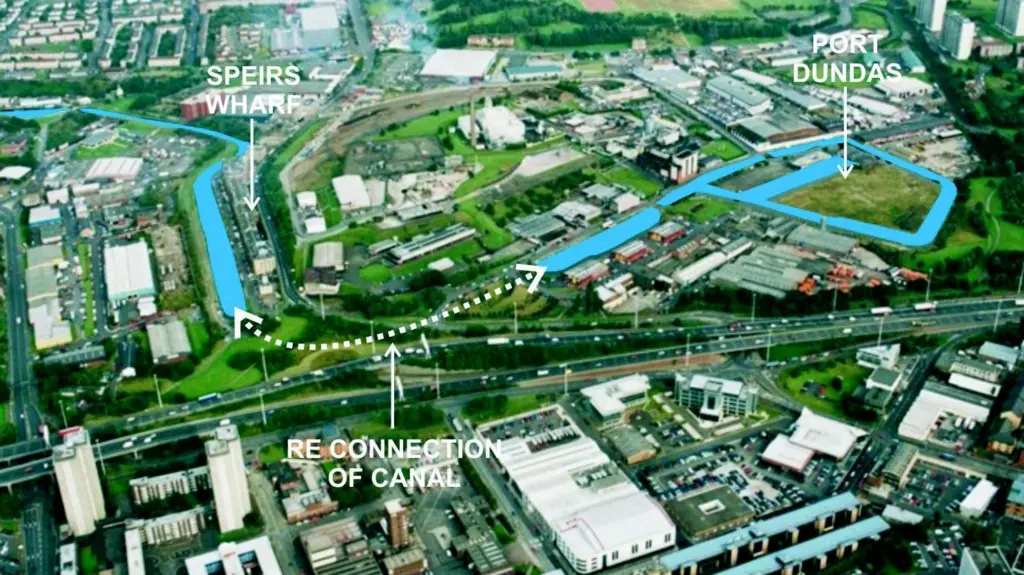
The new development, which will reconnect Speirs Wharf and Pinkston Basin in Port Dundas by canal after a break of 40 years, will include the creation of an impressive canal terminus in Glasgow for Scotland’s successfully restored Lowland canals. The project represents the first stage in a long-term regeneration scheme that will deliver a powerful force for positive change in North Glasgow.
Project managed by British Waterways, the canal link will create new jobs in the area by unlocking up to 30 hectares (74 acres) of vacant and unused land in Port Dundas for business, residential development and environmental improvements. The restored canal basin will provide opportunities for the creation of a thriving water space, including a marina and residential moorings.
Funding support for the project has been received from Glasgow City Council, European Regional Development Fund and British Waterways’ regeneration vehicle – ISIS.
British Waterways is in the final stages of confirming support of £2.2m from the European Regional Development Fund, 2000-2006 Western Scotland Objective 2 Programme. Port Dundas is the flagship initiative in a programme being pushed forward in partnership by ISIS and GCC to regenerate a significant part of North Glasgow around the canal.
Commenting on the Port Dundas restoration, Jim Stirling, Director Scotland at British Waterways, said: ‘This canal side development is a tremendous opportunity to unlock the economic potential within the north of Glasgow, and represents a productive next step in the regeneration of Scotland’s Lowland canal corridor which started with the restoration of the Forth & Clyde and Union canals through The Millennium Link project.’
‘The Scottish Executive’s policy paper Scotland’s Canals – An Asset for the Future, recognises that canals can act as catalysts in generating a host of economic and social development opportunities.
This far reaching document outlined a clear vision for the development of Scotland’s waterways and this latest initiative at Port Dundas represents a major milestone in transforming that regeneration vision into reality.’
Work on the Port Dundas project is scheduled to start in spring 2004 with a completion date for the canal link scheduled for late 2005.
The aim of the long-term regeneration initiative is to generate maximum benefits for the City from the recently re-opened cross-Scotland Forth & Clyde Canal (part of the £84.5m Millennium Link project) by stimulating investment in Tourism and Recreation amenities and commercial and residential development.
ISIS Waterside Regeneration was formed in Summer 2002 by British Waterways, AMEC Developments and Morley Fund Management’s Igloo Regeneration Fund. ISIS combines public sector assets and ethos with private sector capital and expertise and aims to become the UK’s leading regenerator of waterside land within the next decade.
Related Articles
 FEATURES & VIDEOS
 MARINE CIVILS
 OTHER NEWS