

EC selects consortium for floating wind
A consortium will work together to develop better solutions for floating wind energy technology.
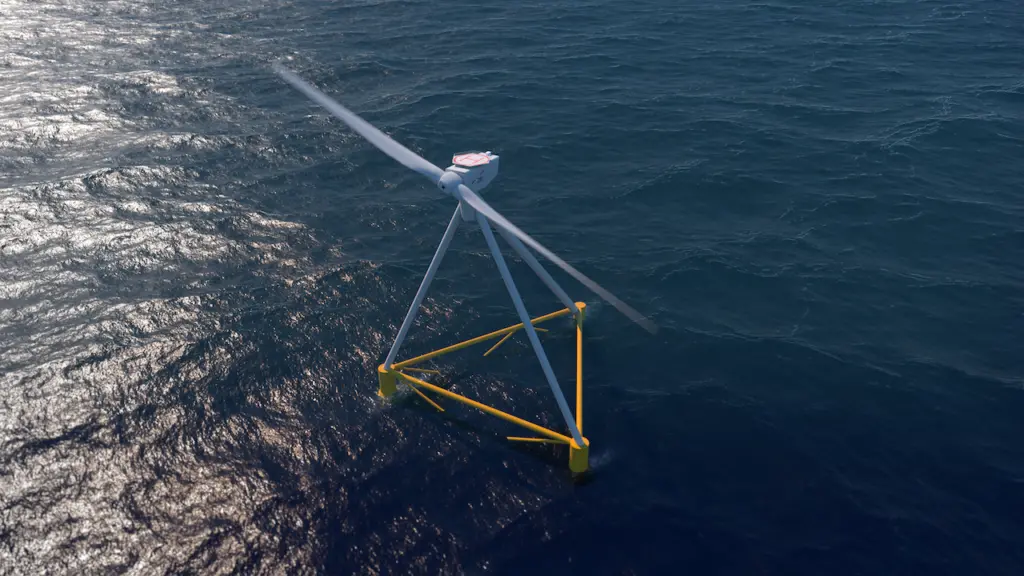
The European Commission has chosen a consortium of 12 companies and institutions to develop a programme of industrial-scale floating offshore wind generation.
Leading the NextFloat programme, which aims to demonstrate a competitive, sustainable and integrated floating offshore wind solution optimised for deep waters, are engineering firm Technip Energies and floating wind technology developer X1 Wind.
”The integrated solution relies on X1 Wind’s innovative and disruptive floating offshore wind technology, allowing for a lighter floater design and a reduced steel requirement, as well as a more efficient and compact mooring system, ultimately minimizing the impact on seabed,” the EC says.
A full-scale 6MW prototype will be deployed at Mistral in the French Mediterranean Sea, enabled by the Open-C foundation, which structures and operates all the test sites for marine renewable energies and offshore wind power in France.
The integrated system design, its manufacturing, assembly and installation procedures will be tested at a scale that is relevant for upcoming commercial offshore wind farms, that will require industrialized solutions for applications in excess of 15MW and beyond, the EC says.
“We are glad to have been selected for the NextFloat project, as part of the Horizon Europe program,” said Laure Mandrou, SVP Carbon-Free Energy Solutiions, witg Technip Energies. ”By leveraging our existing collaboration with X1 Wind, we are preparing the future of the floating offshore wind market and accelerating the development of disruptive floating offshore wind solutions at industrial scale.”
“We are really pleased to have the opportunity to deliver our unique solution through the NextFloat,” said Alex Raventos, CEO and co-founder of X1 Wind. ”This ambitious project aims to bring substantial improvements in the competitiveness of floating wind and prepare the long-term mass deployment of this industry, so that we can actively contribute to accelerate the energy transition, which together with energy security is becoming more and more critical in Europe and worldwide.”
The other consortium members are Naturgy, 2B-Energy, Hellenic Cables, Ocean Ecostructures, Schwartz Hautmont, Tersan Shipyard, Ecole Centrale de Nantes, Ocas, Hydro and the Technical University of Denmark.
Related Articles
 OTHER NEWS
 OTHER NEWS
 SPONSOREDSTORY