

Nuclear tugs: a future reality?
Scientists at a European Tugowners Association seminar told delegates that nuclear propulsion on tugs and smaller vessels was a very real possibility.
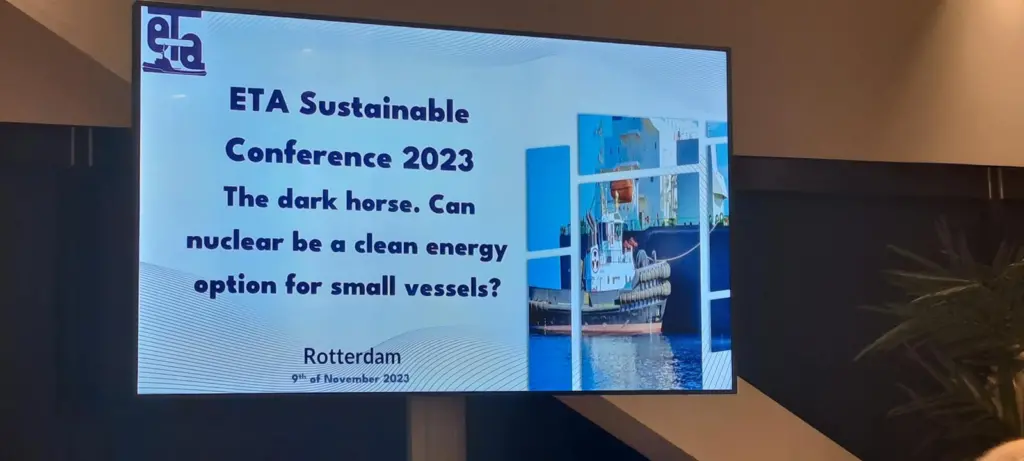
There was excitement among tug owners and operators at the European Tugowners’ Association (ETA) conference at Europort, with scientists claiming smaller vessels could now be powered by nuclear energy.
Introducing the three-hour seminar, ETA president Anna Maria Darmanin said there was optimism but uncertainty in the industry.
“All technologies have issues, none is really ready to explore any possible path to green tugs,” she said. “Everyone agrees that green is good and we as an industry have a duty to ensure our customers get an efficient option. Nuclear is a probable necessity.”
George Tsavliris, owner of tug firm Tsavliris Salvage Group, told the seminar he believed nuclear was the only real option.
“The only zero-carbon future is nuclear,” he said. “We are going through a transitional period but there is also a lot of controversy and a lot of hypocrisy. Green methanol doesn’t exist. Ammonia is dangerous. LNG has issues like methane slip and other problems. Batteries are a short-term solution and a long-term disaster, with the lithium and cobalt that’s not biodegradable. Wind turbine blades the same.
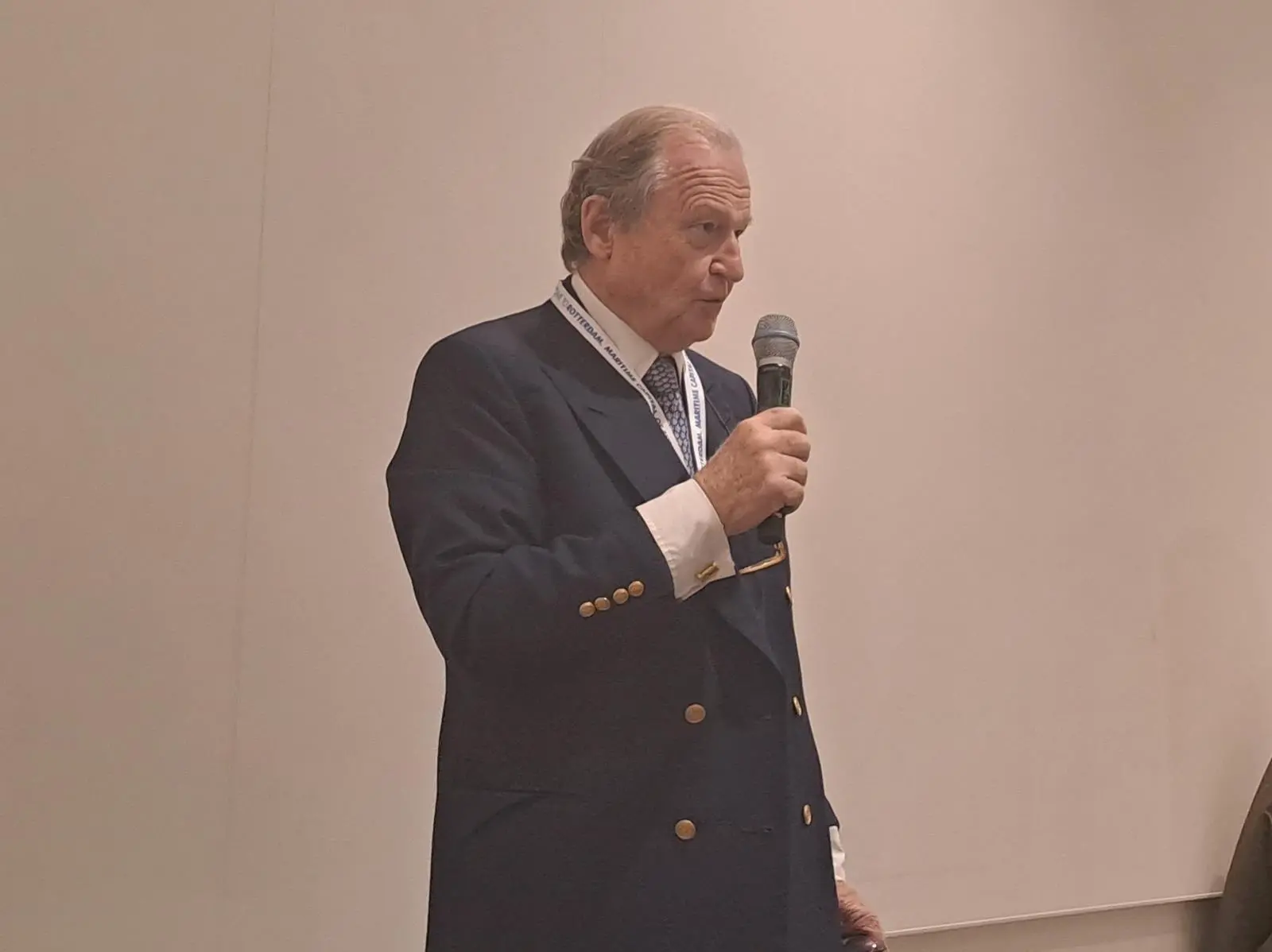
“People are being pressured into making decisions and what it needs is a bit of honesty and integrity, that when people make decisions they can achieve what is being said. We are all under pressure to meet this 2050 deadline, which won’t happen. It can’t happen. It’s not just money, it’s this blame culture.”
Different nuclear technologies
Scientists presented different Low Energy Nuclear Reaction (LNER) systems to the seminar, which we only outline briefly here to avoid giving inaccurate detail.
One of them was Haslen Back, owner of start-up ENG8, who presented ‘a breakthrough in catalysed fusion technology’ that simply used water as the fuel to cause a reaction, without harmful radiation or radioactive materials being produced.
“Water can be millions of times more energetic than fuel oil,” the slide said. “Your tugs literally float in fuel: water.”
He said ENG8’s technology used cryogenic cooling and had the potential for retro-fitting as well as being used on newbuilds. And when it came to cost, he said, it would be on par with any conventional engine.
“There are no nuclear fuels on board, no rare earths on board,” he said.
Claudia Gasparrini, with Associazone Italiana Nucleare, talked about, among other possibilities, Smaller Modular Reactors (SMRs), which could be built in factories in a standardised way.
“This should ensure a supply chain and allow industry to provide a reactor already sealed and ready to use – this is commercially available technology,” she said.
The SMRs could be available in size of between 5MW and 450MW, she said.
Regulation and safety stumbling blocks
“We do believe nuclear will have a critical role to play in the years to come,” said Minas Diacakis, from the American Bureau of Shipping (ABS). “Nuclear energy in ships has been around for more than 50 years, the most famous example being the Savannah.
“Of all attempts that have been made to apply this technology on ships, there has not been a major accident. It is possible for the technology to be safe.” And he said it would be impossible to reach ‘Net Zero’ with conventional technologies.
But when the question of regulation was raised, he admitted it was tricky.
“ABS has worked with scientists, ship associations, tug associations, to carry out risk assessments and qualify new technology to get it ready for market.
“Regulations are an outcome of the technology produced by scientists,” he said. “We can’t produce regulations which have to do with the safety of the technology if we don’t have the technology ready yet.
“It’s the same thing with the maintenance process. And in fact that’s when most accidents happen – for instance Chernobyl.”
After the seminar, a number of vessel owners appeared to be interested in what the speakers had presented, and approaches were made.
“It’s interesting,” said Mike Fitzpatrick, CEO and president of Robert Allan naval architects. “We will keep an open mind.”
George Tsavliris quoted Edward Land, the inventor of the Polaroid camera: “Never undertake a project in life unless it’s manifestly important and nearly impossible.”
Related Articles
 OTHER NEWS
 OTHER NEWS
 SPONSOREDSTORY