


UK marks 25 years of life and vessel-saving SOSREP
The UK’s Maritime and Coastguard Agency (MCA) has marked the 25th anniversary of the work of SOSREP – the Secretary of State’s Representative for Maritime Salvage and Intervention.
In 1996 the tanker Sea Empress ran aground near Milford Haven in Wales, and despite the salvor’s best endeavours to recover a lot of its cargo, 72,000 tonnes of oil leaked into the sea.
Many parties got involved, with communities and environmental groups joining the owner, underwriters and salvors. The incident quickly won the attention of local and national politicians.
HM Coastguard said that the handling of the incident “led to its poor outcomes – no priorities, no leadership, and no decisions made across the agencies involved”. Lord Donaldson’s review of how government, through its agencies, should respond to maritime emergencies highlighted the ineffectiveness of “salvage by committee”.
When political interest extends to the highest level, salvors who often have ultimate commercial responsibility for the response can be left in an unenviable position, balancing the interests of various stakeholders, including ship and cargo owners and insurers with whom they will have commercial contracts, with the potential of state intervention hanging over them influencing their own actions.
To avoid such situations the role of SOSREP was created whereby one individual has ultimate control and the power to make the final decision during a national emergency, with an overarching aim of reducing the risk to safety and marine pollution.
SOSREP is largely free to act on their own initiative without having to consult politicians, and such powers invested in just one person bring huge responsibilities. But in recommending the creation of the role Lord Donaldson warned against the potential temptation for government to influence the person’s judgement, saying they must either “back him or sack him”.
The current Deputy SOSREP is a women, Lisa McAuliffe, who recently led a successful operation following the loss of power and grounding of a roro cargo vessel near Wolf Rock Lighthouse, Falmouth.
Powers of intervention
SOSREP is supported by HM Coastguard, the government agency involved in responding to maritime emergencies to coordinate life-saving response and subsequent activities, including responding to pollution incidents. SOSREP is also supported by the wider MCA community working closely with the Department for Transport and Offshore Petroleum Regulator for Environment and Decommissioning.
SOSREP assesses the risk to safety and if necessary uses their ‘powers of intervention’ to prevent the situation escalating. These powers can be executed in UK territorial waters, 12 miles from the coastline and for pollution prevention inside the UK Exclusive Economic Zone of 200 miles or the median line with neighbouring states. For offshore incidents, the jurisdiction for pollution extends to the limits of the UK continental shelf.
Activities can include ordering a shipowner to agree a salvage contract, ordering a harbour master to provide a port of refuge and administering an exclusion zone around a casualty vessel as well as the obvious work of liaising with the shipowner, insurers and salvor.
SOSREP is not of course responding to emergencies on a daily basis, and their work includes participating in national and international exercises and working with national and international partner organisations and groups to foster good relationships. The SOSREP system is widely lauded by the shipping and salvage industry worldwide.

UK SOSREP Stephan Hennig
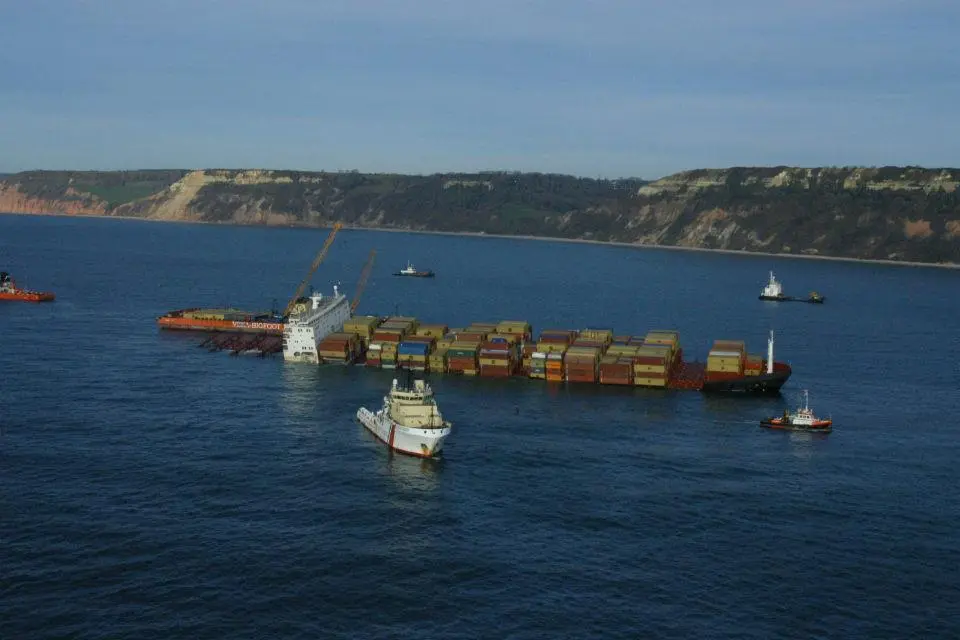
Of the reported 800-odd incidents SOSREP has been involved in, the deliberate grounding on the instructions of SOSREP of the container ship MSC Napoli in 2007 stands out with current SOSREP, Stephan Hennig.
“This was a true test of the system, the SOSREP had to make a decision and that decision was to deliberately beach the vessel,” he said. “No one was happy about it at the time, but in the years that have followed, almost everyone agrees that it was the right decision.
“The thoughts at the time were – do we ground the ship or do we allow it to just break apart in the channel?
“It will sometimes feel a bad decision and the hardest to make, but those decisions have to be made in often uncertain circumstances.
“Most organisations are happy when you’ve made the decision as it helps with action and accountability. I think it works. It really helps reduce the risk to safety and minimises the likelihood of large-scale pollution.”
Related Articles
 OTHER NEWS
 OTHER NEWS
 SPONSOREDSTORY