![MaritimeJournal[Seawork]](https://www.maritimejournal.com/wp-content/uploads/2026/09/MaritimeJournalSeawork.svg)


PROFILE: Viking-inspired safety from Lopolight
For a people known for their sailing expertise, the fact that no Viking had sailed single-handedly around the world simply couldn’t go unaddressed by Danish Lopolight CEO Jan Møller.
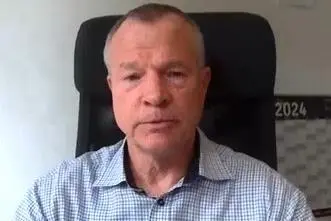
But before he set sail, he needed a safe light that wouldn’t consume all his on-board power – and 20 years later, he and partner Peter Hancke are producing them for all kinds of vessels and offshore structures.
“It started out basically because I had a weird and audacious dream, of being the first Scandinavian to sail around the world single-handedly non-stop,” says Møller. “For someone from the home of the Vikings, I felt we needed to set the record straight.”
Whether Møller’s dream came true you will have to read on to find out, but it was while he was making preparations for his 2004 adventure that he realised lighting would be a problem, ie the power consumed by his onboard lights would be too great to be sure of leaving enough for lighting to make him visible to potentially lethal vessels on the open seas.
“If a ship is coming close you can turn the lights on and be safe, but if you’re alone you can’t always do that – you might be asleep or occupied,” he says. “Peter Hancke (now Lopolight partner and R&D) suggested LED lights, which I had heard of but they were only just coming onto the market at the time.”
And the seeds of Lopolight (Low Powered Lighting) were sown.
Small beginnings
Hancke and Møller put their heads and savings together, beginning with small sailing boats as their primary customers.
“We didn’t have any idea of who else to target, because we weren’t in the marine business – we were sailors,” says Møller. “But as sailors, we knew what sailors look for and that’s pretty good. So we had a starting point, from which I had to figure out a way to do a business.”
The next step was to get their products officially type approved and accepted by the various authorities in the world – and because theirs was such a new product, they were actually instrumental in setting those standards.
“People were quite taken aback,” says Møller. “Because LEDs don’t fail. They’re not like a kerosene light, with the problem of empty canisters, or incandescemnt lights, where the filament might break. An LED has a slow decay.”
No longer needing to change light bulbs also results in savings, for example the design of a vessel no longer needs to account for that task or the gauge of cables, for instance.
A navigation light is among other things defined by the intensity necessary to be seen from a distance.
“The larger the vessel is, the further away you need to see it,” he says. “You’d want to see a super tanker from much further away from say a sailboat, for which you’d only need a couple of miles’ visibility.”
They realised there would be different requirements, and it made what they had believed to be fairly simple a pretty complex undertaking – but one they feel they have mastered.
Anti-vibration feature
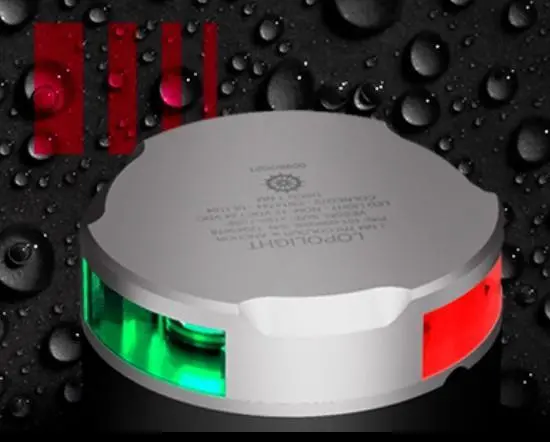
At Lopolight’s first boat show in Southampton, among the recreational sailors, who wanted cheaper, reliable lights, ‘a big, burly guy was waiting in the shadows’ and asked if we had a moment, Møller says.
This was when the vibration element became a factor.
“He was from Special Forces,” says Møller. “They had these high-speed interceptors, although he couldn’t say what speed as it was classified information, but the point was he needed lights that you could shake without shaking them to death.”
Lopolight was now tasked with making lights that were vibration, height, water and energy-loss proof – basically ‘fit and forget’ lights for a lifetime – and this is what they offer, to vessels in all spheres as well as now for offshore wind farm applications.
The lights are also ideal in hazardous circumstances – perhaps where flammable materials, such as gas, are present, because of the construction, where the light is fully encapsulated by resin and the LEDs give off such little heat.
“With the new methanol, or LNG, or hydrogen fuel vessels these will not be a problem as we now have our navigation lights certified to Ex/ATEX Zone 1,” Møller says.
Safety is of course the most important factor, ‘and really nothing else’, says Møller.
“You have to be clearly identified at night to avoid collision and that’s what it boils down to. And now we have given people the freedom to place the lights exactly where they need them and where they make more sense. The concept is very straightforward, and we’ve been focusing on this ultra niche navigation light with control system.”
Growth
With solutions across most if not all the maritime sectors, it could be said that Lopolight has the market sewn up – and it has been growing at 30% a year, Møller says.
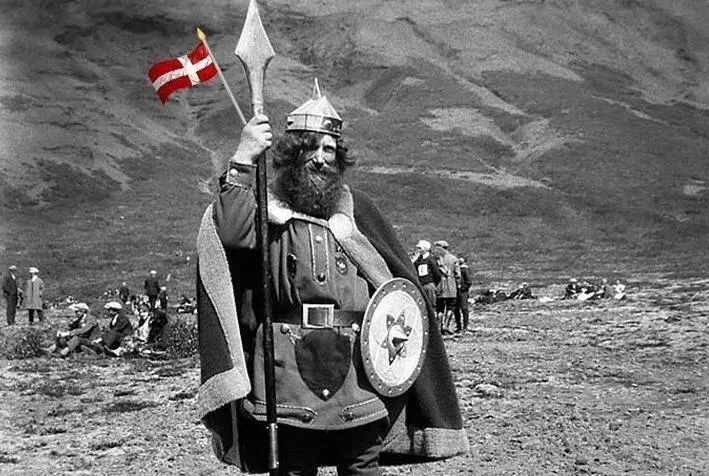
“We’re still a small player,” he says. “If you look at what we sell in the global market it’s less than 10% – which means there is lots of room to grow and it’s a good place to be in.
“We are constantly questioning ourselves to see if we can do things better. At the moment we don’t think we need to do anything differently but things will develop, technologies will change. And one of our biggest development areas is the interfacing of our lights to the other systems in the vessel.
“We’re supplying a number of unmanned vessels these days and as the drive is to get the bridge more and more automated our systems have to speak to onboard systems.”
With the trend in automation Lopolight is also seeing more vessels moving to alternative fuels – “they are opening the envelope, looking at new ways to do things, and we are invited to the table there,” he says.
Now the moment you’ve been waiting for – did the Viking descendant live his dream?
It took him 168 days, and on Monday March 15, 2004, Jan Møller was welcomed back on Danish soil by around 400 people, including his wife Merete and two children.