

ITS 2010 Vancouver
Delegates travelling to the International Tug & Salvage Convention and Exhibition ITS 2010 in May did so looking forward to this biennial event and what the host city of Vancouver, with its’ strong connections with the towage business, had to offer. They were not disappointed.
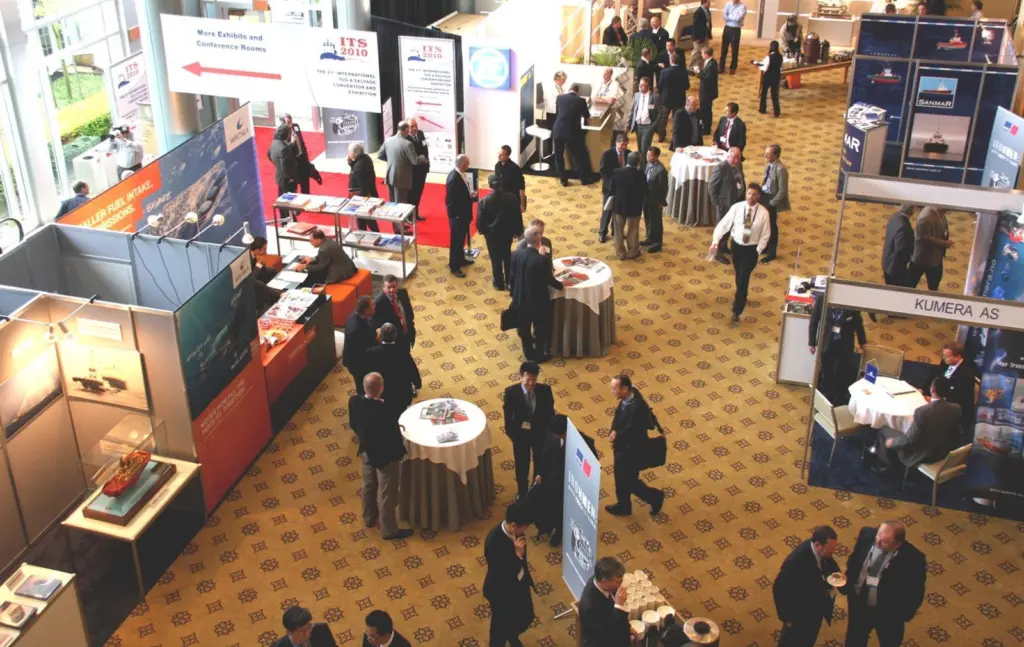
A record 467 delegates from 48 countries, representing every aspect of the towage and salvage industries, attended proceedings on 17 through 21 May. The venue was the Westin Bayshore Hotel, an ideal facility on the waterfront, overlooking Stanley Park and with North Vancouver in the background.
This was the 21st ITS Convention organised by the ABR Company and the second time the event was held in British Columbia’s premier port after a wait of 37 years. Major players in the towage industry based in the locality, such as Robert Allan Ltd, went out of their way to welcome delegates and friends to ‘Their City’ and proved to be excellent hosts.
In spite of the economic climate this prestigious and important forum was buzzing with activity and the organisers were surprised by the number of would be participants arriving and registering ‘at the door’.
The main conference sessions were again ably chaired by Michael Allen. Thirty three papers had been selected by the event’s steering committee of industry pundits. In order to accommodate this weighty programme a simultaneous parallel session of five ‘Green papers’ was held on the Wednesday morning and chaired by the editor of International Tug & Salvage, Dawn Gorman.
ITS 2010 was opened with a keynote address by Robin Silvester, the President and CEO of Port Metro Vancouver. Mr Silvester took up his present post in 2009 following an impressive career in port management in many locations worldwide. He gave a graphic description of the Port Metro and its five constituent parts, which also include the Fraser River ports and Prince Rupert. A total of 102m tons of cargo were handled during 2009 and Mr Silvester gave an optimistic view of the future, recognising the important part played by the towage industry in several sectors of Vancouver’s diverse and recovering economy.
Among the eight papers presented on the first day, most were towage related and of a technical nature. A team of speakers from Wartsila presented ‘Innovation in Tug Design’, emphasising the importance in an integrated approach to tug design, where equipment manufacturers and ship designers participate in the end product. A ‘home grown’ paper entitled ‘Predicting Tug Behaviour by Analysis of Rated Performance of Coastal Tugs’, was introduced by Robert Allan and presented in an exceptional manner by Andra Papuc, a graduate engineer from the RAL design team. The paper explained in some detail a method of comparing carefully selected criteria from eleven existing vessels built over a period of 30 years and the useful information that could be derived for future designs.
Among several papers related to tug design and performance was ‘Ship Assist in Fully Exposed Conditions’ by a team from MARIN of the Netherlands, headed by JH de Jong. This contribution described the work carried out as part of the SAFETUG II Joint Industry Project, following on from SAFETUG I, and some of the important issues explored relating to hull design, roll damping, winches, towlines and the effects on crew members.
A paper presented later in the week by Coen Boudestein and Joost Mathot from the Damen Shipyards Tug & Workboats project team described the development of a new twin-fin skeg concept that has been applied to their ATD 2412 tractor tug.
The differing requirements of classification societies in relation to tug design criteria and the difficulties they create is a subject that has been aired at ITS in the past. A paper entitled ‘The Class Answer to Rapidly the Developing Tug Industry’ by Gijsbert de Jong of Bureau Veritas described the work being done by BV and other societies on this matter. The highly detailed paper gave some hope for future harmonisation of requirements and a promise that further feedback may be available at the Tugnology conference next year.
The session on ‘Green’ papers, included some long awaited feedback on the Foss Hybrid tug Carolyn Dorothy, the world’s first true hybrid, which has now been in service for over a year. Susan Hayman and Elizabeth Reynolds Boyd presented ‘The Foss Hybrid Tug: The Journey into the Future’. The paper outlined the background to the project and the extensive testing and data collection that has been done since the tug entered service. Many positive points were identified relating to emissions, fuel and maintenance costs, and this first true hybrid has been deemed a great success. There was however little positive news of future newbuildings, but the likelihood of one existing ‘Dolphin’ class tug in the same fleet undergoing conversion in the near future.
Other ‘Green’ papers included news and feedback on the ‘E3 Tug’ development from Smit and Damen, and details of a project to build a prototype hydrogen powered ‘hybrid-electric’ tug from Capilano Maritime. Robert Hallengren of Caterpillar Marine Power Systems gave a paper with the self explanatory title of ‘EPA Marine Rules – EPA’s Marine Engine Remanufacture Program – What Owners Need to Know’.
The other half of the split session featured papers examining salvage operations from the perspective of a cooperative approach. ‘A Team Approach to Shipping Casualty Management’ by Capt Keith Hart and Jim Chub opened a session that was followed in the same vein by a paper from the new ISU president Todd Busch and another from Faz Peermohamed.
Among the other salvage related papers was ‘ OPA-90 Salvage Regulations implementation – Potential Pitfall and Solutions’ by Paul Hankins of the American Salvage Association, again a self explanatory title. A lively presentation from Morgyn Davies, chief salvage officer for the UK MOD, explained many aspects of deepwater salvage related to military and civil aircraft.
There were a number of papers related to the training and certification of tug crews. Capt Andy Crawford of Serco Ltd, in his paper ‘Changing the Fleet – New Vessels, Same People’, went to some length to describe the training regime and issues involved in converting crews from conventional screw and Voith propulsion systems to ASD and Azimuthing Tractor technology.
A presentation by Yvonne Orr of Maritime Craft Services (Clyde) Ltd in the UK which generated considerable interest among other tug operators was entitled ‘STCW – The Need for Internationally Recognised Certification for Crew on Vessels of less than 500gt’. The paper was written as a result of the frustrating experiences of a growing number of tug and workboat owners and operators who face problems operating outside their flag state simply because, within current Standards of Training, Certification & Watchkeeping (STCW) guidelines, there is no internationally recognised standard for training and certification on vessels of less than 500 gross tons. (This is a subject that we shall return to in more detail in MJ)
As always, the convention included an exhibition, with stands and representatives from companies representing designers, shipbuilders, equipment suppliers and many other related disciplines. The exhibition contained over one hundred stands and provided an excellent environment for delegates to meet and do business.
A number of sponsored social events were organised throughout the week, culminating in the traditional Gala Dinner, held at the new Vancouver Conference Centre a short distance from the ITS 2010 venue. The very large number of guests and partners enjoyed an excellent meal and entertainment.
Due to effects of recession on the local towage industry it seemed unlikely that a ‘Tug Parade’ would be possible but guests were delighted when the vessel chartered for a Harbour Tour on the last day was escorted through the port by an interesting cross section of tugs of various types. The latter included the BRAtt training tug, which had been available for inspection and demonstrations throughout ITS 2010, and the very latest ASD in the area, Seaspan Resolution.
Related Articles
 TUGS & SALVAGE
 EQUIPMENT
 MARINE CONSTRUCTION