

Jan De Nul vessels first for eco notation
Five Jan De Nul trailing suction hopper dredgers (TSHDs) have become the first ships to receive a new notation that recognises the environmental performance of ultra-low emission vessels (ULEVs).
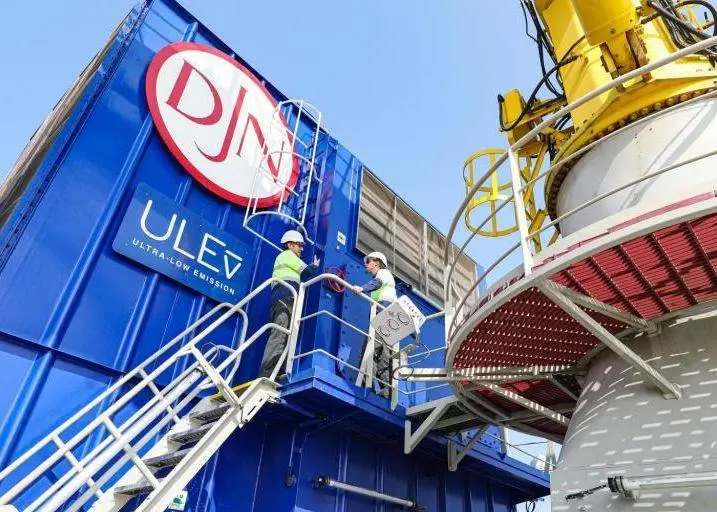
The Bureau Veritas ULEV notation can be assigned to ships that exceed existing MARPOL requirements for lowering pollutant emissions. The voluntary notation accounts for air quality, including hydrocarbons, carbon, NOx, and particulate matter, as well as particle numbers.
Michel Deruyck, head of energy at Jan De Nul Group, said: “Jan De Nul focuses on minimalizing the footprint of its maritime activities on ambient air quality and climate, and therefore designs its latest vessels fitted with a highly advanced exhaust gas filtering system by means of a Selective Catalytic Reduction (SCR) system and a Diesel Particulate Filter (DPF). This new notation demonstrates our commitment to a cleaner, greener shipping sector.”
Low-emissions design
The Sanderus, Ortelius, Tristáo da Cuhna, Afonso de Albuquerque and Diogo Cáo TSHDs are specifically designed for ultra-low emissions, including installation of a two-stage catalytic filter system.
As well as design solutions, Jan De Nul Group is adopting 100% renewable fuel, as a certified sustainable substitute for fossil fuel made from waste flows. Since the end of 2019, its first Trailing Suction Hopper Dredger in Zeebrugge has been operating on 100% biofuel. Jan De Nul Group is considering this switch for other dredging vessels.
First published in 2019, Bureau Veritas developed the ULEV notation by carefully adapting the European Commission’s Stage V policy for emissions reduction to the specific needs of sea-going vessels.
By Rebecca Jeffrey
Related Articles
 ACCESSORIES & EQUIPMENT
 MARINE CONSTRUCTION
 POWER & PROPULSION