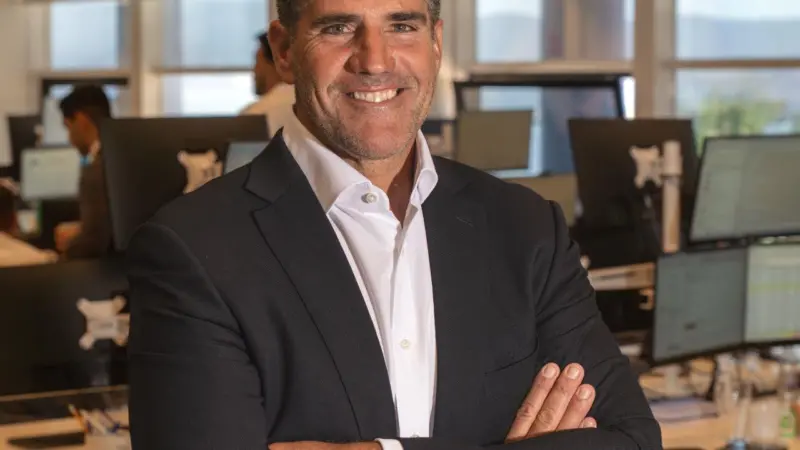

Marcel Roelofs: Chevalier Floatels
“In the beginning, installing permanent ‘walk-to-work’ access on a vessel was a very expensive gamble,” said Marcel Roelofs, CEO and founder of Chevalier Floatels
However, flush with funds from selling a hotel barge business, Roelofs was ready for a challenge. And that is exactly what he got.
When Ampelmann started to make the first of its gangways for the market, “they were all hired for a specific project … but that isn’t that smart,” he pointed out. There are costs associated with preparing the vessel and the hire clock is still ticking even if installation is delayed.
“So, I looked around for a smaller vessel that could be adapted for a permanent solution.” He explained the idea was to aim for manoeuvrability rather than to compete on scale. On finding not one but a pair of 61m support boats, he snapped them up and then kept DP Galyna and DP Gezina on the quay “while we took people over them and talked and talked about what they wanted”.
This process “went on so long that everyone started to think we were never going to actually do it”. But he said: “Although it was a costly business, it was going to be even more costly to get wrong.”
One of the ideas that struck Roelofs was the need to be flexible with the heading in fast moving wind and water: so, setting the access system on the centreline meant being able to connect from either side. However, plans were upset when calculations showed placing the gangway aft would limit workability. Having committed to getting the pair absolutely right there was really only one thing to do: lengthen the boats by 9m and position the gangways centrally. A bold step “this made the conversions a lot more expensive than originally envisioned” but it yielded increased deck and storage space.
Even so, being ‘first’ comes with inherent risks: “While Ampelmann knew how its gangways performed, we were putting them on a completely different kind of boat,” he explained. Summer operations were untroubled but winter saw some limitations: this just wasn’t good enough, he decided.
So, biting the bullet, Roelofs invested in another study and more upgrades including a fourth azimuth thruster to support DP operations. At the same time Ampelmann, using the company’s vessels as a test bed, came up with new ‘Hypermode’ software which allows for limited free float of the gangway, helping widen the weather window.
It worked: Roelofs is justifiably proud of Galyna’s record 50 connections in 24 hours – which he described as “unparalleled”. Further, the boats have now shown they can take difficult conditions in their stride: projects in the Irish Sea and on Dogger Bank presented “no problems” despite the fast, 2kt currents which have caused issues for far larger vessels.
Lastly, it’s worth noting DP Galyna and DP Gezina “created the Walk-to-Work spot market” explained Roelofs, simply by making gangway access vessels available for short term hire.
Another first.
By Stevie Knight