


Emergency dam installed with Dutch expertise
An emergency temporary dam has had to be built in the Netherlands’ city of Maastricht after a spillway dam on the River Meuse was damaged earlier this year.
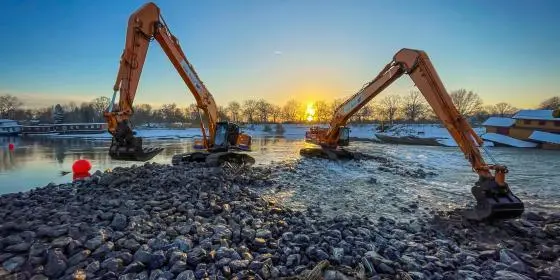
Part of the lining of the spillway had been loosened and washed away by the force of the water, and strong currents made it impossible to repair the dam within a short time scale.
The Public Works and Water Management Office (Rijkswaterstaat) commissioned contractor Mourik to organise the repairs, many of which were carried out by Van Oord.
“Due to the high water discharge and associated flow velocities, this was a complex operation,” said Van Oord. “After the hole in the spillway dam was caused, a first emergency dam was constructed within a week to reduce the strong current.
“To construct this first quarry stone emergency dam, Van Oord deployed crane vessel Leendert Sr and two excavators. To build the emergency dam from both banks, Rijkwaterstaat engaged the Ministry of Defence to build a ferry connection between the east and west banks of the River Meuse for moving equipment across.
“Simultaneously, Chinook helicopters flew back and forth with nets full of quarry stone to partially close the hole in the spillway dam.”
Dutch speciality
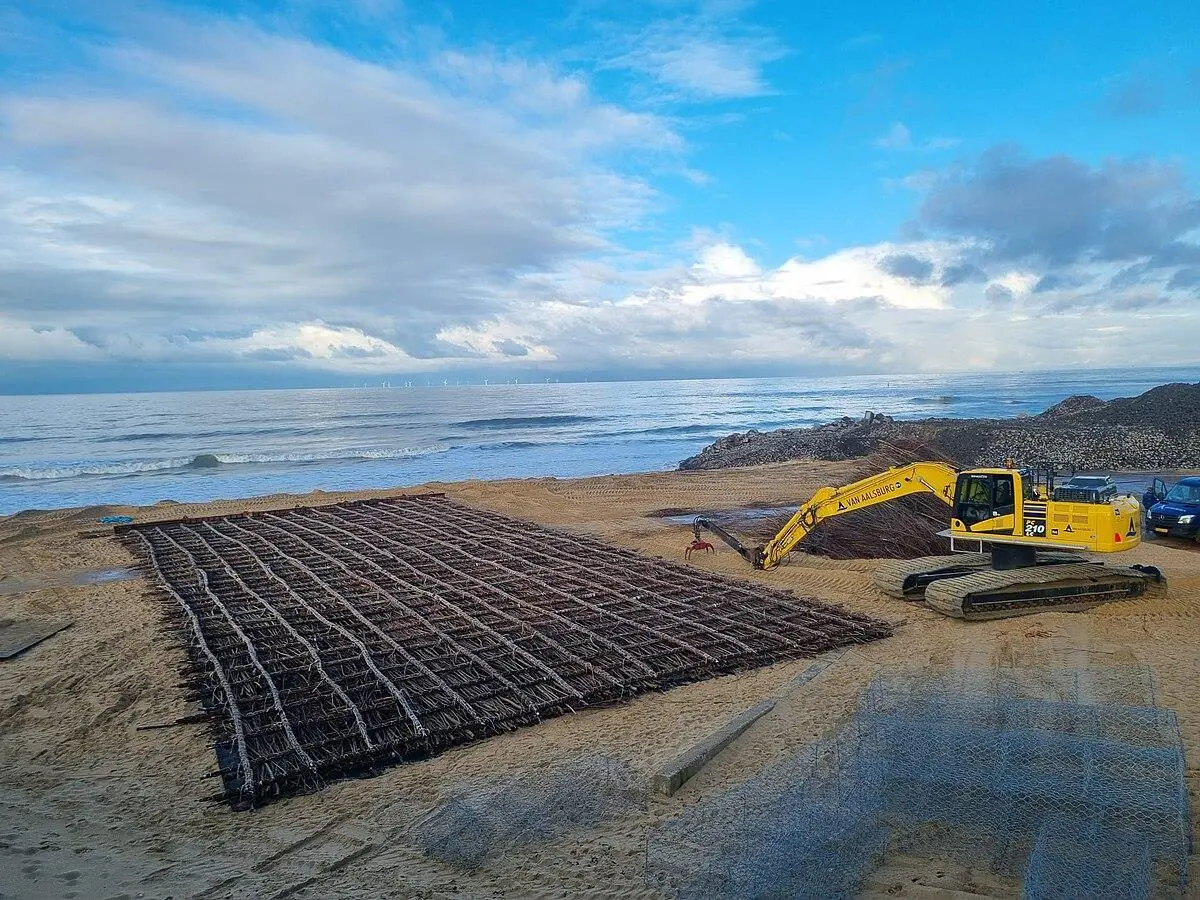
A second emergency dam has now been installed to secure the river water level with the use of fascine mattresses – the use of which is particularly common in the Netherlands.
These are essentially large woven mats made of brushwood or twigs, and are placed in rivers to strengthen banks and coastal structures such as groynes. They can also be used to protect river and sea beds from scour.
Because these mattresses are used so widely in the Netherlands, the materials required to make them are harvested in specially created plantations.
In the Meuse River, Van Oord towed them to where they were needed then weighted them down with rocks. More than 150,000 tonnes of quarry rock was installed to raise the emergency dam to the correct height and now the water is at a level that can allow permanent restoration of the spillway dam to be undertaken.
Related Articles
 OTHER NEWS
 OTHER NEWS
 MARINE CONSTRUCTION