






FEATURE: North Sea’s decommissioning boom
Permanent removal of ageing oil and gas infrastructure in the North Sea is emerging as one of the most complex engineering challenges facing the UK offshore sector, while also representing a multi-billion-pound industrial opportunity.

The report After the oil: Economic impacts from UK offshore decommissioning, by Dutch firm Redwater Insights, says decommissioning activity on the UK Continental Shelf (UKCS) could generate £25.6 billion (€30 billion) in spending over the next decade, but warns that delivery will depend heavily on whether the UK can mobilise sufficient engineering capability, infrastructure and supply chain capacity.
At the centre of this opportunity is a vast backlog of offshore assets requiring dismantling, including platforms, subsea systems and more than 500 wells already overdue for decommissioning.
Engineering challenge spans seabed to shore
Decommissioning offshore infrastructure involves highly specialised engineering processes, each requiring different technical capabilities.
At the subsea level, one of the most critical and technically demanding tasks is well plugging and abandonment (P&A). This involves sealing wells permanently to prevent leaks, often decades after installation, when structural integrity may have degraded. Delays increase cost and complexity as well deteriorating conditions.
Above the seabed, operators must carry out topside and substructure removal, often involving structures weighing tens of thousands of tonnes. These operations rely on a limited global fleet of ultra-heavy-lift vessels, capable of removing entire platforms in single lifts or, where that is not possible, through more complex sectional dismantling.
The report says the availability of such vessels is already a major bottleneck, particularly as demand rises globally from both oil and gas decommissioning and offshore wind installation.
Once offshore structures are removed, the engineering work shifts onshore. Ports must handle landing, dismantling, processing and recycling of materials, often at large scale. This requires heavy-duty quaysides, deep-water access, and extensive laydown areas.
Ports and yards face capacity gap
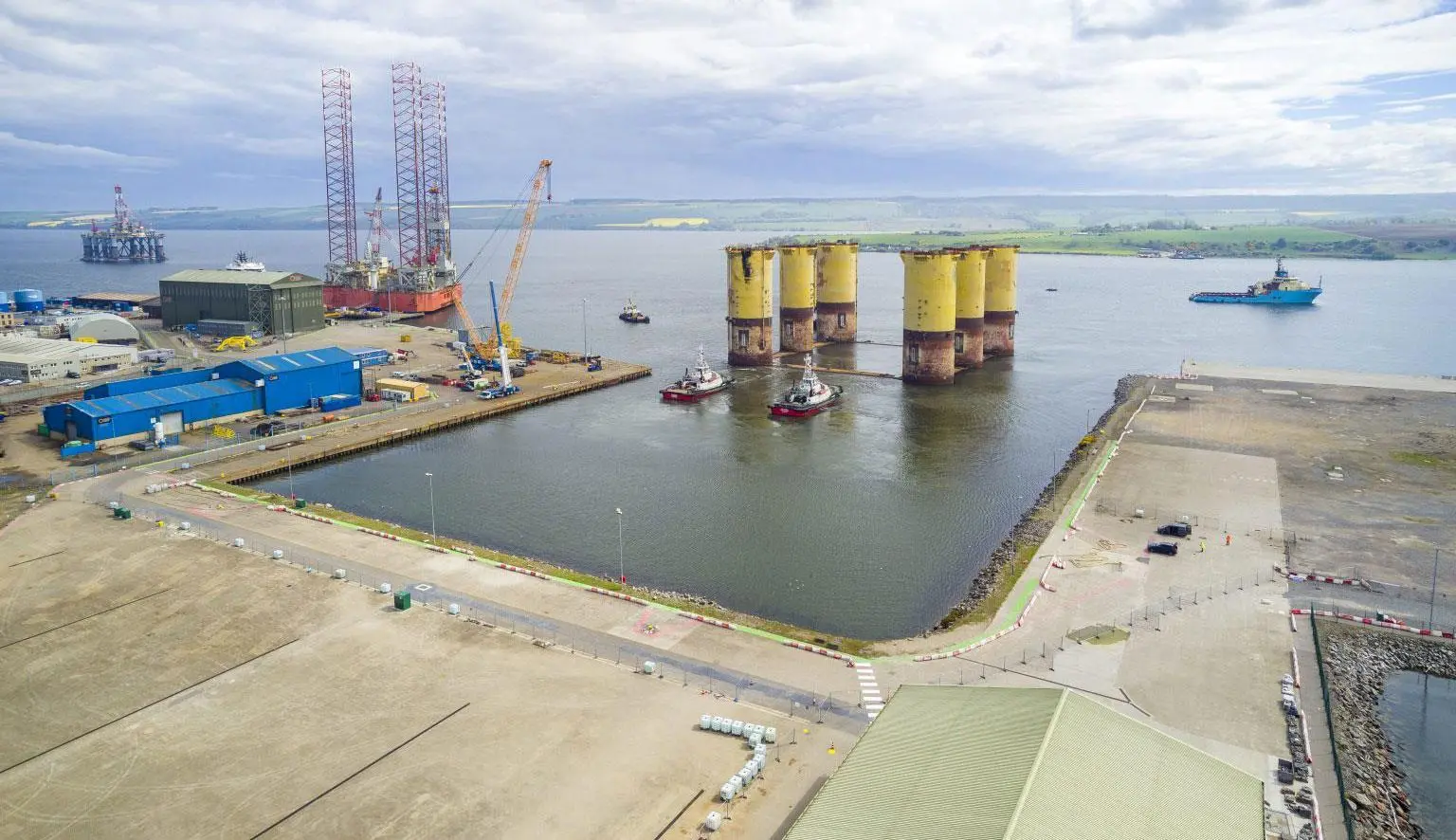
The UK’s ability to capture value from decommissioning will depend heavily on port infrastructure.
While UK ports are geographically well positioned, being closest to around 91% of installations, they face structural disadvantages compared to European competitors, says the report.
Facilities in Norway and Denmark, for example, are equipped with ultra-deep-water quays capable of receiving entire topsides in single lifts. By contrast, many UK ports rely on more complex and time-consuming methods involving barges and staged dismantling.
The report identifies a shortage of integrated decommissioning hubs in the UK – sites where dismantling, waste processing and recycling can be carried out in one location. This fragmentation increases logistics costs and reduces competitiveness.
Nevertheless, several UK regions are positioning themselves as engineering centres for decommissioning work. These include:
- Aberdeen, focused on project management, engineering and subsea recovery
- Teesside, with heavy industrial capacity and recycling facilities
- Tyneside and the North East, specialising in subsea technologies and advanced manufacturing
- East Anglia, supporting smaller infrastructure dismantling.
Supply chain bottlenecks, costs and complexity
Despite the scale of the opportunity, the report warns that engineering constraints could significantly limit activity. The shortage of heavy-lift vessels is one issue; a lack of skilled engineers and technicians another; and insufficient spending on port infrastructure a third.
These constraints are compounded by the ‘lumpiness’ of decommissioning demand, where projects are unevenly distributed over time. This creates uncertainty for contractors, making it difficult to justify long-term investment in equipment and workforce capacity.
The report suggests that without intervention, decommissioning activity could fall 30–70% below forecast levels over the next decade.
Delays in decommissioning not only reduce economic output but also increase engineering difficulty.
As infrastructure ages, wells degrade, increasing the cost and risk of sealing them. Sometimes offshore structures need repair before they can be removed, and what vessels will be needed before dismantling is an unknown often until the project begins.
The report estimates that even modest delays can drive continuous cost escalation, with additional engineering work required at every stage of the process.
As experienced offshore workers retire or leave the sector, knowledge of specific assets is lost, increasing uncertainty and requiring additional engineering analysis.
Economic opportunity across engineering disciplines
Despite these challenges, the scale of the engineering work creates significant commercial opportunities.
The report estimates that decommissioning could support:

- 11,300 direct engineering and technical jobs annually
- An additional 13,500 supply chain roles
- Around £470 million in research and development investment.
Much of this activity is concentrated in engineering-intensive fields, including:
- Subsea robotics and remote operations
- Heavy lifting and marine logistics
- Structural dismantling and cutting technologies
- Materials handling and recycling.
Innovation is expected to play a key role, particularly in areas such as robotic cutting systems and automated dismantling processes, where efficiency gains can reduce costs and improve safety.
The engineering capabilities developed through decommissioning are also expected to have wider applications.
The report highlights links to offshore wind installation and maintenance, carbon capture and storage (CCS), particularly well integrity engineering, and hydrogen infrastructure and offshore energy systems.
This creates an opportunity for the UK to build long-term industrial capacity, using decommissioning as a bridge between oil and gas and emerging low-carbon sectors.
Overseas competition
Although the UK is well placed geographically, capturing the full economic value of decommissioning is not guaranteed.
The report estimates that around two-thirds of decommissioning value is currently retained within the UK supply chain, with the remainder flowing to international contractors.

Competition is particularly strong in areas such as heavy lifting, where vessel ownership is concentrated among a small number of international operators.
There are also cost pressures from overseas yards, where lower labour costs and different regulatory standards can make projects more competitive.
The report concludes that engineering capability alone will not determine the success of the decommissioning sector: policy decisions will play a critical role in shaping both activity levels and investment flows.
Without stronger regulatory enforcement and coordinated planning, operators may continue to delay projects, reducing near-term engineering demand while increasing long-term costs.
Conversely, the report suggests, a more proactive approach – combining infrastructure investment, supply chain coordination and stricter timelines – could unlock both engineering activity and economic value.
Decommissioning activity is expected to peak over the next decade before declining in the 2040s.
However, the engineering capabilities developed during this period could have lasting value, positioning UK companies to compete in global markets for offshore infrastructure removal and related services.
For now, the challenge is clear: turning a backlog of ageing offshore assets into a coordinated programme of engineering work—before delays erode both the economic opportunity and the UK’s industrial capacity to deliver it.
Related Articles
 MARINE CONSTRUCTION
 MARINE CONSTRUCTION
 MARINE CONSTRUCTION