



Historic Spanish beach restoration completed
Van Oord has just restored the beaches of Valencia along seven kilometres of coastline, the largest project of its kind in Spain’s history.
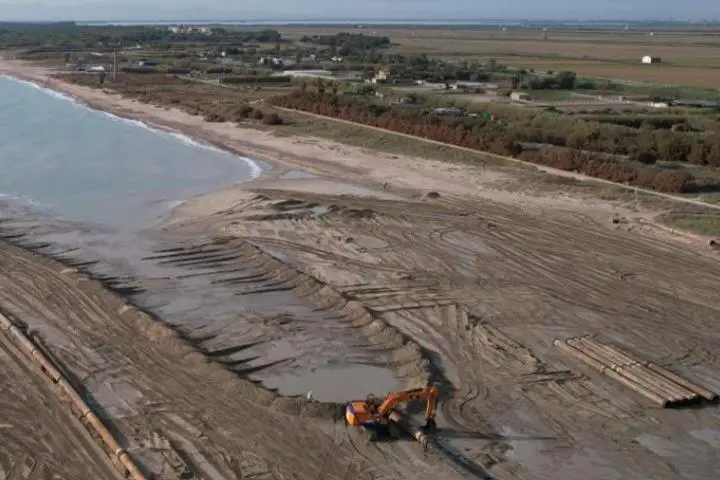
Since 1965 the beaches to the south of the Valencia have been slowly eroding, and to restore them to their former glory, the Spanish government contracted the joint venture of Dravo SA, a Van Oord company, and Rover Maritime.
They were enllisted to restore seven kilometres of coastline, widening the beaches to 150 metres, and extend two breakwaters to help reduce erosion.
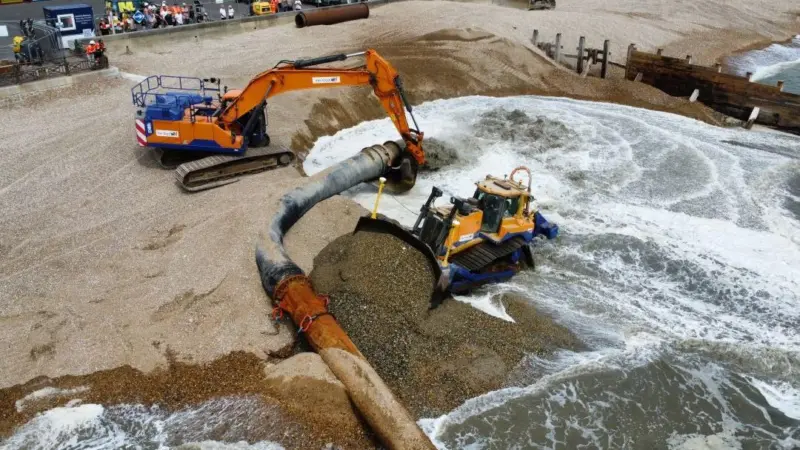
Using a combination of floating and submerged pipelines over a distance of almost two kilometres, Van Oord’s largest trailing suction hopper dredger, HAM 318, pumped the dredged material onto shore.
New dunes were built up to keep a freshwater lake close to shore separate from the Mediterranean Sea. Sand, sand collectors – a local cordgrass – and other vegetation were put in squares over 75 kilometres to trap sand instead of it blowing away.
“Van Oord’s subsidiary Dravo S.A. looks back on the Valencia project with pride,” said Jesus Martin, managing director Dravo SA. “Thanks to the expertise and commitment of the project team, the large-scale project has been successfully completed within budget and within the agreed execution period. The new beaches not only serve as coastal protection for Valencia, they also contribute to the restoration of the ecology within the area.”
In February, Van Oord began a land reclamation project in Estonia, where a new quay is needed to speed up the development of the offshore wind sector in the region.
About 830,000 cubic metres of sand will be dredged from an area 125 kilometres away from Paldiski South Harbour to create 10 hectares of land for the new quay, Van Oord says, which is scheduled for completion in 2025.
“Due to its favourable location, the construction of the new quay will create the conditions for the Port Authority, Port of Tallinn, to become an important partner in the construction and maintenance of offshore wind farms in the Baltic Sea region,” Van Oord says.
Related Articles
 MARINE CONSTRUCTION
 MARINE CONSTRUCTION
 MARINE CONSTRUCTION