

Major Dutch canal works completed by ‘Destiny’
After almost a year and a half, extensive engineering works are almost completed to upgrade and widen the 63km Twente Canals in the Netherlands.
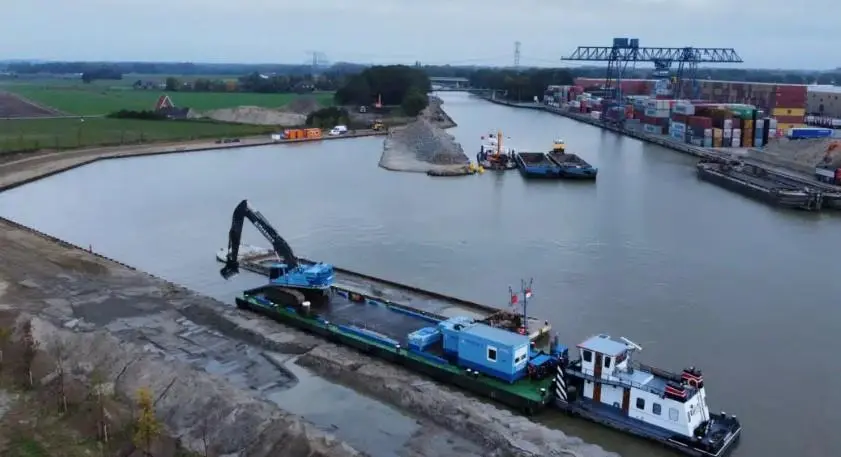
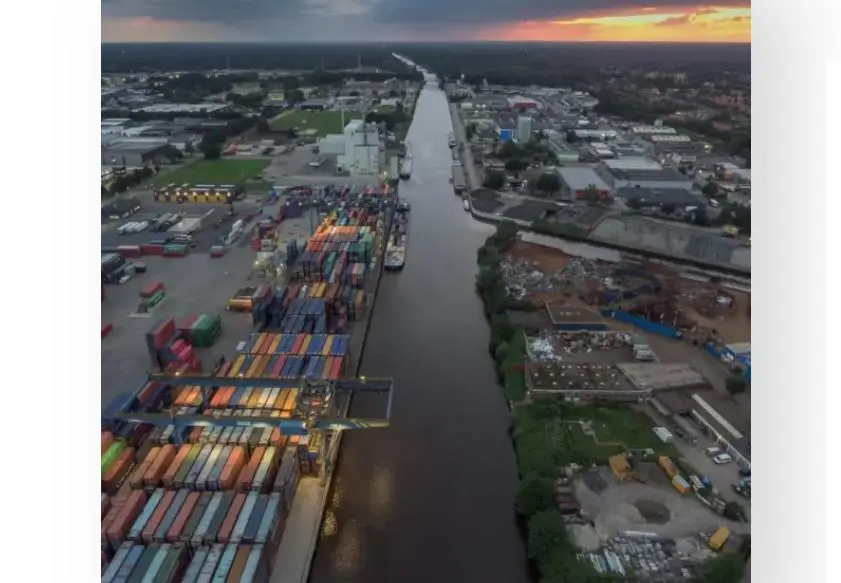
The canals – a single main waterway with branches – are an important logistical link for the inland ports of Almelo, Hengelo and Enschede, but they were too narrow and shallow for larger vessels to navigate them.
Running the project, the Rijkswaterstaat (Department of Waterways and Public Works) first had to carry out an architectural survey of everything within 70 metres of the canal to ascertain how much would be affected by dredging and embankment works in terms of vibration and groundwater level.
Then 35 kilometres of old steel sheet piling along the banks had to be replaced, which meant first placing 20,000 tonnes of new steel in front of it to prevent water seepage as much as possible.
After dredging the canal bed, a sand-bentonite mixture was applied to the bed and sides to restore the sealing effect of the original soil in areas most sensitive to seepage, to avoid damage to adjacent houses, farmland and woodland.
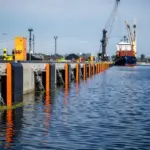
A new swing basin opposite the XL business park at Almelo was engineered to allow larger vessels to turn around without having to go through to the port, and the municipal quay at Delden was moved 12 metres inland and extended by 30 metres so that ships can pass each other more easily.
Marine contractors and a special workboat
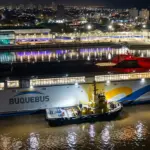
Marine contractors Van Oord, Hakkers and Beens were hired for the job, along with Destiny, a multi-purpose workboat owned by Dutch firm AGB Bouw en AGB Maritiem, which was co-founded by brothers Karel, Tinus, DIck and Johan Aangeenbrug.
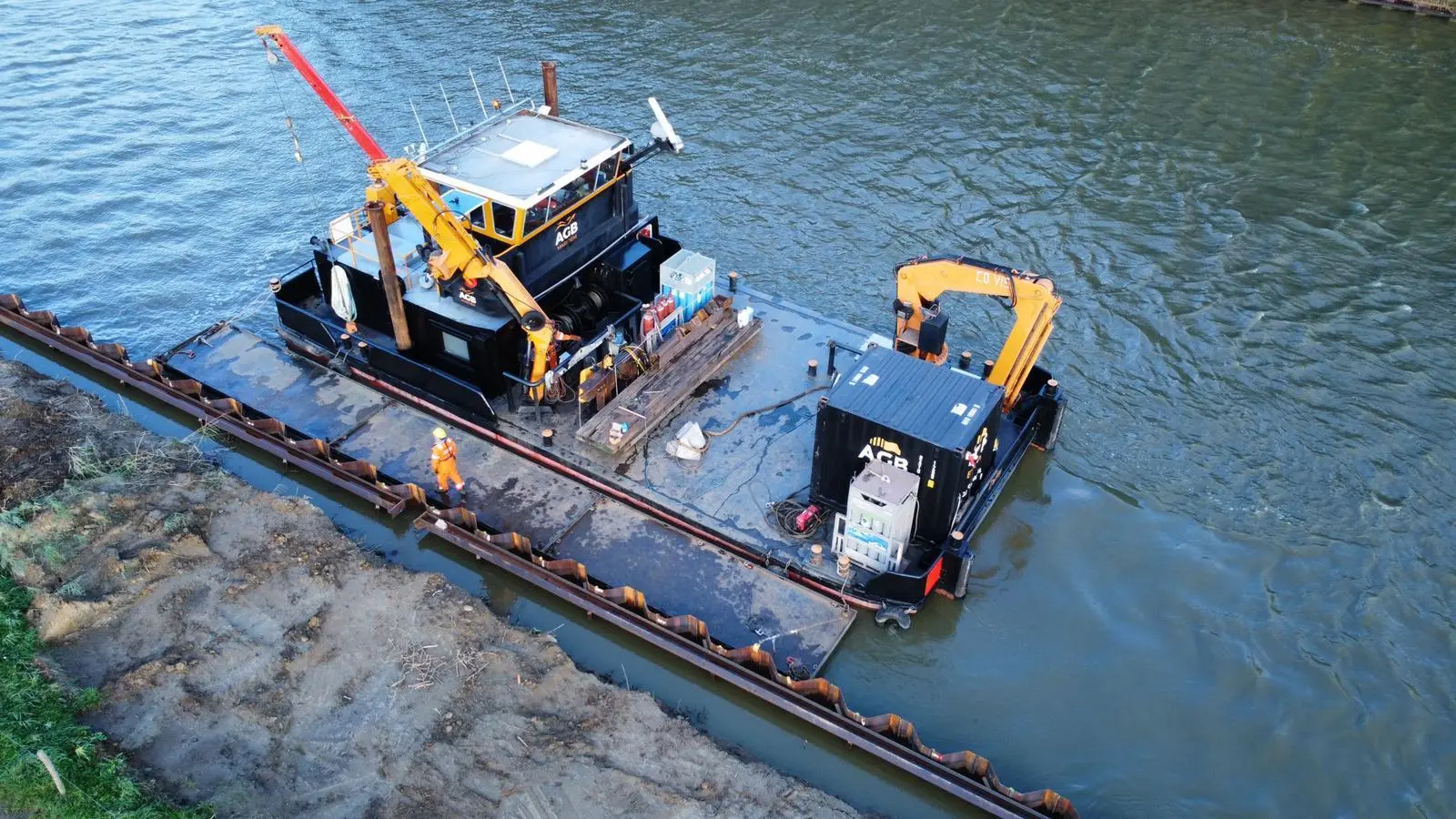
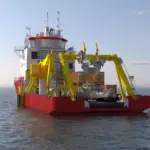
Destiny, according to Aangeenbrug, was converted from a pusher tug with a hydraulically liftable wheelhouse into a multi-purpose ‘multicat’ vessel while retaining her push bow.
She has a 60-tonne crane for heavy-duty work and a 26-tonne crane for auxiliary jobs, but at 18.8m x 8.2m is still very compact – yet has ’everything on board to get the job done’, such as a moon pool, two 80-tonne hydraulic winches and two spud poles.
“It is a wonderful boat and suitable for many types of work,” says Aangeenbrug. “For example, customers deploy us for diving support, quay or bottom inspections and repairs, lifting work and wet contracting. Recently, we even salvaged a sunken yacht!”
Least disruption, most safety
Vital to the project’s value was disrupting working shipping as little as possible.
“A little inconvenience is unavoidable,” said Marten Klos, nautical advisor in Rijkswaterstaat’s Traffic and Water Management department. “But the extent of the inconvenience can be controlled.
“We have divided the inconvenience into various categories. It has been agreed with the contractor that ‘nuisance class 2’ is acceptable during this work, which means that shipping can be delayed by the work for a maximum of half an hour. If it becomes a higher nuisance class, we will first consult with Rijkswaterstaat. We will communicate with the shipping industry well in advance. This is how we ensure safe and smooth passage, also during the work.”
Safety was also paramount, not least because of the 300 suspected sites of WWII unexploded ordnance, which divers were employed to seek out. (No reports have been made of anything found.)
Signposting was mandated, with coloured buoys and signs indicating where the work was taking place, with supervisors always present to check on shipping when diving activities were under way.
At some junctions, escort vessels were deployed to help vessels navigate where they were likely to cross other vessels.
And wildlife was also on the agenda – aquatic plants and animals were considered with new turning basins at Deldenerbroek and Bornerbroek, which have been landscaped to create more space for them.
The Twente Canals were opened in 1936 to improve transport and communications with the industrial east. Now upgraded, logistics look likely to improve further still.
The work has been funded by the European Commission’s programme ‘Connecting Europe Facility’ (CEF), which focuses on developing ‘a high-performing, sustainable and efficient European network in the field of transport and passenger transport’.
Related Articles
 MARINE CONSTRUCTION
 MARINE CONSTRUCTION
 MARINE CONSTRUCTION