![MaritimeJournal[Seawork]](https://www.maritimejournal.com/wp-content/uploads/2026/09/MaritimeJournalSeawork.svg)



Norway overturns own decision to scrap world’s first ship tunnel
The Norwegian government’s proposal to abandon plans for the world’s first ship tunnel has been overturned by its own parliament, the agency at the heart of the project has said.
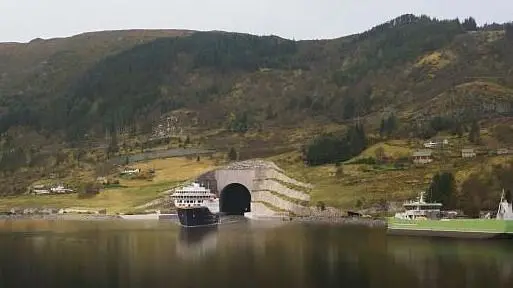
Media reports said the government had proposed on Friday 10th October that the Stad Ship tunnel project should be scrapped, blaming higher than expected costs, but just four days later the proposal was overruled by parliament and the tender process was allowed to go ahead.
Frank Willy Djucvik, managing director of the Måløy Vekst, the communications office for the project, told Maritime Journal that the Norwegian Coastal Administration (Kystverket) would continue negotiations with the three bidders who have submitted offers for the project.
“This was a very important decision, as the government’s proposal was not based on accurate information regarding the project’s costs,” he said.
The idea for the Stad Ship tunnel was conceived around 150 years ago. It suggested a tunnel be built through the Stad peninsula so that ships could avoid the extremely dangerous waters around it.
So dangerous are the waters around the peninsula that smaller boats were regularly dragged some 4.5km over the 240m high mountains of the peninsula with the help of timber logs, although this was of course impossible for larger ships.
In 1594, 15 sinkings resulted in 300-600 drownings in the waters.
The tunnel, if it goes ahead, will be blasted through the narrowest point of the peninsula for 1.7 kilometres, first by drilling horizontally and then by using explosives to dig out the roof section of the tunnel. The tunnel will be about 12 metres below sea level, with rock dams holding back the water. Materials blasted from the mountain will be used to build piers and comercial areas around entrances.
Tunnel economics
The government’s proposal to halt the project was because of an almost doubling of the costs, according to minister of Fisheries and Oceans Marianne Eivertsen Næss.
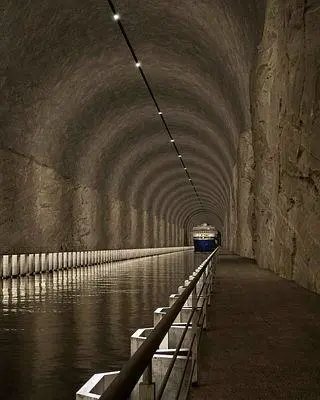
“The Stad Ship Tunnel is a large project that has been worked on for many years. However, the bids that have come in are several billion kroner above the cost limit adopted by the Storting (parliament). The cost increases mean that construction can no longer be justified,” she said.
However MPs argued that the tunnel would be crucial for economic development as well as safety, was a commitment to coastal regions and showed a lack of support for western Norway.
Djucvik said the Coastal Administration had so far spent NOK 290 million (€25 million) on design, preparatory work, land acquisition and the tendering process. The three municipalities surrounding the tunnel have spent another NOK 100 million (€8.5 million) on preparatory work and ‘zoning’, “while private companies have invested several tens of millions on zoning and preparations to receive excavation material from the project”.
A decision to go ahead is certainly not set in stone, and the government will expect to see savings before it can be agreed.
“It is currently estimated that Parliament will receive the case for consideration after Easter next year, to make a final decision on the realisation of the tunnel,” said Djucvik. ”This decision will be based on both the final cost estimates and the socio-economic analyses of the project’s benefits in terms of safety, economy, and regional development.
“There is great optimism that a majority in parliament will vote in favour of realising the project,” he said. ”It is the largest and most important coastal project in Norway, aimed at ensuring safe and predictable maritime transport and contributing to significant value creation for industry and coastal communities in the future.”
“The companies will not go further to get the final price before a decision is taken next summer as to whether the tunnel will be built,” said a spokesman for the Norwegian Coastguard.
Related Articles
 INDUSTRY NEWS
 MARINE CIVILS
 MARINE CIVILS