![MaritimeJournal[Seawork]](https://www.maritimejournal.com/wp-content/uploads/2026/09/MaritimeJournalSeawork.svg)






Skandia Gateway Project delayed by dredging costs
Works to turn Sweden’s largest port into one that can accept the world’s largest ships have been stalled because of dredging costs.
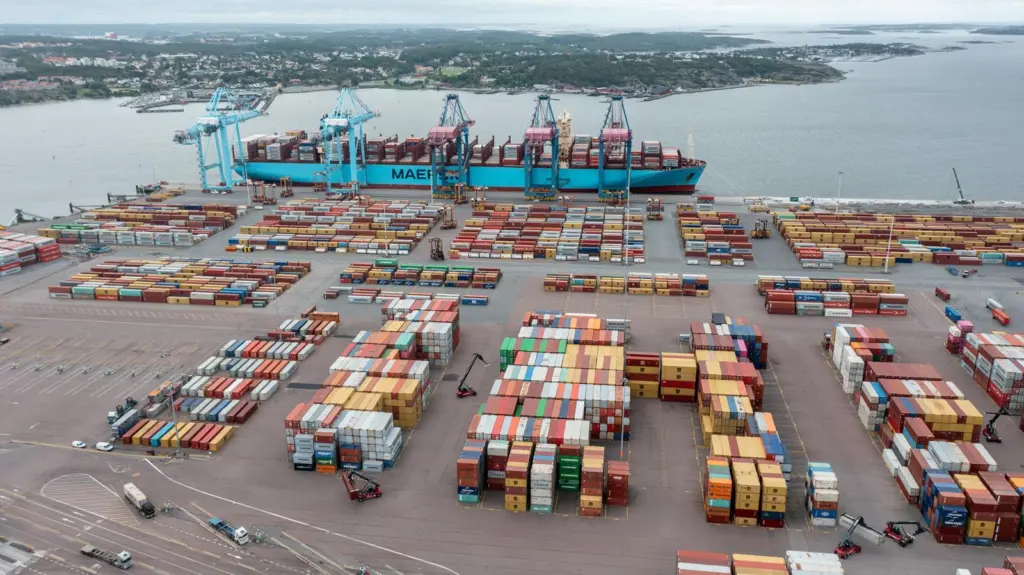
The SEK2.8 billion (€256 million) Skandia Gateway Project, a national infrastructure project being carried out by Gothenburg Port Authority, the Swedish Maritime Administration and the Swedish Transport Administration, was first mooted in 2017.
As the world’s container vessels grow in size the port is having problems accommodating them, and the largest ships can only enter the port half loaded. Dredging is required to deepen the northern Torshamnsleden fairway by up to 18 metres, removing 11 million m3 of material from the seabed.
Quays also have to be reinforced, and the Skansiahamnen basin dredged by about 7 metres.
Of the budget set in 2017, SEK1.25 billion (€114 million) was earmarked for quay reinforcements and SEK1.6 billion (€147 million) for the fairway deepening. None of the parties involved has revealed by how much the tenders received had exceeded the budget for dredging.
“We have decided to cancel the procurement as the bids received are significantly higher than the available budget,” said Joel Smith, director of Infrastructure at the Swedish Maritime Administration. “Skandia Gateway is an important and necessary investment to secure competitive transport solutions for Swedish industry, and we look forward to implementing the project.”
The authorities will now split the dredging contract into two parts: the Port of Gothenburg will arrange the near-quay dredging, which is about 5% of the total volume, and aim to begin the work next year for competion by May 2027.
The Swedish Maritime Administration will aim to begin the remaining fairway dredging in 2027.
”Together with the Port of Gothenburg and in dialogue with contractors, we are now taking measures to restart a new procurement process as soon as possible,” said Smith. “Our ambition remains to have the new fairway and quay operational in 2028.”
Gothenburg is Scandinavia’s largest port, handling around 20% of Swedish trade and more than half of all container traffic.
Related Articles
 INDUSTRY NEWS
 MARINE CIVILS
 MARINE CIVILS