




Vital flood defences to protect Welsh coast
A total of 760 pre-cast concrete panels are being installed to protect part of the Welsh coastline in a project that is using satellite and drone technology to fit them within 1mm of accuracy.
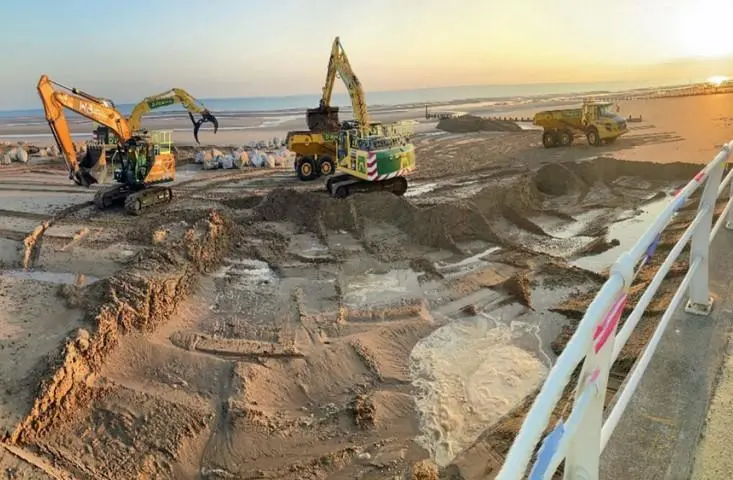
Over 12 months, engineers with Balfour Beatty will fit the panels, which are four metres wide and weigh 13 tons each, and will eventually line the promenade at Rhyl for more than two kilometres.
Denbighshire County Council, under whose authority the works fall, says current defence structures are deteriorating and could fail within the next 10 to 15 years.
Hundreds of residential and commercial properties could be at risk, it says, and the new defences will protect them for at least 100 years.
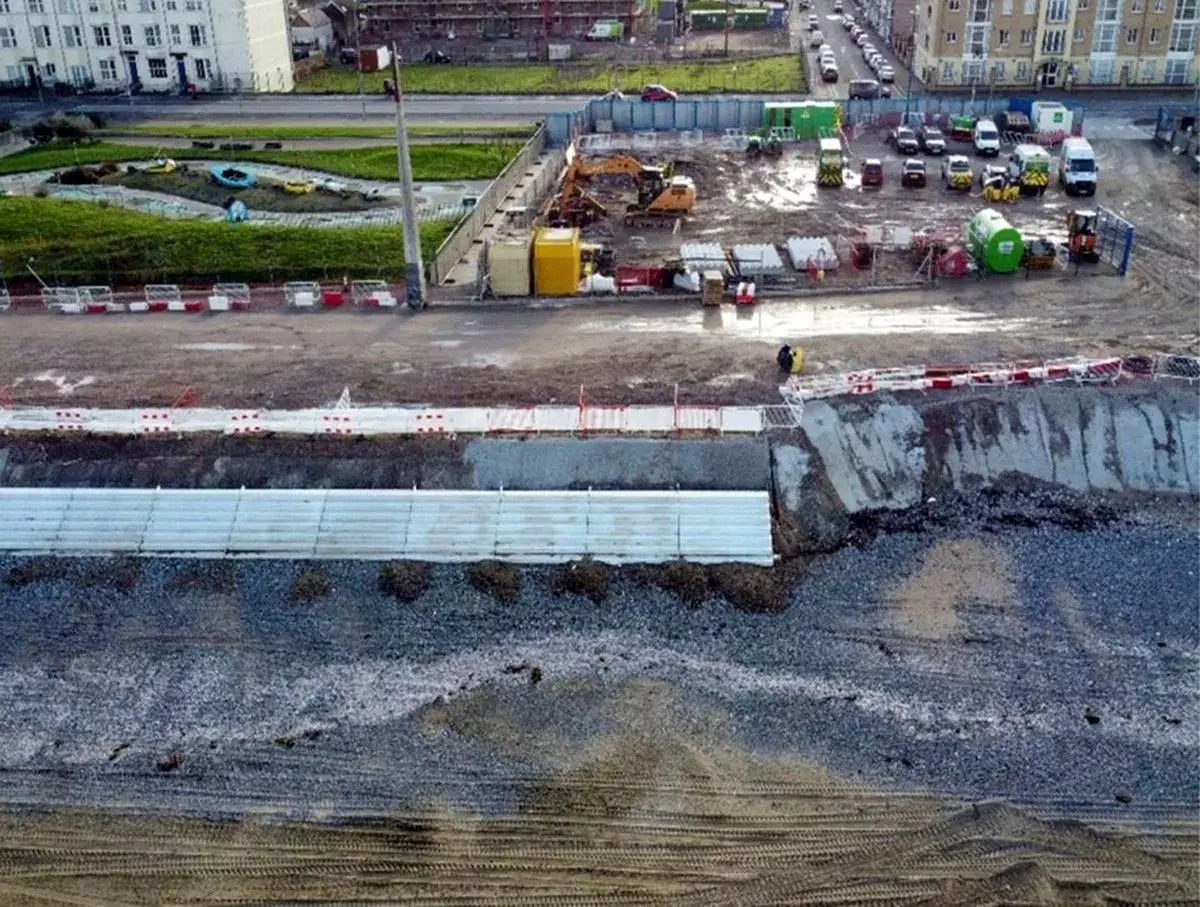
The Central Rhyl Coastal Defences Scheme will see the new revetments installed over the next 12 months, with rock scour protection already installed and buried under the beach to protect foundations of existing and new defences.
Contractor Balfour Beatty has been instrumental in carrying out the extensive works.
“There were existing sea defences in place which were built at various times between 1900-1920,” says Chris Hull, project manager at Balfour Beatty. “They no longer meet current standards and were built at a time when rising sea levels and climate change were not a consideration.
“Coastal defence projects have particular challenges – aside from working around the tides in all weather conditions and seasons, these works also require closing parts of a popular beach in a seaside resort. High levels of accuracy were demanded – particularly in placing the 760 pre-cast concrete panels for the revetment in the Western Section. They are precisely cast with a high-quality finish so have to fit together perfectly like a jigsaw.
“Also, when casting large quantities of concrete as the foundation for the revetment, to the right accuracy and quality, we need to ensure that there’s enough time for it to set sufficiently before the tide comes in over it.”
Future fears
According to the organisation Climate Central, which describes itself as ‘an independent group of scientists and communicators who research and report the facts about our changing climate and how it affects people’s lives’, Rhyl and its surrounding area will be under water by 2030.
The Rhyl defences, however, are designed to withstand any event that has just a 0.5% chance of happening per year, says Hull.
“This is also known as a ‘one in 200 years’ event,” he says. “A Multi-Variate Analysis was completed, to simulate a 10,000-year dataset of possible storms. In total more than 300,000 different events were considered, where each event corresponds to a different combination of sea water level, wave height, wave period, and wave direction.
“The “1 in 200 years” water level (with 100 years’ sea-level rise) is predicted to be around 2.5m higher than the typical spring high tide today. Some of the offshore wave conditions used in the analysis have a significant wave height of over 7m – but the highest waves would not be expected to occur at the same time as the most extreme sea levels.”
Balfour Beatty used a Vacuum Lifter to lift the concrete panels in place.
“It’s a great piece of machinery for us as it means there’s no need for any bespoke lifting points and the work involved with those,” says Hull. “It also means a better finish on the end result.
“We use GPS by way of machine control to do digs and fills to affirm line and level control without the need for engineering setting out.”
Hull says the work is progressing on time with a scheduled completion date of autumn 2025, after which regular beach and defence monitoring will continue to keep Rhyl and its inhabitants dry.
Related Articles
 OTHER NEWS
 MARINE CONSTRUCTION
 MARINE CONSTRUCTION