



Scientists study seal teeth to analyse climate change
Scientists in the UK and Norway have analysed teeth from Arctic harp seals which shows changes in their ocean food since the 1950s.
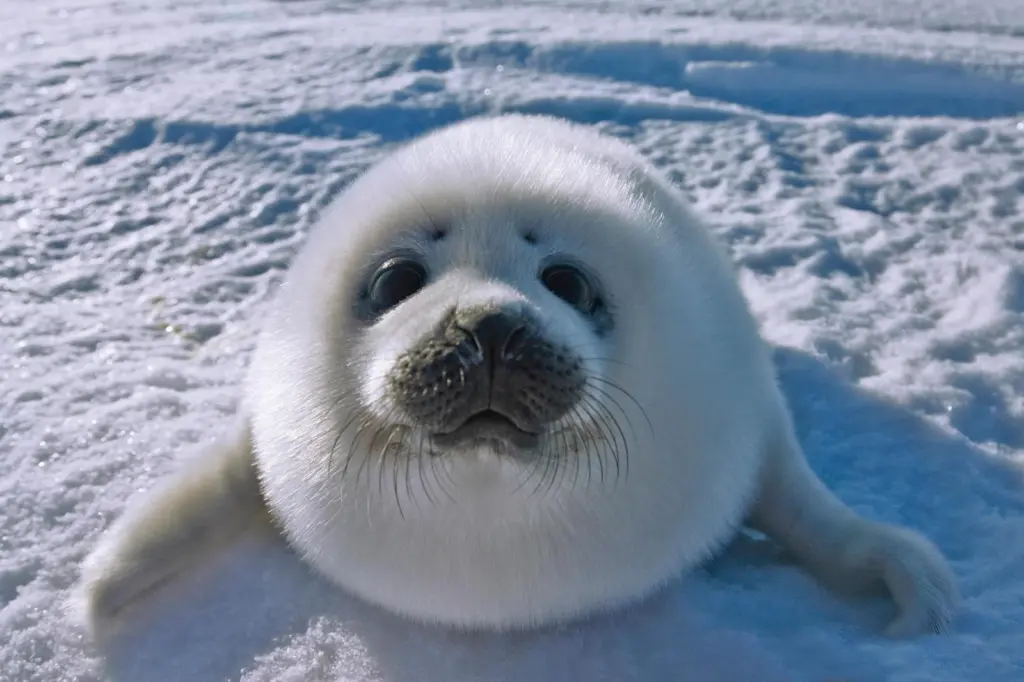
Researchers at the Universities of Liverpool and St Andrews, the UK National Oceanography Centre and the Institute of Marine Research in Norway have found that food webs in the Barents Sea, a marginal sea in the Arctic Ocean off the northern coasts of Norway and Russia, have been affected by changing climate over the past 70 years.
They say that seal teeth are like tree rings, with annual growth layers of dentine being deposited and leaving a biological record of age.
“Combining unique 60-year records from compound specific δ15N (a measure of the two stable isotopes of nitrogen) biomarkers on harp seal teeth alongside state-of-the-art ocean modelling, we observed a significant decline in the δ15N values at the base of the Barents Sea food web from 1951 to 2012,” the Multi-decadal environmental change in the Barents Sea recorded by seal teeth paper says.
“This strong and persistent decadal trend emerges due to the combination of anthropogenic atmospheric nitrogen deposition in the Atlantic, increased northward transport of Atlantic water through Arctic gateways and local feedbacks from increasing Arctic primary production.
“Our results suggest that the Arctic ecosystem has been responding to anthropogenically induced local and remote drivers, linked to changing ocean biology, chemistry and physics, for at least 60 years. Accounting for these trends in δ15N values at the base of the food web is essential to accurately detect ecosystem restructuring in this rapidly changing environment.”
The paper says warming and changes in ocean circulation affect nutrient supply and thus the base of Arctic marine ecosystems, with cascading effects on the entire food web through bottom-up control.
The paper was published in the journal Global Change Biology. It was led by Dr Camille de la Vega and Dr Pearse Buchanan, post-doctoral researchers on the NERC (Natural Environment Research Council)-funded ARISE project, a five-year research project led by Professor Claire Mahaffey from the Department of Earth, Ocean and Ecological Sciences.
Related Articles
 SUBSEA SERVICES
 ENVIRONMENT
 OCEAN SCIENCES