![MaritimeJournal[Seawork]](https://www.maritimejournal.com/wp-content/uploads/2026/09/MaritimeJournalSeawork.svg)




Automotive battery technology meets marine market
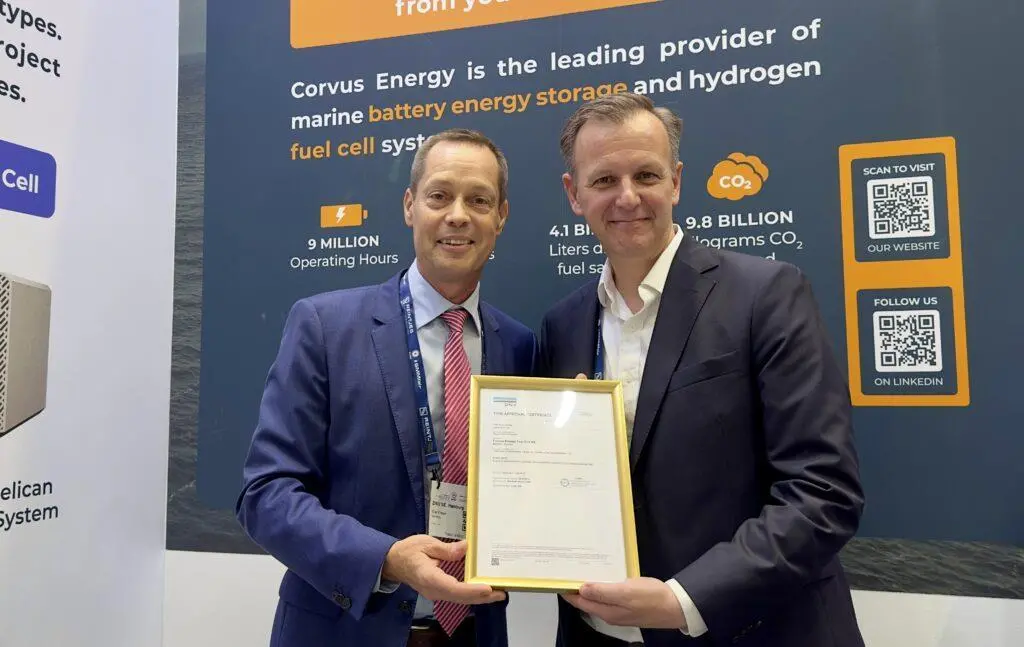
Battery and hydrogen fuel cell specialist Corvus Energy has been awarded DNV Type Approval for its Pelican Fuel Cell System, which will see vehicle manufacturer Toyota’s fuel cell technology used to enhance the provision of battery electric vessels for the marine market.
The automotive industry is making rapid advances with development of electric vehicles and the potential environmental and efficiency wins has naturally not gone unnoticed in the world of shipping. Battery-electric technology in the form of all-electric and hybrid is now a regular feature with new ships of all sizes, so a sharing of automotive industry knowledge with the marine sector can be seen as a natural development.
The Corvus Pelican Fuel Cell System was developed through the three-year H2NOR project and claims to be the first fuel cell system designed to be inherently gas-safe, ‘making it the safest fuel cell system in the market’, according to Corvus.
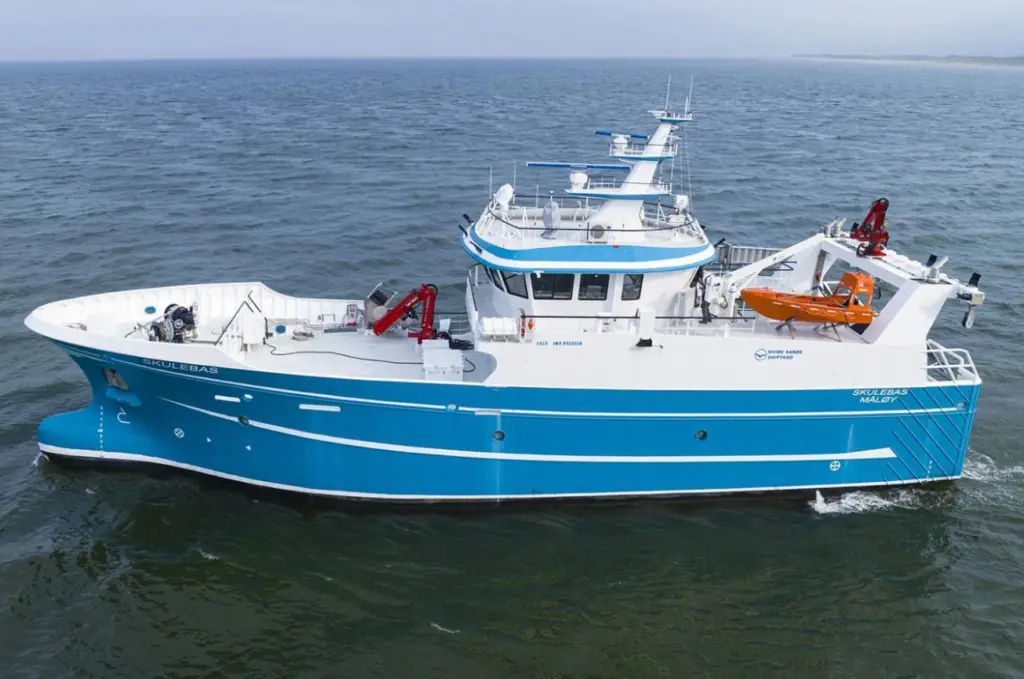
Positive progress is reported with the first installation ready for the fishing and training vessel Skulebas, owned by Vestland County and operated by Måløy Upper Secondary School in Norway. The 35m long vessel already has a 1MWh battery system and by adding the Pelican Fuel Cell System and hydrogen storage, Skulebas will be able to operate for four days with zero emissions, says Corvus.
Net zero shipping
Despite technology improvements with battery electric vessels, Corvus admits most cannot achieve zero-emission operations for extended periods using batteries alone.
For vessels on longer routes and those unable to charge often enough, clean fuel and fuel cells need to be added to enable extended zero-emission capabilities. Receiving classification society DNV’s type approval ‘confirms the system meets the most stringent performance and safety standards required by the maritime industry’.
The Corvus system employs the building block of Toyota’s PEM (Proton Exchange Membrane) fuel cell module, proven in 30,000 vehicles worldwide with Thiebault Paquet, vice president of Toyota Hydrogen Factory Europe, saying: “DNV Type Approval demonstrates that Toyota fuel cell technology is transferable to the marine sector and is a viable solution to support maritime decarbonisation efforts.”
The Pelican system is described as ‘special’ because it uses nitrogen for inerting the fuel space and is the first fuel cell system to use this technology, bringing it “to a very preferred safety level”.
“This is a milestone and we look forward to the first ship project,” said Olaf Drews, head of engines and pressurised equipment maritime.
In addition, to optimise power distribution between the fuel cell and energy storage systems, Corvus is developing a real-time advisory system for the shipowner called Corvus CoPilot, a digital solution designed to increase energy efficiency, enhance performance and extend system lifetime. It includes remote performance monitoring, troubleshooting and state-of-health testing.
Strong collaboration
Corvus CEO Fredrik Witte is clear on the success factors for the project.
“Toyota’s unsurpassed knowledge in developing high-quality and efficient fuel cells, in addition to the strong collaboration and high level of maritime experience among the partners in this development project, has been key,” he said.
“This is a milestone for net-zero shipping, we now have a high-quality range extender to add to our existing energy storage system portfolio with the scalability and the safety needed to be a real driver in the future of marine decarbonisation.”
Formed in 2009, Corvus Energy believes the combination of clean fuel and fuel cells together with batteries is the solution to reach the goal of zero emissions by 2050 for the marine industry, the Nesttun, Norway-based company having built a global presence with offices in Europe, Canada, the US, Singapore, Japan and Republic of Korea.
Marine energy storage systems are the dominant feature in its product list, tailored for specific vessel requirements with the latest fuel cell systems now added to its portfolio of products.
Its reference list covers virtually every type of vessel from tugs, workboats and fishing vessels through to merchant vessels including cruise ships and ferries, along with offshore wind and offshore oil and gas vessels.
Its activities also extend to the shoreside element of the world of maritime, with batteries powering rubber-tyred gantry cranes in the US and China.
Related Articles
 FEATURES & VIDEOS
 ENVIRONMENT
 OTHER NEWS