![MaritimeJournal[Seawork]](https://www.maritimejournal.com/wp-content/uploads/2026/09/MaritimeJournalSeawork.svg)


Energy island hits stumbling blocks as first caissons installed
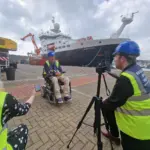
Two massive concrete caissons have been installed in the Belgian North Sea as initial building blocks for the world’s first energy island.
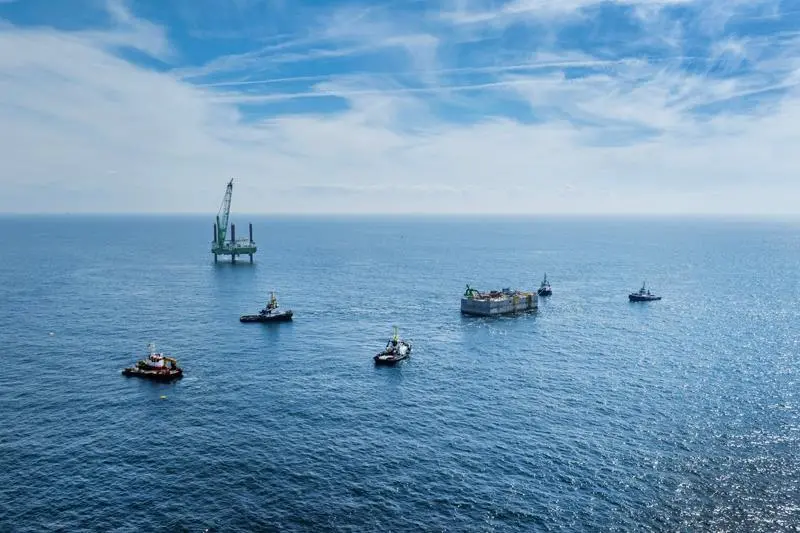
The work has gone ahead despite unresolved issues with rising HVDC infrastructure prices that are likely to cause at least three years’ delay.
The blocks were transported by sea even though developers have admitted there was no sign of resolution to the issues that caused the delay.
In total there will be 23 caissons sunk 45km off Ostend, on the Belgian coast, each weighing 22,000 tons and measuring 58 metres by 28 metres. They will form the outline of the island, eventually to be filled with sand. Some of the caissons are higher than others if they also are built with a storm wall.
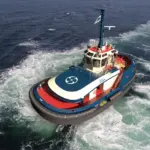
After being built in Vlissingen, four tugs are needed to tow each one via the Western Scheldt and North Sea to the site, about 53 nautical miles away.
Once they arrive at the site, the caissons are connected to pre-installed anchors and positioned above a so-called foundation zone. Each is lowered with incredible precision, using advanced survey techniques, continuous monitoring and precise tidal measurements. Once low enough, the caisson fills with water, which gives it stability, and it is protected with rock armour, filled with sand and sealed.
Timeline
“Elia is carrying out this project within a legal framework but is not indifferent to growing concerns about the increased cost of HVDC technology,” say project leaders. “Meanwhile, the construction of the artificial island (foundations) and the implementation of the already-signed alternating current (HVAC) contracts remain on track. This ensures the realisation of two (700MW + 1400MW) of the three future offshore wind farms. Thus, 60% of the new Princess Elisabeth wind zone is already being implemented.”
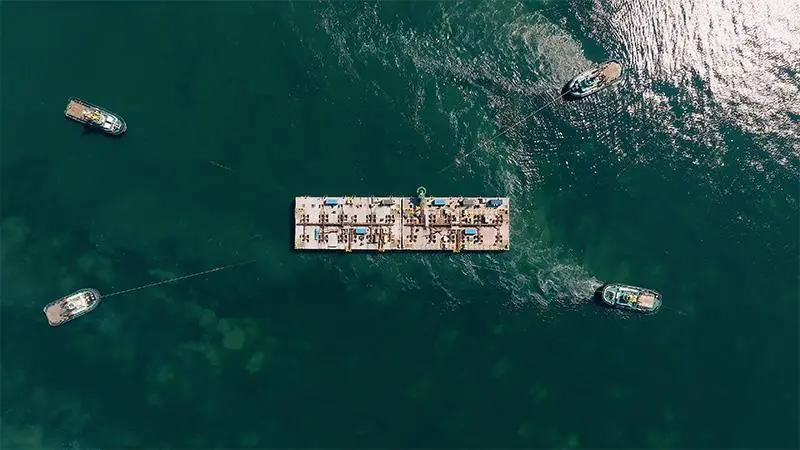
However, a third 1,400MW wind farm needs two HVDC converters that will be needed to develop a hybrid interconnector for the UK, and this is where the problems like.
“The international tender that Elia has set up for these direct current components shows an overheated supply chain with significant price increases,” a statement said. “Although the terms from the supplier involved are comparable to those of other European grid operators, they are – despite our efforts – much higher than our initial estimates. This significant cost increase – specific to HVDC – is due to scarcity, combined with the rise in material costs and inflation.”
The Princess Elisabeth island was due to be completed in 2028 to form an electricity hub to connect North Sea offshore wind generation to electricity grids.
“Elia is indeed carrying out the project within a legal framework but remains attentive to growing concerns over the rising costs of HVDC technology,” they say. “This delay is not without consequences but provides extra time to evaluate the current design against alternative concepts in a changing market context. Elia and the relevant federal authorities have been discussing this matter for some time, with the aim of supporting a well-founded political decision when it is made.”
A spokesperson told Maritime Journal that there had been no movement on the contracts.
Related Articles
 FEATURES & VIDEOS
 ENVIRONMENT
 OTHER NEWS