![MaritimeJournal[Seawork]](https://www.maritimejournal.com/wp-content/uploads/2026/09/MaritimeJournalSeawork.svg)





France makes sound investment to curb subsea noise
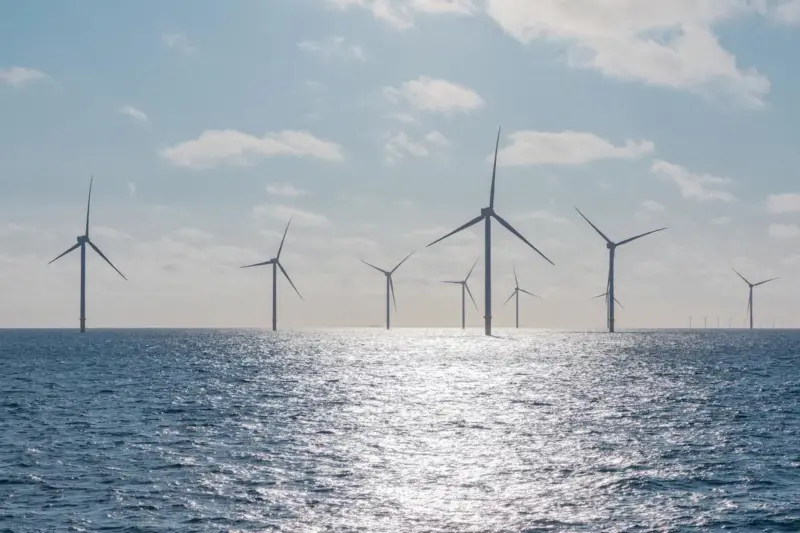
A European consortium is advancing new technology to reduce underwater noise from offshore wind projects as research highlights increasing risks to marine life from subsea engineering activity.

With a grant of €7.1 million from the French government as part of its €54 billion national programme to cut carbon emissions and fund industrial innovations, the Searénité project centres on adapting SubSea Quieter, a patented technology developed by Sealence, for floating wind turbine anchoring and offshore substations.
Chantiers de l’Atlantique, EDF power solutions, Heerema Marine Contractors, Menck, RTE, Sealence and Smulders have all joined forces under the project to develop noise mitigation solutions for offshore installations.
The system uses flexible, air-inflatable membrane panels deployed underwater around structures during installation. These act as an acoustic barrier, reducing noise emissions particularly from pile-driving, which is widely recognised as one of the most disruptive offshore construction activities due to its high-intensity sound waves.
Menck is supporting acoustic modelling and deployment methods, while Smulders is contributing to structural optimisation. French grid operator RTE will help validate the technology and provide a real-world demonstration site. The project is scheduled to move from design and tank testing to prototype trials by 2028, with full-scale offshore deployment planned if successful.
The development comes as a study by the Swiss scientific journals publisher MDPI highights the growing environmental challenge posed by offshore wind. The paper finds that noise is generated across the entire lifecycle of a wind farm, from intense, short-term impulsive noise during construction to continuous low-frequency sound during operation over decades.
Both forms of noise can affect marine species, disrupting communication, navigation and feeding behaviour, it says. The impacts can extend over considerable distances, raising concerns about cumulative effects as offshore wind capacity expands globally. The findings reinforce warnings from the World Health Organisation that underwater noise is a significant and increasingly widespread pollutant.
The study also highlights the technical difficulty of monitoring underwater sound. It points to the need for integrated systems combining buoy-based sensors, seabed recorders and fibre-optic acoustic sensing to build an accurate, long-term picture of environmental impact. No single monitoring approach is sufficient on its own.
Against this backdrop, the Searénité project reflects a wider industry shift toward mitigating environmental impacts at source. By reducing construction noise directly, alongside improved monitoring, such technologies are expected to play a key role in enabling more sustainable offshore wind development while protecting marine ecosystems.
Related Articles
 FEATURES & VIDEOS
 ENVIRONMENT
 OTHER NEWS