![MaritimeJournal[Seawork]](https://www.maritimejournal.com/wp-content/uploads/2026/09/MaritimeJournalSeawork.svg)




Last monopiles sent to Denmark’s largest offshore wind farm
The final shipment of monopiles has left China for Denmark, where installation of its largest offshore wind farm is about to begin.
Seventy-two Siemens Gamesa wind turbines have been planned for the Thor wind farm to generate 1GW of power once commissioned.
The current total of offshore wind in Denmark that is classed as ‘operational’ – which does not mean connected to the grid and generating power, it simply means installed and ready to be connected – is about 2.3GW, according to analysts Research & Markets.
Research & Markets says there are 19 ‘operational’ offshore wind farms, two under construction and 36 planned, with a potential of 25GW.
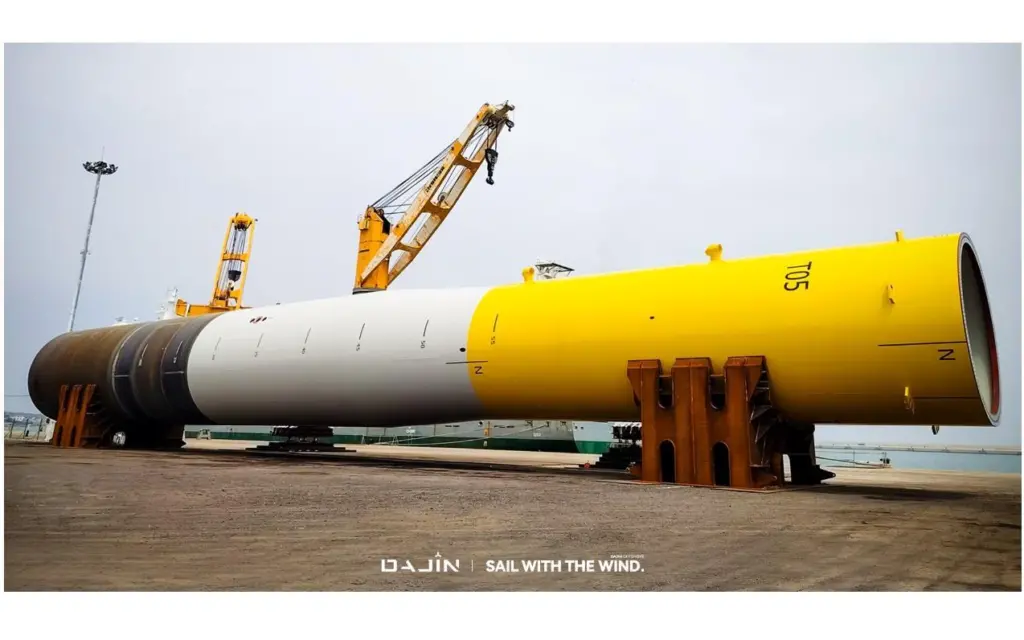
Dajin Heavy Industry has manufactured 10 of the final monopiles, each weighing more than 100 tons. They will be delivered to the Port of Eemshaven, a key logistics hub for offshore wind projects and other industries, where facilities for the assembly, transport, and maintenance of wind turbine components have been set up.
RWE points to a number of factors that could differentiate Thor from other projects.
Forty of the 72 wind turbines, it says, will be equipped with recyclable Siemens Gamesa rotor blades that are made with composite materials that can be separated again. Because the iindividual materials remain intact they can be re-used in other industries, such as the automotive sector.
RWE also claims that 36 of the turbines will have towers that are made with 63% ‘CO2-reduced steel’. With 160,000 tonnes of steel needed for the turbines, RWE is claiming it makes ‘a significant step towards producing even more sustainable wind power’.
The wind turbines will each be 266m tall with a blade length of 115m and a rotor diameter, or blade sweep, of 236 metres. They each weigh 1,658 tons.
Vessels and installation
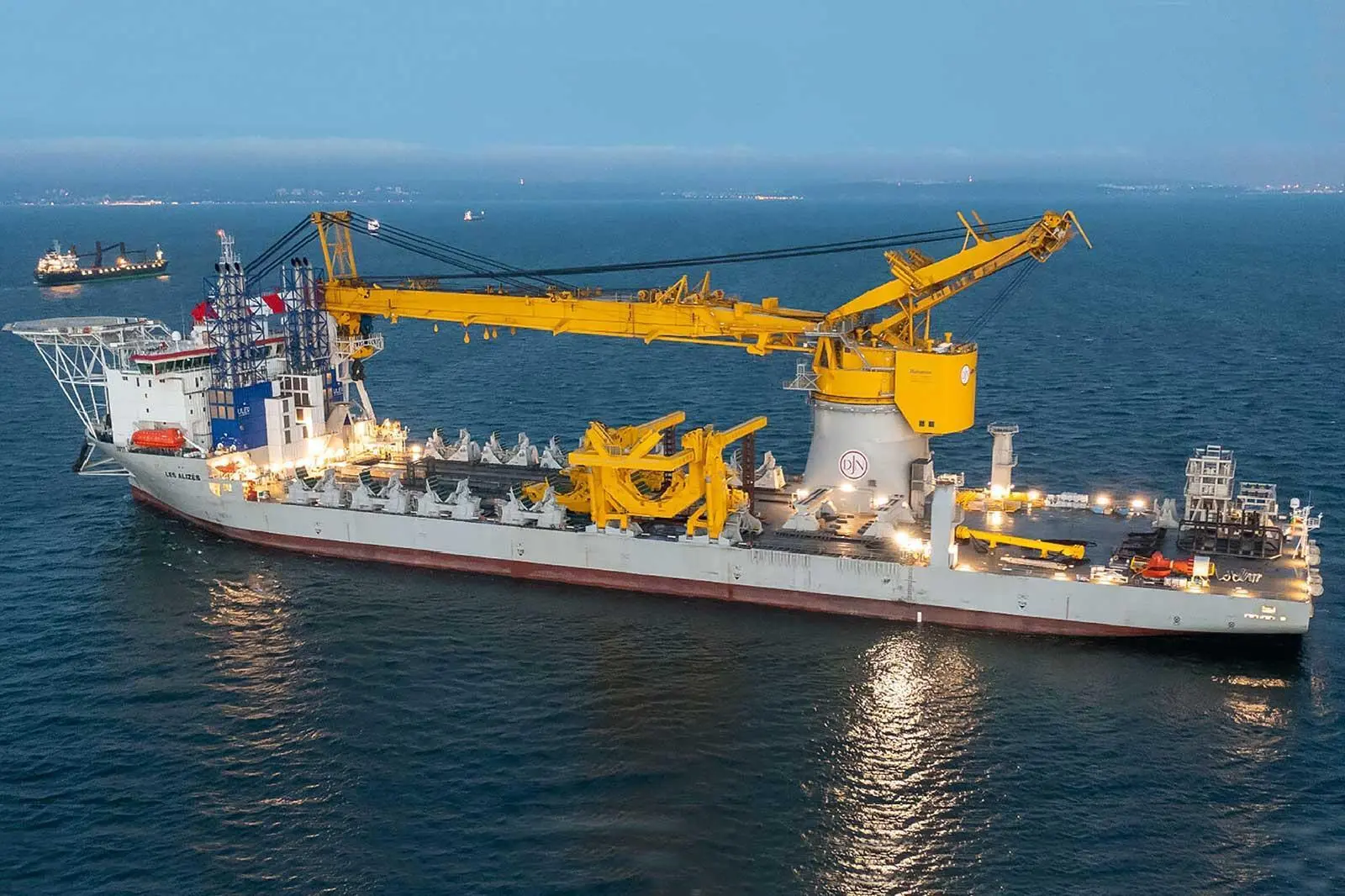
Purpose-built vessel Les Alizés, the largest heavy-lift vessel in Jan De Nul’s fleet, will carry out the transport, lifting and installation works and with its 5,000t lifting capability and deck-loading capacity of 61,000 tonnes, is ‘future proofed’ for the next scale-up of components, Jan De Nul says.
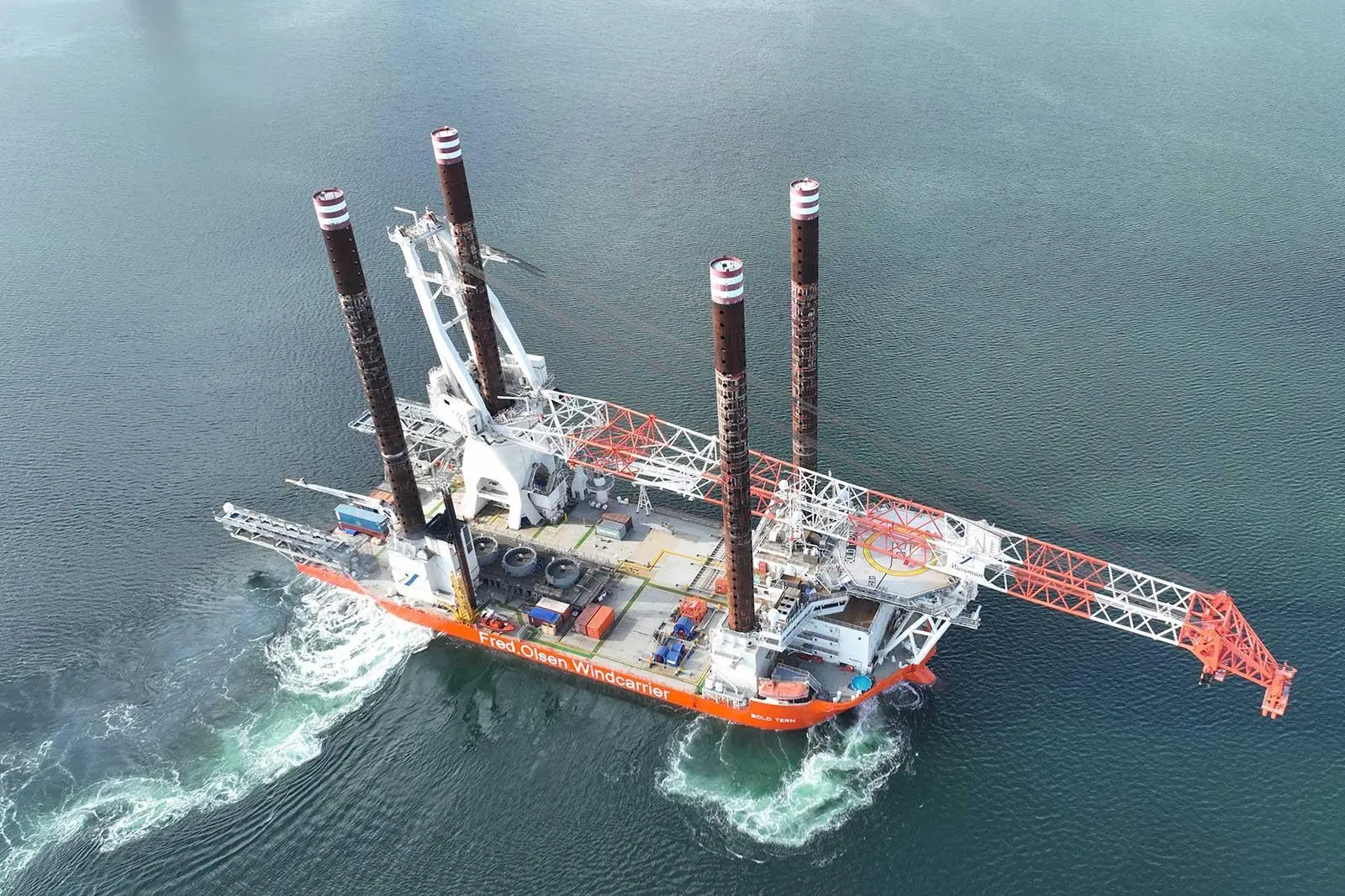
“For the turbine installation, Fred. Olsen Wind Carrier will make use of one of the two-Tern class installation vessels, which by the time of the project execution, will feature a new and upgraded crane with a lifting capacity of 1,600 tonnes at 31 metres as well as other upgrades to the vessels including jacking system,” the company says.
Hellenic Cables and Jan De Nul will manufacture and install 60 kilometres of export cables and 200km of inter-array cables to connect the turbines to the offshore substation, which will be engineered, built and installed by HSM Offshore Energy.
Related Articles
 FEATURES & VIDEOS
 ENVIRONMENT
 OTHER NEWS