![MaritimeJournal[Seawork]](https://www.maritimejournal.com/wp-content/uploads/2026/09/MaritimeJournalSeawork.svg)






UK signs MoU with Japan on floating wind
UK government offshore renewables innovation centre ORE Catapult has turned to the Far East to boost floating wind technologies.
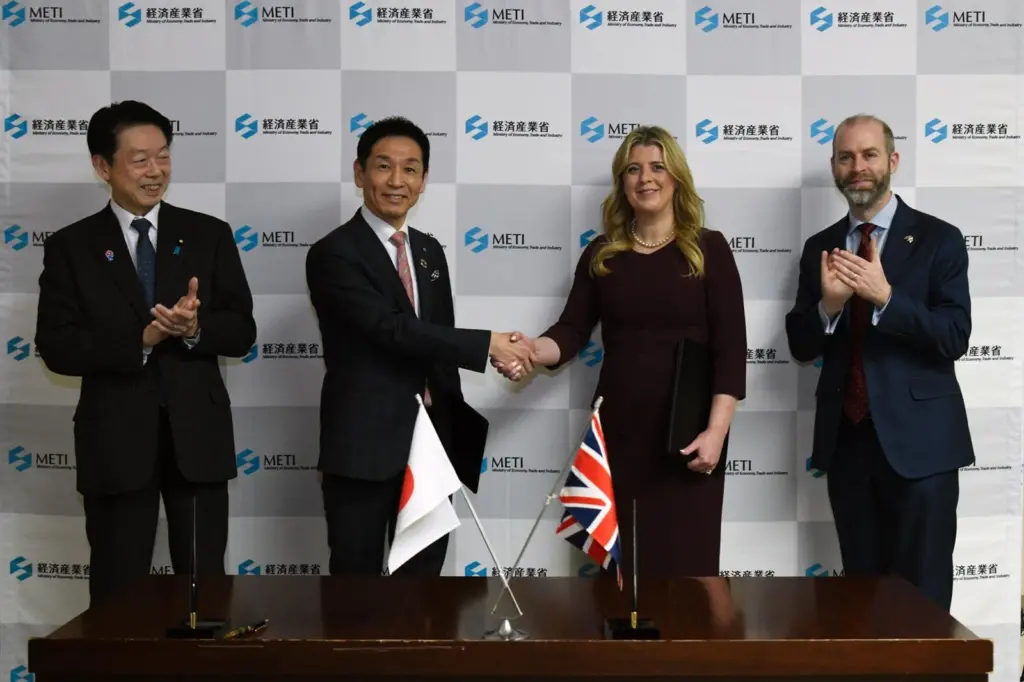
The organisation, which took along Labour MP Jonathan Reynolds, went to Tokyo to sign a Memorandum of Understanding with Japanese officials that will see the two countries ‘work together to reduce development risks and costs of floating wind’.
A spokesperson told Maritime Journal that the MoU includes personnel exchange, work on standardisation of component technologies and a tesst and demonstration sites alliance ‘to facilitate large-scale technology development’.
“We are at the very early stages of this working relationship and look forward to sharing more details in due course,” the spokesperson said.
“Floating wind is set to play an important role in the future energy mix of both the UK and Japan, and as two organisations committed to the development of floating wind technology there will be mutual benefit in partnership to drive innovation in this burgeoning sector in both countries.”
The MoU, on which the UK government has been working for nine months, was signed with Japan’s minister of Economy, Trade and Industry Muto Yoji and Masakatsu Terazaki, chairman of Japan’s Floating Offshore Wind Technology Research Association (FLOWRA).
“Harnessing UK R&D capability and the strength of Japanese industrial manufacturing capacity will turbo charge development of this important technology, bringing innovative and sustainable renewable energy to both countries and wider global markets,” said a statement from ORE.
Representing ORE Catapult was Cristina Garcia-Duffy, director of Research and Technical Capabilities.
“As two island nations with a long-standing history of trade and investment partnership, Japan and the UK are important partners for the burgeoning technology development of floating offshore wind,” she said.
“Working with our friends and colleagues at FLOWRA to address the challenges and opportunities in bringing floating offshore wind to commercial deployment will stimulate significant economic and export opportunities, create jobs, bolster energy security and support our respective efforts to combat climate change.”
Related Articles
 FEATURES & VIDEOS
 ENVIRONMENT
 OTHER NEWS