![MaritimeJournal[Seawork]](https://www.maritimejournal.com/wp-content/uploads/2026/09/MaritimeJournalSeawork.svg)



Driving port efficiency with digital twinning
The UK’s Port of Dover is to create a digital twin in order to augment the productivity of its operations.
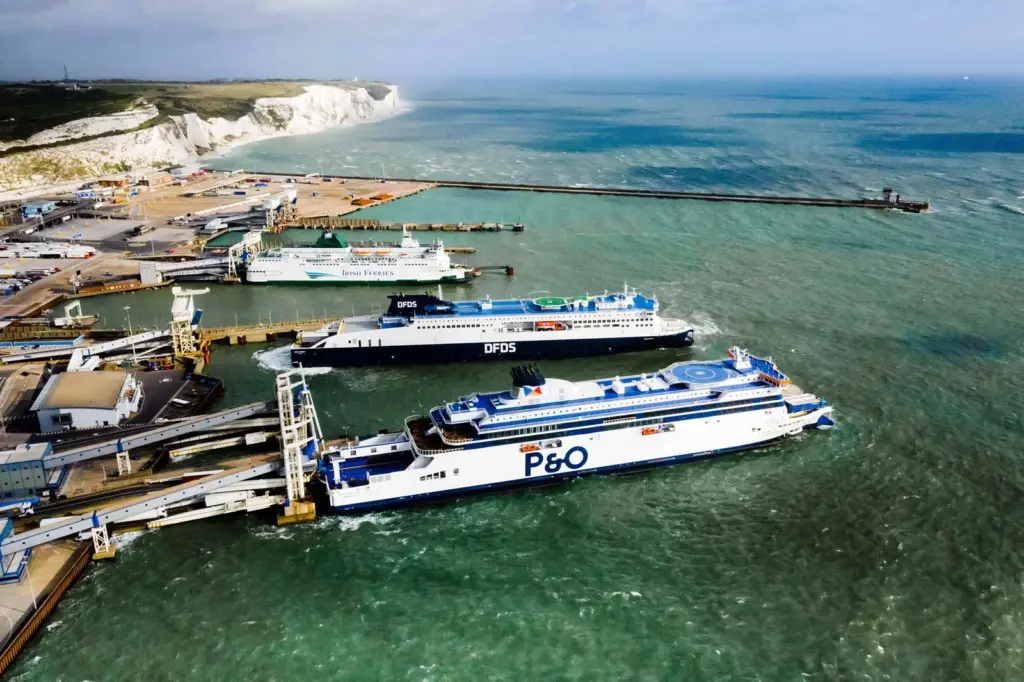
Dover and the Universities of Plymouth and Manchester have been awarded a £333,585 grant by Innovate UK in order to create the twin which will be used to extend the port’s capability and operational hours.
“We are delighted to learn of the award of this KTP and are thoroughly looking forward to working with the Universities of Manchester and Plymouth on this hugely exciting project, which will play a vital role in our journey to become the UK’s most seamless, sustainable, and tech-enabled port,” said Doug Bannister, chief executive of the Port of Dover.
”The enhanced navigational analysis brought by the digital twin of Dover Harbour will extend our capability and operational hours and subsequently deliver a huge bonus of growth and productivity to the national economy.”
Monitoring efficiency
The funding underpins a three-year Knowledge Transfer Partnership (KTP) that will harness the universities’ world-leading expertise in hydrodynamic modelling and cutting-edge research in AI and machine learning.
Creating a virtual model of the Port of Dover should bring huge dividends to be gained for UK productivity – smoothing and enhancing the journey of GB£144bn worth of UK trade every year.
The enhanced digital twin will provide a dynamic 24-hour, 365-day all-weather simulation of the complex tidal flows across the harbour and predict with maximum confidence the conditions essential for safe navigation in the Port of Dover.
As a result, the port will be able to remain operational during harsher weather conditions and welcome larger vessels and an even greater range of cruise and cargo ships, enabling greater operational efficiency and an increased volume of UK imports and exports.
The funding for the twin forms part of a wider programme of digitalisation by the Port of Dover, including work on a similar land-side digital twin, using a digital transformation to support energy efficiency and decarbonisation and using AI to optimise traffic flows and port operations.