![MaritimeJournal[Seawork]](https://www.maritimejournal.com/wp-content/uploads/2026/09/MaritimeJournalSeawork.svg)


Pilot died after heart attack and rescue equipment failure
A marine pilot died after suffering a heart attack, falling from a pilot ladder and being partially submerged in freezing water for more than 40 minutes due to equipment failure, an investigation has found.
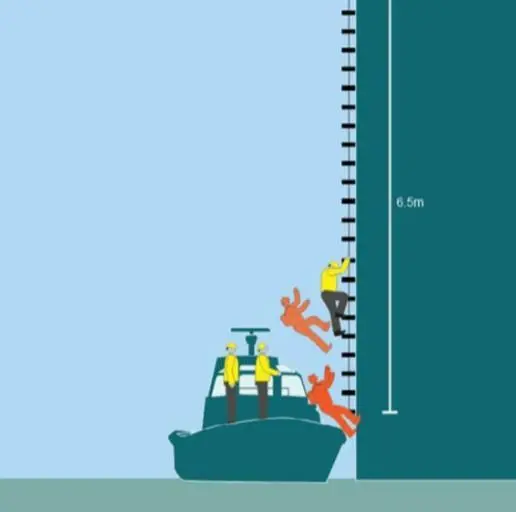
The Marine Accident Investigation Branch (MAIB) said the death of 67-year-old pilot Francesco Galia while boarding the cargo ship Finnhawk from the pilot vessel Humber Saturn on 8 January 2023 was ‘very probably’ triggered by a sudden medical event, compounded by failures in emergency recovery capability and prior medical assessment.
Francesco Galia had worked as a seafarer for many years before joining ABP Humber as a pilot in March 2002. He became a Class-1 pilot in November 2012.
According to the report, he fell off the ladder about 2.5 metres above the deck after letting it go with both hands, which investigators concluded was consistent with a cardiac arrhythmia rather than a slip or misstep.
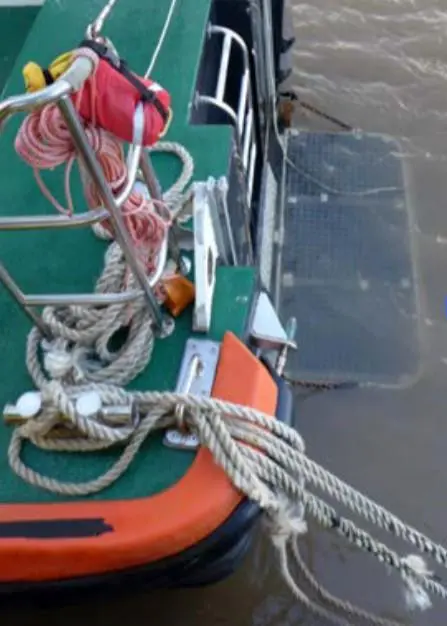
After striking the pilot vessel, breaking his safety helmet, which came off, Galia fell into the sea. He was briefly conscious, but rescue efforts were severely jeopardised when Humber Saturn’s man-overboard recovery platform could not be raised.
A post-mortem found ‘compelling pathological evidence that Galia was at risk of a sudden cardiac event occurring at any time, and without warning’, with the interim cause of death recorded as ‘hypertensive and ischaemic heart disease and the effects of immersion in water’.
“It is almost certain that the pilot’s immersion in cold water and the delay in his recovery and first aid treatment significantly reduced his chance of survival,” the report says.
The MAIB found the recovery platform’s solenoid valve was defective and had jammed, preventing the platform from lifting once lowered. As a result, the injured Galia remained ‘partially immersed in cold seawater for over 40 minutes’, during which time the crew were unable to begin CPR or use the vessel’s defibrillator.
Medical certification
Investigators raised serious concerns about Francesco Galia’s medical certification.
Despite a history that included a heart attack, stroke, heart failure, obesity and hypertension, the pilot had been issued with a full, unrestricted ENG1 medical certificate just six months earlier.
“The pilot’s seafarers’ medical assessment did not follow the MCA’s guidance and was incomplete,” the report says, adding that had proper assessments been carried out, ‘they would probably have declared him either temporarily unfit for sea or issued him with a restricted certificate’.
The MAIB also criticised the port authority for lacking an occupational health standard tailored to the physical demands of pilotage, including climbing pilot ladders in exposed conditions. The authority’s safety systems were found to be ineffective despite colleagues raising concerns about Galia’s fitness on the day of the accident.
Recommended preventions
To prevent similar tragic incidents, the report calls for sweeping changes. It recommends that non-SOLAS vessels be required to carry ‘an alternative means of recovering an unconscious person from the water that does not rely on the use of shipboard systems’.
Associated British Ports has been urged to ‘identify and act upon safety-critical defects’ on pilot vessels and to reassess pilot personal protective equipment to improve survival in cold water.
Since the accident, the port has introduced stricter medical standards, upgraded pilot vessel recovery systems and strengthened stop-work authority, while industry bodies have updated national guidance on pilot transfers.
“The sole objective of the investigation,” the MAIB said, “shall be the prevention of future accidents.”