![MaritimeJournal[Seawork]](https://www.maritimejournal.com/wp-content/uploads/2026/09/MaritimeJournalSeawork.svg)

PLBs: The difference between survival and tragedy
The tragic consequences of failing to equip crew with Personal Locator Beacons (PLBs) were laid bare before delegates at the IMCA global summit last week.

In an emotional and gripping presentation, Kevin Barron, deputy manager, Resources and Operational Support with Fugro, gave a harrowing account of a fatal lift boat – or jack-up – sinking in which he personally knew the crew.
At times unable to hold back his tears, he described the sinking and that if the 19 crew had all had PLBs, their chances of survival would have been massively increased.
Personal tragedy
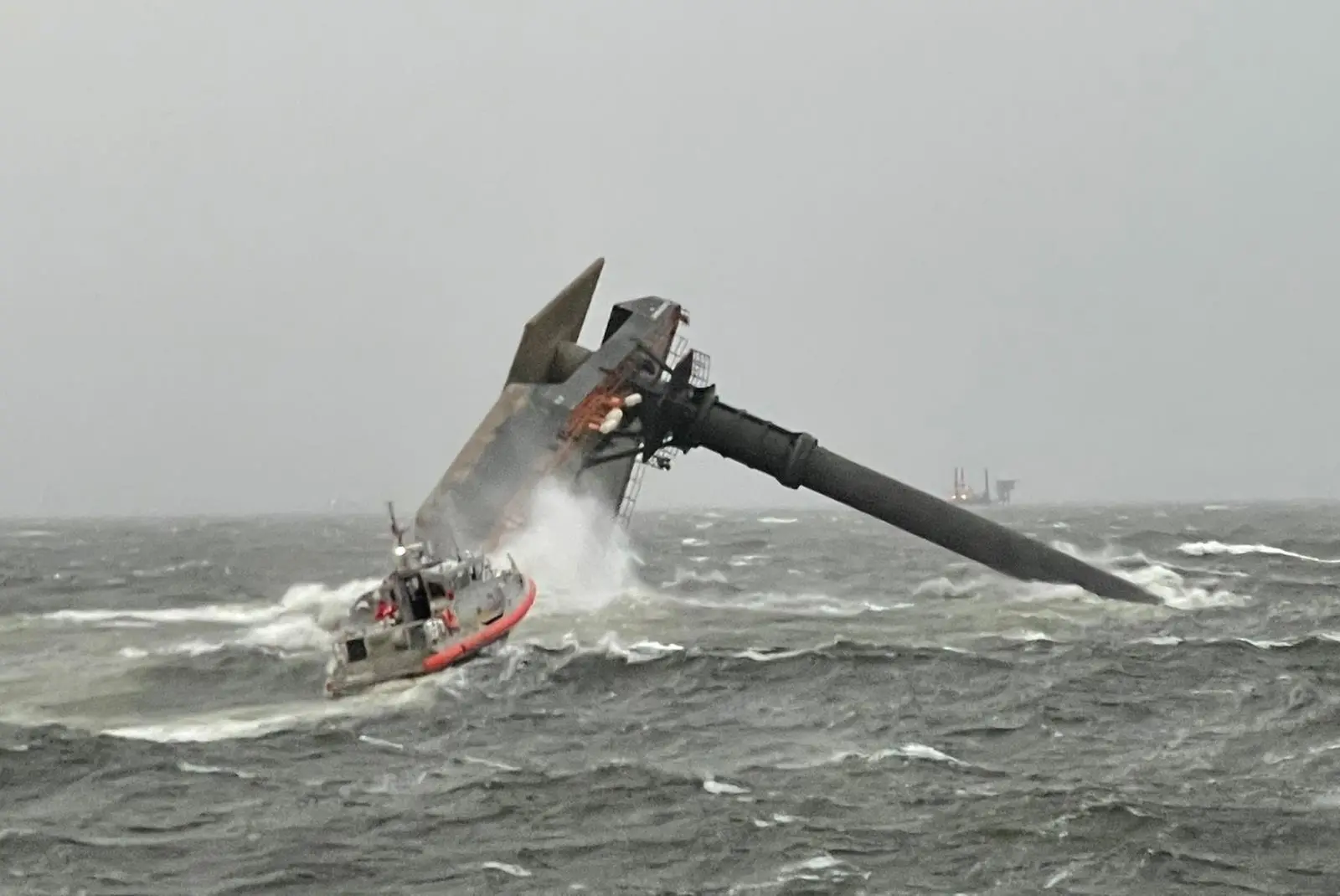
“On April 13, 2021, the Seacor Power went over eight miles off the coast of Fourchant,” Barron told a silent audience. “It encountered a rare weather event that created a hurricane situation directly over the top of the vessel. They went from fairly calm seas to 10ft seas and 100mph winds very, very quickly.”
The crew attempted to lower the vessel’s legs to the seabed just 55ft (16.5 metres) below to stabilise it, but there wasn’t enough time and it flipped over.
“Nineteen people were on board. Six of them were recovered alive out of the water that particular night. Seven of them were never found. The captain was found dead in the water. Four people were found on the vessel and one was found dead.
“The mate gave testimony that as he got into the water, he was smart, he didn’t have a PLB so he grabbed the EPIRB (Emergency Position Indicator Radio Beacon) and jumped into the water with it.
“The EPIRB never worked on this vessel. He watched five vessels passing and he got lucky that one vessel decided to drive past the debris and came back in and found them.”
Kevin Barron was one of those who had to inform the families that their loved ones were missing and they didn’t know what had happened to him.
“We stayed with the families while they searched for the bodies. They were hoping for air gaps in some of the vessels, but the divers were having trouble getting into the vessels because of the nature of the seas that they had,” he said.
“I saw the devastation on these families, and the heartbreak they went through when they were found.”
EPIRBs versus PLBs
Barron gave examples of incidents in which EPIRBs – Emergency Position Indicating Radio Beacons – had been used, but nearly all had failed.
One of many was the El Faro container ship near the Bahamas in October 2015, which sank with 33 people on board. An old boat with very outdated safety gear, it was transporting goods to Puerto Rico from Florida when it encountered Hurricane Joaquin.
“The captain thought he was steering away from the storm and going around it – unfortunately he had old weather data, and he was actually steering directly into it,” said Barron. “As he got into it, the boat started listing, the engines died and it was not long before they went over.
“They did have time, they did call Abandon Ship, but unfortunately their EPIRB only worked for 24 hours and being an old system, didn’t actually have a GPS in it. It gave them a position that they could triangulate, but it was a rough position and in 24 hours in a hurricane, that wasn’t much to go on.
“The searchers found one body in a submersion suit, deceased, and they decided instead of recovering that body they would put a marker on it and spend the time looking for live people because if people had time to get into a submersion suit, that could be a signal… ” but no one was recovered and the marker on the body they had found failed as well.
None of the 33 crew was ever recovered.
EPIRBs are made for the vessel, which means searchers can locate the vessel, but when crew have to abandon it the current can take them anywhere.
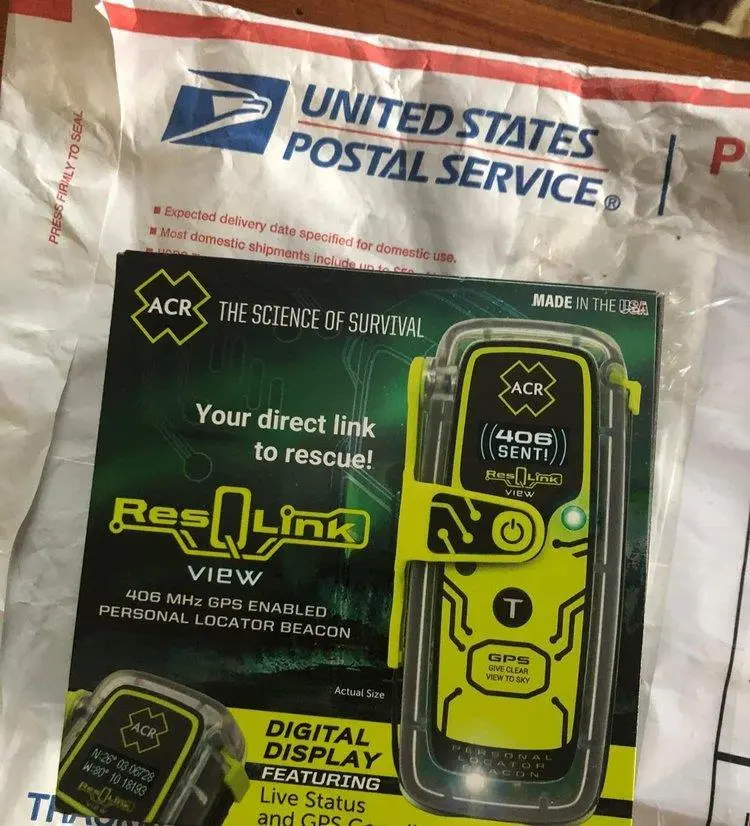
“A PLB set off means they’re coming to you no matter where the current takes you,” said Barron. “So many times the EPIRB doesn’t work, but if each seafarer had a PLB there are chances that at least one would work. PLBs have a much quicker response time, they are a one-time purchase that can last for seven years, and no subscription price to it.”
PLBs speak to a global rescue satellite system, all combined to give worldwide coverage.
“When these go off they give off a 402 megahertz signal that talks to those satellites. Those satellites go down to the base station, or the rescue centres, and they contact the local governments or the local search and rescue and they come out and they find them.”
He held up the kind of PLB that Fugro gives out in the US. Slightly smaller than a pack of playing cards, one costs around $300 and they last for up to seven years without changing the battery, longer if they do not need to be used.
IMCA, he said, recommends one that is slightly longer and thinner, just a little bigger than a cellphone.
“We bought 348 of them and I can tell you that we paid much less for them,” he said. “I’ve heard often that it’s the cost that’s the problem, they’re just too expensive, yet in the US we’re giving out a boot allowance that recently went up to $250 every two years. A survival suit for remote cold areas costs roughly $650.”
Jason’s Beacon

Twenty-six-year-old Jason Willis Krell was one of the seven crew who were never found.
His aunt, Debbie Burt, was also at the IMCA global summit. She and her family have started the ‘Jason’s Beacon’ charity to raise money to buy PLBs and distribute them to as many seafarers as they possibly can, but there is an 18-month waiting list for one because demand is so high.
IMCA has donated €10,000 to the charity, Fugro has donated beacons and the firm Ocean Signals has also pledged to donate some devices.
Barron said that after each tragedy, the US National Transportation Safety Board has recommended that PLBs become mandatory for all marine workers.
“Unfortunately, the National Transportation Safety Board doesn’t seem to have a voice and it doesn’t get out to people,” Barron said. “The Coast Guard has denied their request multiple times, yet it would make it much easier for searchers in very dangerous situations to go and find these people.
“Modern PLBs are an incredibly valuable addition to seafarer safety,” said Gary Clay, from Fathom Safety, an organisation that focuses on pilot transfer safety. “Any seafarer working in a high risk environment with a heightened risk of falling overboard should consider them essential elements of PPE along with a properly secured lifejacket.
“Such roles may include maritime pilots, fishers, offshore oil, gas and wind support, yacht crew or any seafarers working outboard whilst the vessel is underway.
“The biggest challenge following a man overboard event is the speed at which recovery can be performed. In that timeframe it’s easy for the casualty to be lost in swell, spray or reduced visibility. The PLB ensures that it is always possible to locate the casualty in an efficient manner, drastically increasing the chances of a positive outcome.
“As a pilot I have worn a PLB for the last 10 years. During that time they have become smaller, smarter and fully automated. Whilst I have never had need for it, the fact that it is there gives me an enormous sense of reassurance that should the worst happen my chances of survival are significantly higher. I now would not work in a high risk environment without one.”
“I would never send my workers out now without a PLB,” Barron concluded. “Everyone in my group is given one. It’s better for someone to know that you’re in trouble rather than no one know you’re in trouble.”
Details of how to donate to the charity are on its website: www.jasonsbeacon.org