![MaritimeJournal[Seawork]](https://www.maritimejournal.com/wp-content/uploads/2026/09/MaritimeJournalSeawork.svg)



WindEurope 2026: Start-Up Round-Up
Of the 24 companies joining the Start-up Pavilion at WindEurope this year, showcasing innovations ranging from modular generators to autonomous drones, UK-based CGEN took top spot – which means a free booth at next year’s event.
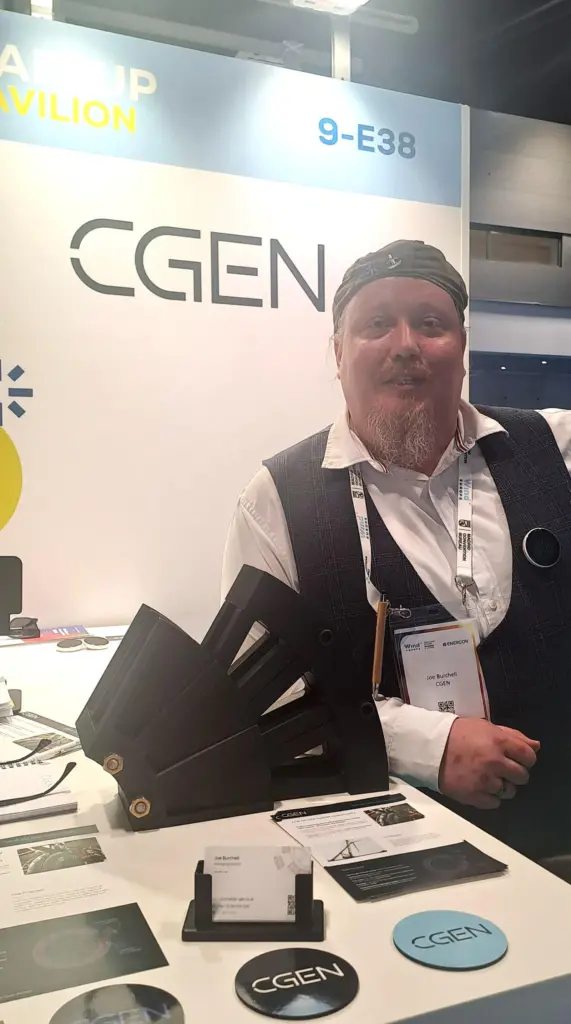
Maritime Journal editor Debbie Mason took a wander into the pavilion to find out about CGEN’s innovation, and also what some of the others had been conjuring up in their labs.
CGEN – Modular generators (WINNER)
UK-based CGEN brought its modular, air-cored generators to WindEurope, which it says are built for the real-world challenges of wave, tidal and wind.
Unlike conventional generators, which are heavy and run complicated nacelles, CGEN’s design is of a lightweight, stackable architecture.
Each CGEN unit is assembled from interchangeable rotor and stator modules. If a fault occurs, it can be isolated and bypassed, avoiding full system shut-down and enabling in-situ repair. This modularity also supports scalable, efficient manufacturing and faster deployment at all power levels.
When a system is modular problems become manageable,” said managing director Joseph Burchell. “Multi-MW wind turbine farms may have major problems, which could mean lost revenue and greater risk of spare parts being harder to access. Our systems mean they could be switched off for days, not weeks or months, with replacements weighing kilos, not tonnes.”
Kavaken – Sensor monitoring
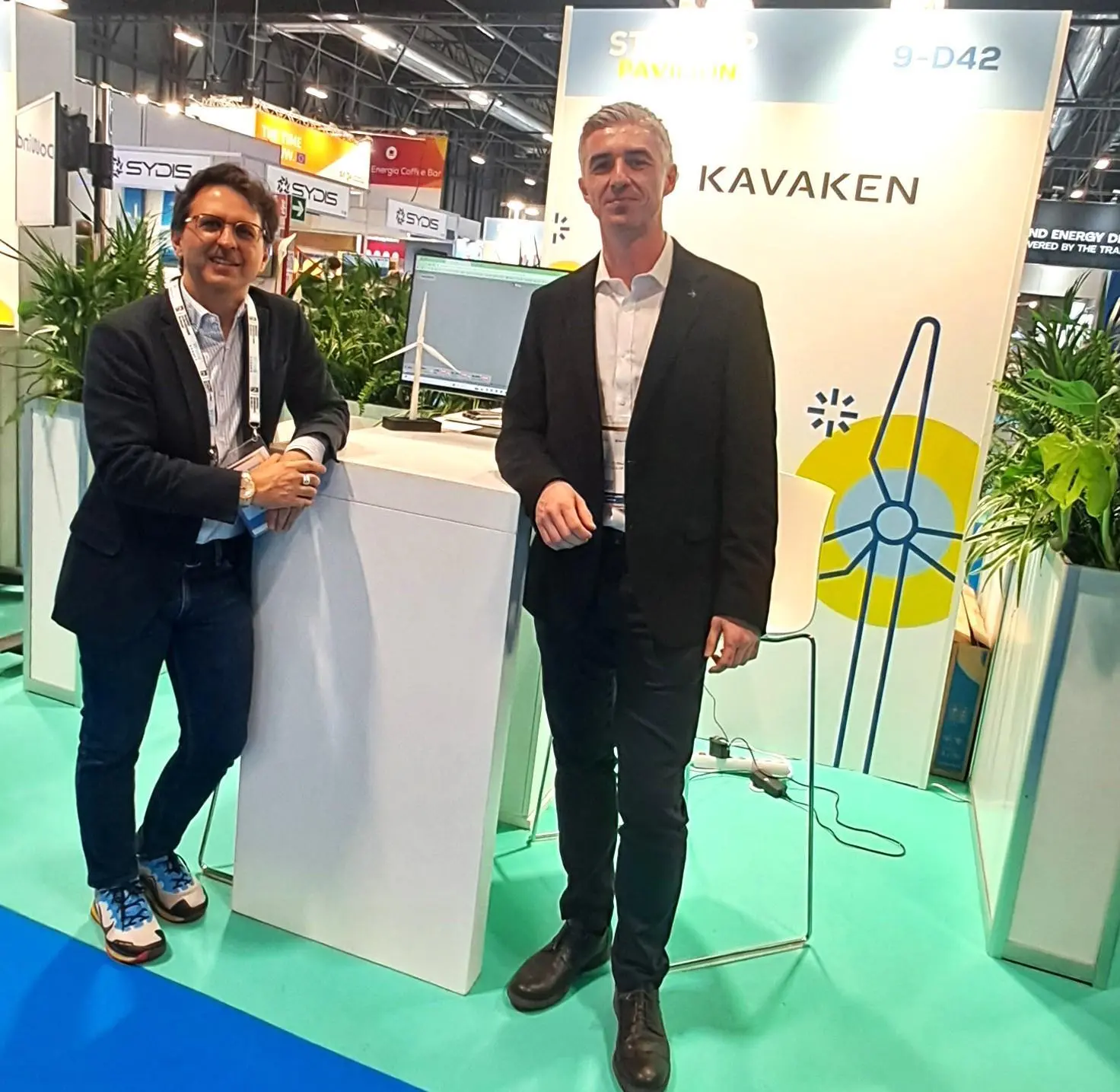
UK-headquartered with offices in the US and Turkey, Kavaken develops AI-driven monitoring that combines data from multiple offshore wind sensors such as SCADA and vibration systems to detect faults early.
Its platform uses machine learning to analyse turbine behaviour, generate automated alerts and predict component failures, enabling proactive maintenance and reducing downtime and operational costs.
“If the data from the sensors gives you three to four different readings you can’t help customers to generate more power – and this can happen if the sensor is crooked. We can fix that,” said Murat Yimaz, co-founder and COO.
Avyonx – Drone inspection for corrosion prevention
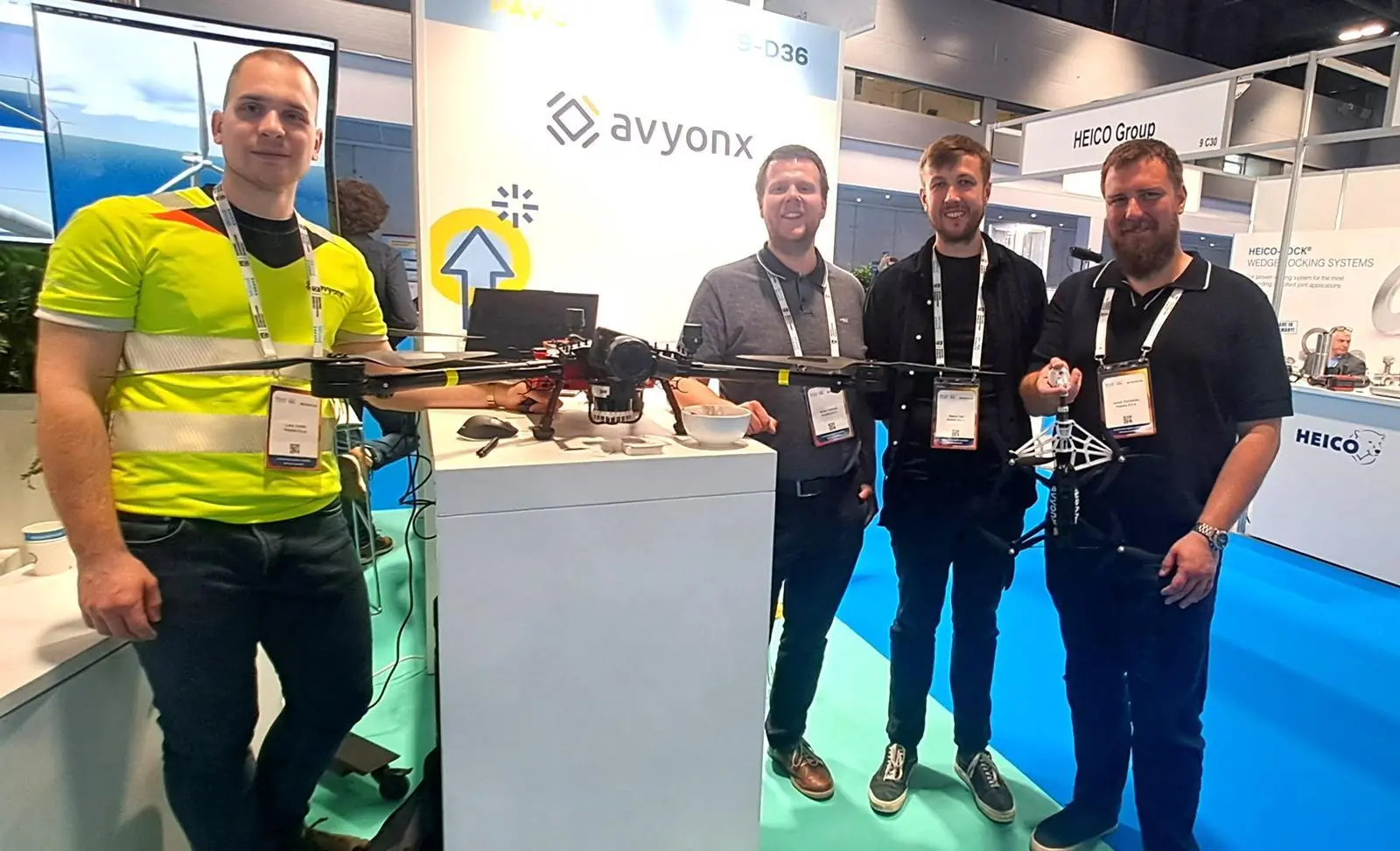
Croatia-based Avyonx has developed an autonomous inspection drone that can precisely position itself against a wind turbine using LiDAR-based localisation and onboard processing.
In simple terms, it “sticks” to the turbine virtually, holding a fixed distance and orientation, and scans surfaces in detail, capturing high-quality images particularly looking for corrosion, or coating porosity, to inform for repairs.
“Worldwide, corrosion is responsible for $3 trillion in lost revenue because of downtime and repair,” the team said. “One hour’s downtime could easily be $1,000 lost.”
SeaTwirl – Vertical floating wind turbine
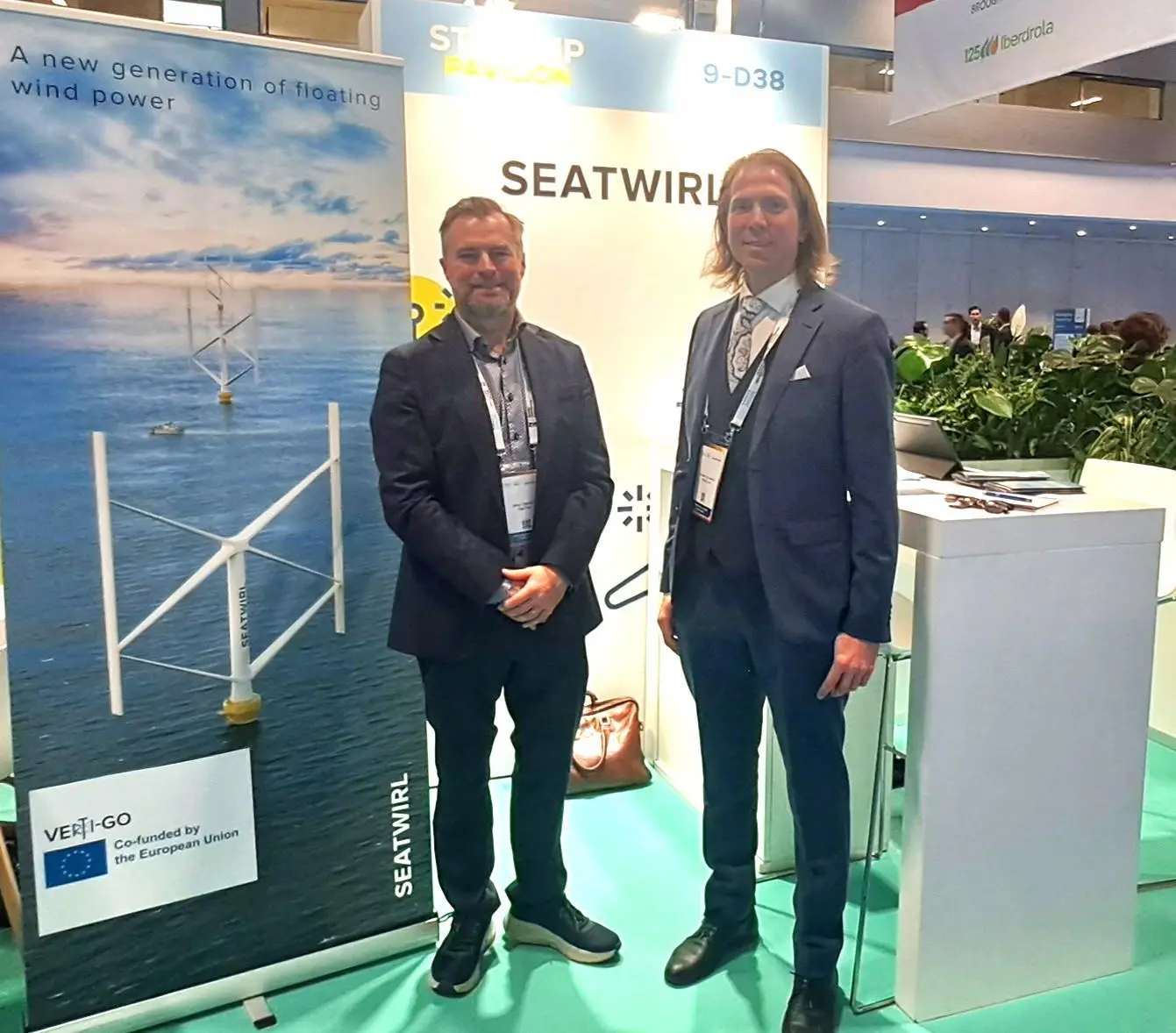
Norway-based SeaTwirl brought its vertical-axis offshore wind turbine idea to WindEurope, which offers several advantages over conventional designs, says said Business Development manager Andreas Oscarsson.
“We are not trying to re-invent the wheel: we are bringing all the mechanicals down to sea level, reducing O&M costs,” he said.
The turbine places heavy components like the generator at the base, lowering the centre of gravity and simplifying maintenance. The turbine can capture wind from any direction without yaw systems, reducing mechanical complexity. Its floating design enables deployment in deeper waters, while potentially lowering installation, servicing and lifecycle costs compared to traditional horizontal-axis turbines.
Fundamend – Untangling data spaghetti
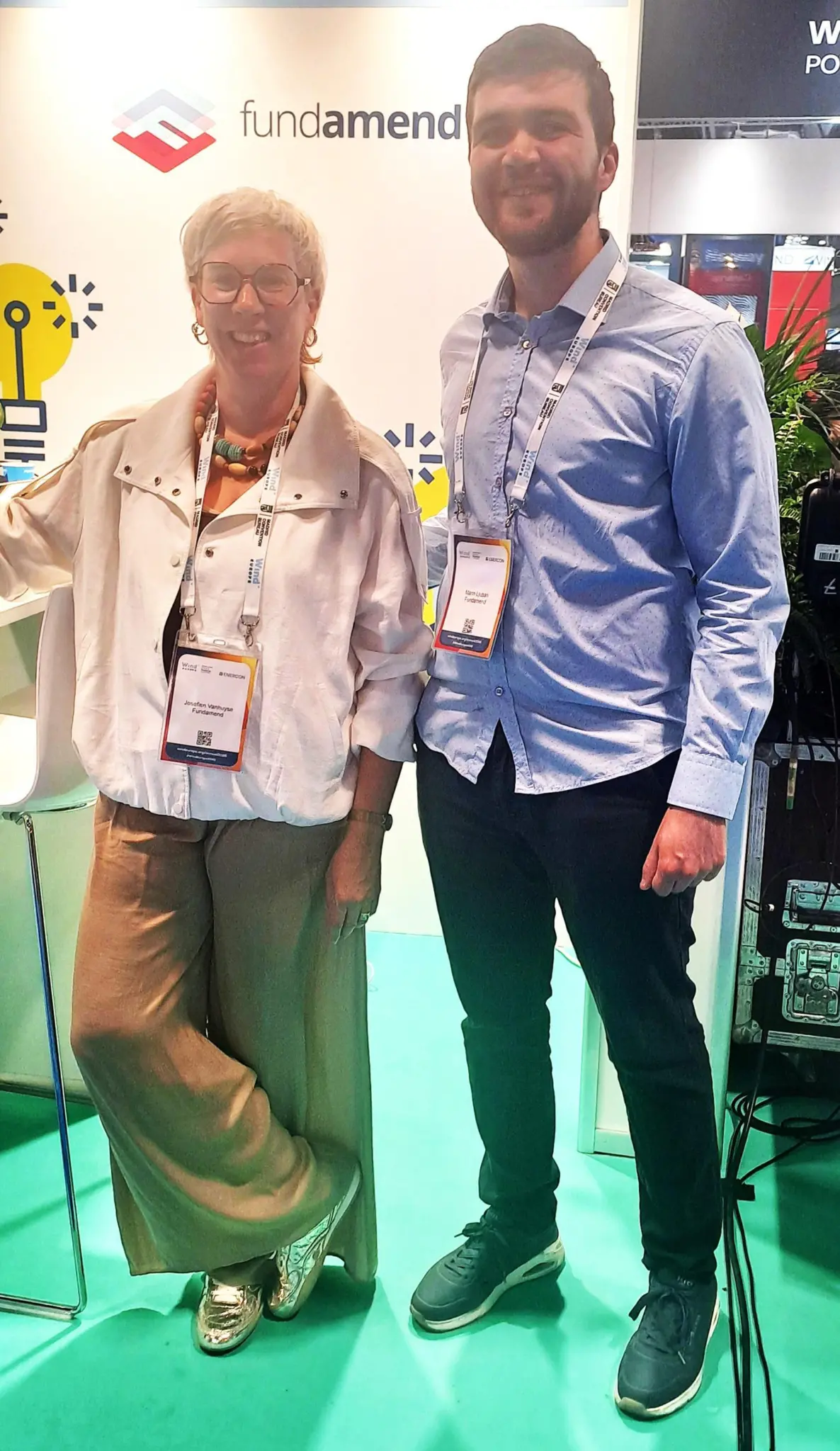
Antwerp-based Fundamend’s Asset Twin platform could be used on anything, but it is focusing on the critical challenges of offshore wind at the moment.
CEO Josefien Vanhuyse said all of the data behind a certain project – from design and engineering to construction to contractors and vessel operators carrying out the work – could be collected and sorted out in a clear way. It would be continuously monitored and validated so that if anything went missing – documents, handover information – it could be immediately identified and rectified.
The company is already working with TenneT, the Dutch/German high-voltage offshore electricity grid operator.
Mespac – Metocean space control
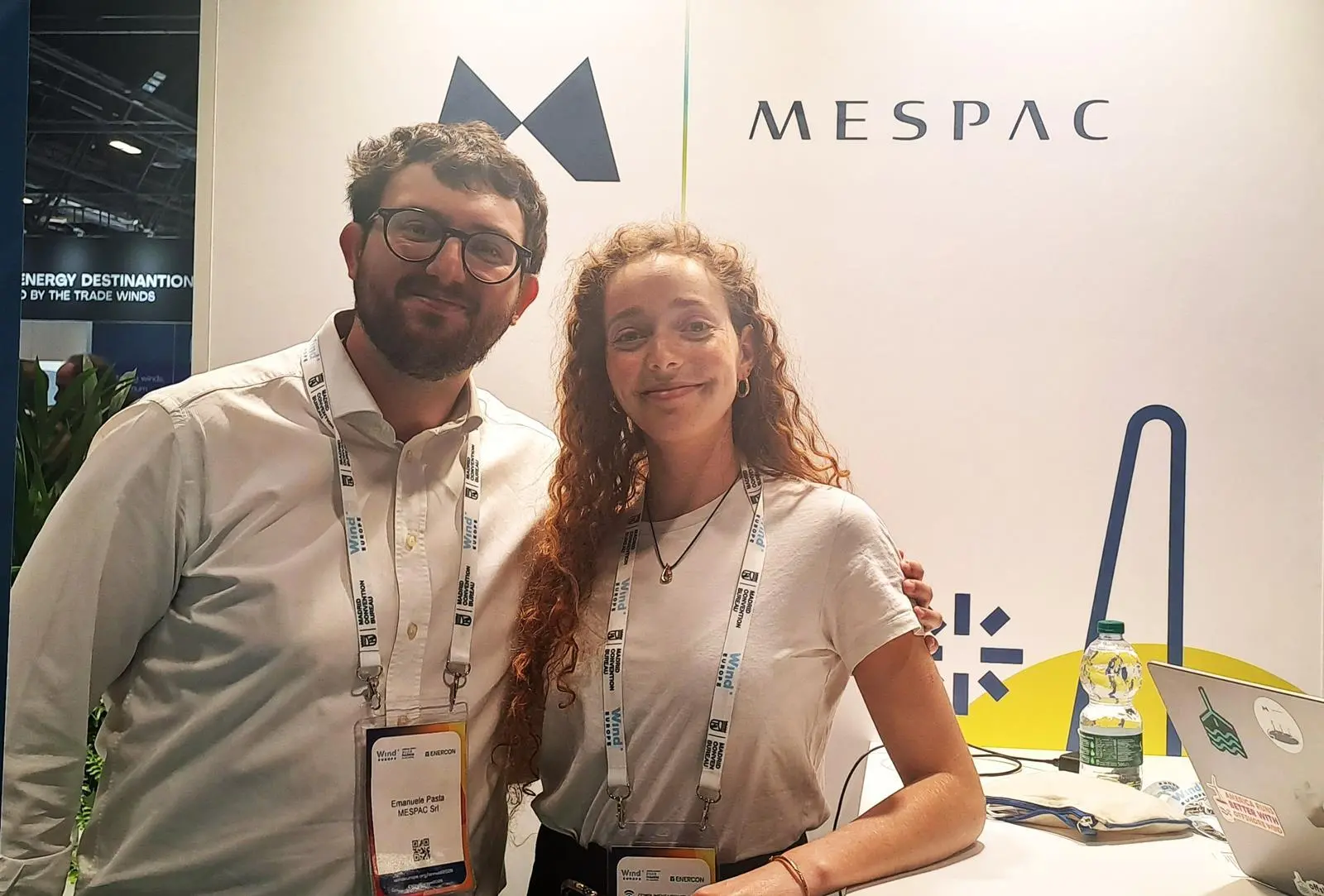
Turin-based Mespac has developed satellite-derived ocean intelligence by integrating oceanographic and meteorological data into a unified digital platform. It enables offshore operators to monitor conditions, manage spatial constraints and optimise vessel and asset deployment in real time, improving safety, efficiency and decision-making across complex offshore wind and marine operations.
The company has pilots in the offshore wind space.