![MaritimeJournal[Seawork]](https://www.maritimejournal.com/wp-content/uploads/2026/09/MaritimeJournalSeawork.svg)


Commercial marine looks beyond diesel in Australia
Electric propulsion, fuel efficiency and Australian-made innovation dominated this year’s Australian Commercial Marine Conference, where a record number of industry professionals gathered this week to explore the technologies and ideas shaping the next generation of commercial vessels.
With new propulsion systems, safety equipment and operational technologies unveiled alongside fresh economic insights, the conference demonstrated how operators are responding to rising costs, changing regulations and the transition to lower-emission fleets.
The Australian Commercial Marine Group (ACMG) welcomed 143 delegates to its third annual event, held aboard SeaLink’s M/V Starship Sydney, in a third iteration that has seen numbers double since it launched in 2024.
One highlight was the unveiling of SUKKAGON, an Australian-designed confined-space ventilation system developed by Control Point Group and manufactured by Marine Air Flow International. Developed from decades of frontline emergency response experience, the system advances confined-space safety for commercial marine operations.
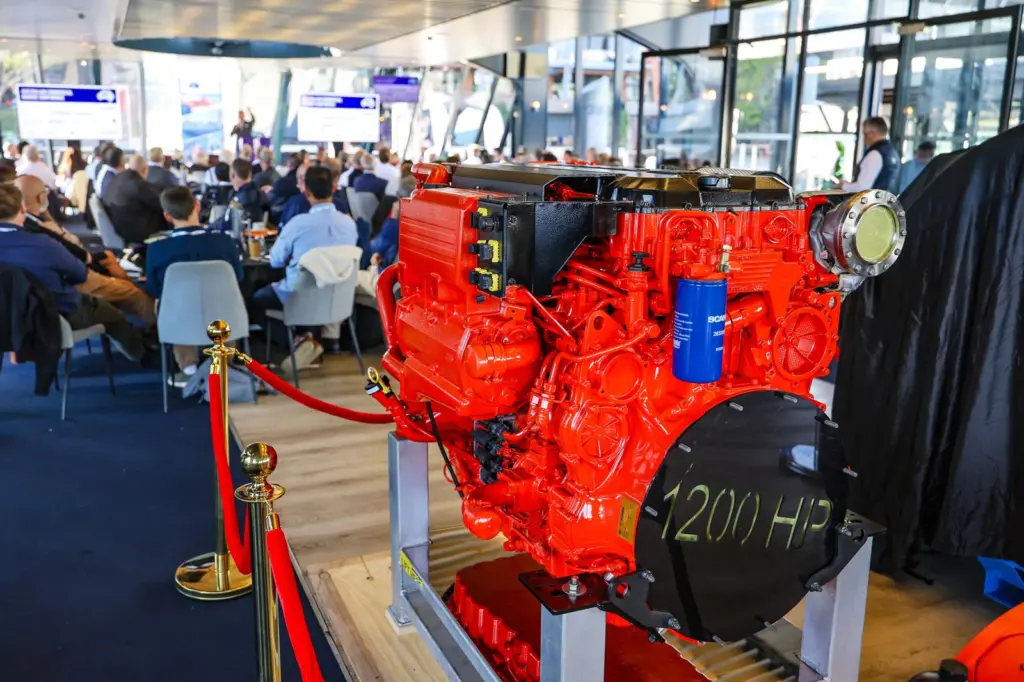
Propulsion technology was another key theme. Scania Australia introduced its DI13 marine engine, which it says delivers a 7% improvement in fuel efficiency with better durability, simplified maintenance and readiness for alternative fuels. The company also showcased its new Scania E-Machine, a compact electric propulsion package designed as a practical repower solution for existing vessels, reducing emissions, operating costs and noise without requiring a complete vessel rebuild.
Continuing the electrification discussion, Aus Ships Group shared progress on Australia’s first fully electric passenger ferry, highlighting the technical challenges, project partnerships and the importance of demonstration projects in accelerating confidence in electric commercial vessels.
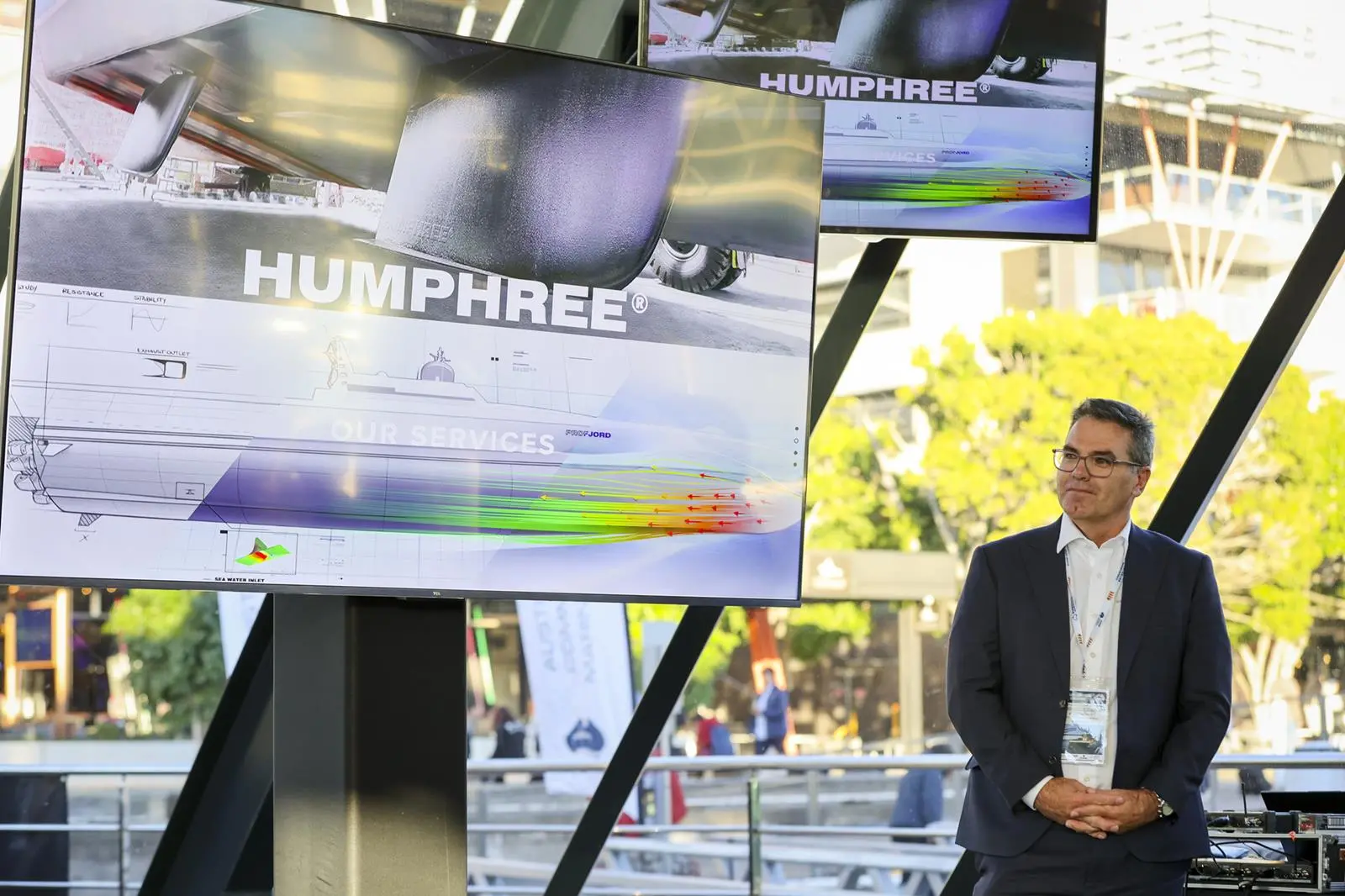
Delegates also heard how incremental efficiency gains can deliver substantial operational savings. Humphree demonstrated how interceptor-based trim and stabilisation systems improve vessel performance, reduce fuel consumption and emissions, enhance passenger comfort and lower long-term operating costs.
Commerciality
Beyond technology, the conference looked at the commercial outlook for operators. While ACMG presented findings from its latest Economic Impact Study that showed the commercial marine sector now contributes more than $50 billion to the Australian economy, tourism Australia outlined opportunities created by Australia’s growing international visitor market.
Economic insights from Bank of Queensland Chief Economist Peter Munckton addressed inflation, interest rates, oil prices and geopolitical pressures, with a strong focus on productivity and efficiency as the key to long-term resilience.
The conference also introduced the inaugural Pitch Platform, giving members the opportunity to present new products and services directly to industry professionals. Marine Air Flow International, Sea-Flux, BluSky and Nebo Fleet took the opportunity to unveil innovations designed to improve operational performance across the commercial marine sector.
An expanded Exhibitor Zone provided delegates with direct access to suppliers and emerging technologies, reinforcing the conference’s role as Australia’s leading forum for commercial marine innovation and business development.
ACMG Chair and SeaLink Sydney Harbour General Manager Nick Lester said the conference’s continued growth demonstrates the value of bringing every part of the industry together.
“That growth reflects an industry hungry for connection and collaboration,” he said. “Commercial marine in Australia is made up of operators, builders, suppliers and innovators who all face the same challenges, and this conference is where we tackle them together.”