![MaritimeJournal[Seawork]](https://www.maritimejournal.com/wp-content/uploads/2026/09/MaritimeJournalSeawork.svg)





OPINION: A flexible course to net-zero shipping
 Part of our special report
Alternative Fuels · April 2026
All 10 features
Part of our special report
Alternative Fuels · April 2026
All 10 features
We are now halfway through what is a defining decade for the shipping industry as it faces up to its decarbonisation duties.

Operators are under mounting pressures as regulatory frameworks tighten, while investors and clients demand credible transition strategies. Technology is advancing at speed creating unprecedented opportunities for the shipping industry to positively overhaul the way it operates.
This change, however, will not be uniform and there is no single, one-size-fits-all answer to decarbonisation. Instead, the sector must embrace a broad portfolio of solutions, deploying the right tools for the right missions while ensuring resilience and reliability remain front of mind.
For an industry that is a cornerstone of global trade and energy production, two key pillars of modern life, the stakes could not be higher. With a 139-year track record, supported by a 1,500-strong workforce and 47 vessels in operation or build, North Star knows more than most about the scale of the challenge. Thousands of offshore transfers each year rely on robust, proven platforms and any change to this must balance ambition with pragmatism.
Innovation focus areas are broad and hardware advances in marine technology, ancillary services such as Drone deployment infield, software, AI and cutting-edge navigation systems are being balanced with the wave of future alternative fuels under evaluation. Hydrogen, ammonia, methanol, ethanol and electrification are all on the table, each carrying distinct benefits and hurdles.
No silver bullet
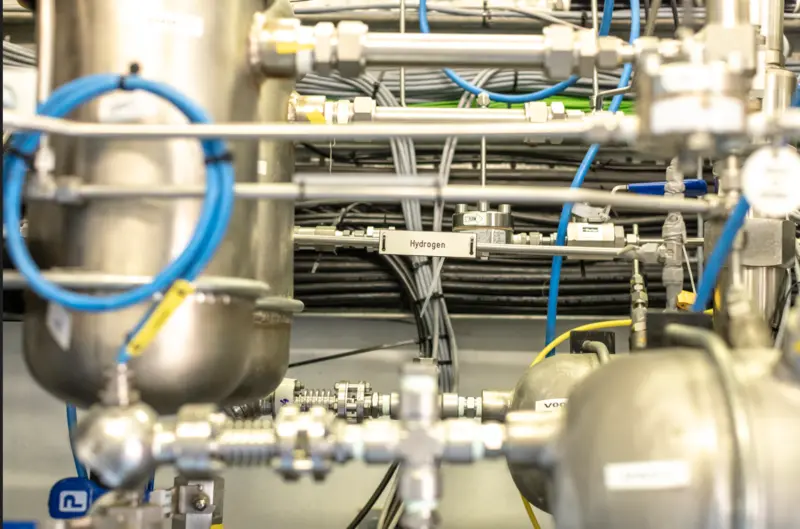
If there is one clear message for shipowners, it is that there is no single winning fuel. Hydrogen may hold promise for shorter-range operations when coupled with offshore charging or floating wind generation, but questions of storage, infrastructure and crew training remain.
Ammonia offers high energy density and scalability but brings challenges around toxicity and safe handling. Methanol and ethanol are gaining traction for their easier drop-in potential, while battery-electric propulsion is proving viable for niche, nearshore routes.
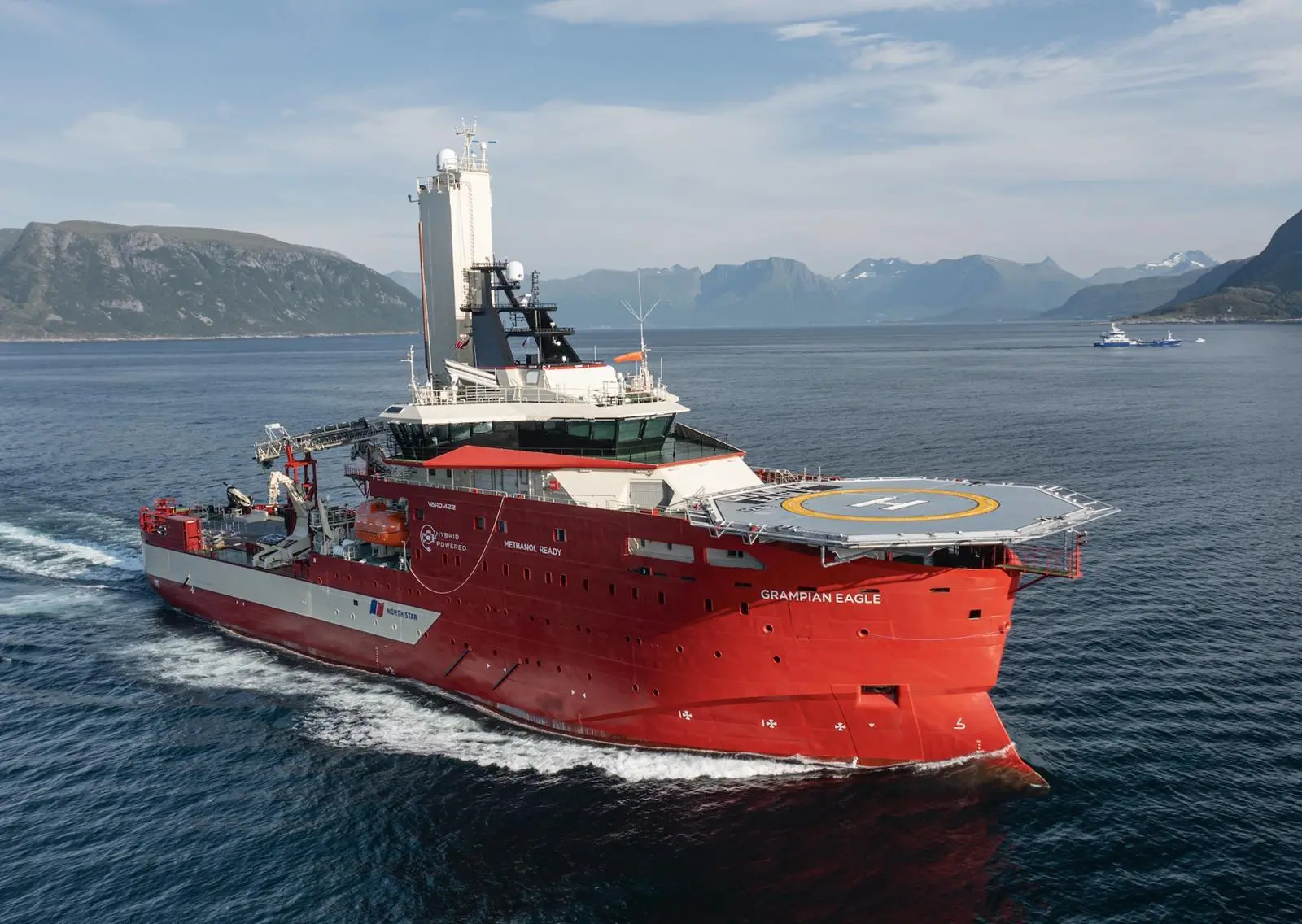
The reality is that different operational profiles will require different solutions. A vessel serving offshore wind installations close to port may be well-suited to electrification and hybridisation. A platform supply vessel operating further afield may find methanol more practical in the near term. Long-range, heavy-duty support ships could ultimately transition to hydrogen-derived carriers such as ammonia.
What is encouraging is that these conversations are no longer confined to the drawing board. Demonstrator projects are under way, with offshore charging infrastructure trials and hydrogen collaborations such as those with NAVHYS, as well as digital systems that enhance efficiency in real time. The industry is moving from theory to practice, with learnings feeding back into design loops at pace.
But the challenges are real and they are weighing heavy. Regulations remain in flux, fuel supply chains are embryonic, and cost and return-on-investment questions weigh heavily. Training seafarers to operate novel propulsion and storage systems safely is a non-negotiable. Collaboration between owners, yards, classification societies, technology developers and regulators will therefore be decisive.
Collective responsibility
North Star’s own net-zero pathway acknowledges this complexity. By 2040, we aim to transform our fleet through staged investment, piloting and scaling solutions as they mature. Crucially, North Star is taking a collaborative stance, partnering across energy, maritime, and technology sectors to de-risk innovation and accelerate adoption.
For the offshore industry more broadly, the ‘clean leap’ is inevitable, but it must be carefully navigated. Operators cannot afford to wait for a perfect solution to emerge, nor should they gamble on a single pathway. Instead, the sector’s strength will lie in optionality and flexibility.
The industry’s credibility will rest on its ability to demonstrate progress, but decarbonisation cannot be at the expense of vessels in the water or compromised safety. This will require openness to a wide spectrum of technologies and sustained investment, underpinned by a willingness to share learnings along the way.
We are now halfway through what is a defining decade for the shipping industry as it faces up to its decarbonisation duties. This change, however, will not be uniform and there is no single, one-size-fits-all answer to decarbonisation, writes Kenneth Coughlan, North Star CTO.
This feature is part of our SPECIAL REPORT – to read the whole report and others, click here.
Related Articles
 FEATURES & VIDEOS
 FEATURES & VIDEOS
 OTHER NEWS