![MaritimeJournal[Seawork]](https://www.maritimejournal.com/wp-content/uploads/2026/09/MaritimeJournalSeawork.svg)



FEATURE: Port of Rotterdam addresses chronic seafarer shortages
A new visitor experience centre at the Port of Rotterdam aims to boost enthusiasm in an industry struggling with chronic seafarer and staff shortages.

Peter Barker talks exclusively to the Port of Rotterdam Authority (PRA) about the opening of Portlantis, which is subtly putting career opportunities at the heart of its facility in a bid to set young people on a new life course.
Rotterdam handles around 436 million tonnes of freight, involving some 28,000 seagoing and 91,000 inland vessels annually over its 12,500ha port area. The estate is owned by the authority, which is in effect a landlord to the diverse range of tenants doing business within the port.
Its own workforce of around 1,400 may seem modest for such a geographically large operation, but in the Rotterdam-Rijnmond region alone around 192,000 people are employed directly or indirectly in port-related activities. More widely, the port generates more than 500,000 jobs, providing an added value of more than €60 billion – or 2.9% of GDP – for the Netherlands.
Skills shortage
The International Chamber of Shipping predicts a shortfall of 90,000 trained seafarers by 2026.
This affects the port and associated sectors, which compete to attract younger generations into increasingly high-skilled jobs while at the other end of life’s ‘supply chain’, skilled seafarers, after a lifetime at sea, seek more settled, shore-based roles, often in the port sector, sharing their hard-earned experience.
“PRA, like many other companies, is significantly impacted by the ongoing skills shortage in the port and shipping sector,” says Lex Bezemer, media spokesperson for PRA. “This shortage is driven by several factors, including an ageing workforce, rapid technological advances, and a declining interest in maritime careers among younger generations.
“With an ageing workforce and retirement gaps, a large portion of experienced maritime professionals is nearing retirement, creating a vacuum in specialised roles such as shipmasters, engineers and logistics coordinators.
“Technological advances, including the rise of automation, digitalisation, and AI-driven logistics, require new skill sets that many current workers lack, leading to a mismatch between available talent and industry needs.”
The transition to low-carbon fuels and sustainable shipping practices requires specialised training that Bezemer says is insufficient to meet industry demands.
“Due to workforce shortages, ports and shipping companies experience longer turnaround times, higher recruitment costs, and potential safety risks,” he says.
Mitigating the challenges
Before exploring the history behind Portlantis itself and its relationship with skills shortage issues, PRA’s own actions to mitigate the challenges including investment in initiatives such as the Human Capital Coalition Energy transition are worthy of mention.
An example is the authority’s upskilling and reskilling programs, including collaborations with maritime academies and technical institutions to train workers in emerging technologies with a joint recruitment strategy campaign www.werkeninderotterdamsehaven.nl (working in the Port of Rotterdam), which aims to recruit people to work in the port.
A joint effort of more than 150 companies promote jobs and career opportunities in the port and such initiatives are evident at Rotterdam’s annual three-day World Port Days festival.
On the first day, school groups and students from across the Netherlands meet face to face with employers at the MATCH jobs fayre in a nearby theatre, which showcases career opportunities in what is an increasingly high-tech industry.
The Career Orientation and Guidance system (known as LOB in Dutch) demonstrates who PRA is targeting age-wise.
“The joint LOB strategy makes sure youngsters from a young age already know about career opportunities from 8-18 years old. This hopefully increases the amount of youngsters that choose a job in the maritime/port industry,” says Bezemer.
Public-private partnerships enable industry stakeholders to create tailored training modules to address specific skill gaps, including educational campaigns to increase awareness, while PRA’s diversity and inclusion efforts encourage under-represented groups to pursue careers in the maritime sector.
“By working on these goals in collaboration with the government, companies and educational institutions, PRA aims to future-proof the workforce, ensuring the port remains competitive and operationally efficient despite ongoing labour shortages,” says Bezemer.
Portlantis
The Portlantis facility itself may be new but the port’s interaction with the public dates back to 2008. Construction of the 2,000ha Maasvlakte 2 port expansion project includes FutureLand, an on-site visitor centre where the public could learn about the project and view progress.
Following the opening of Maasvlakte 2 in 2013, FutureLand continued to attract more than 100,000 visitors a year until earlier in 2025 when, nearing the end of its design life, it closed its doors for the final time, passing the baton of informing the public about the work of the port to Portlantis.
FutureLand was primarily aimed at keeping the public updated about this new port emerging from the North Sea, but with the basic infrastructure nearing completion the situation changed, and its role became more of a ‘history’ of the building of Maasvlakte 2, where individual developments within will naturally be a never-ending story.
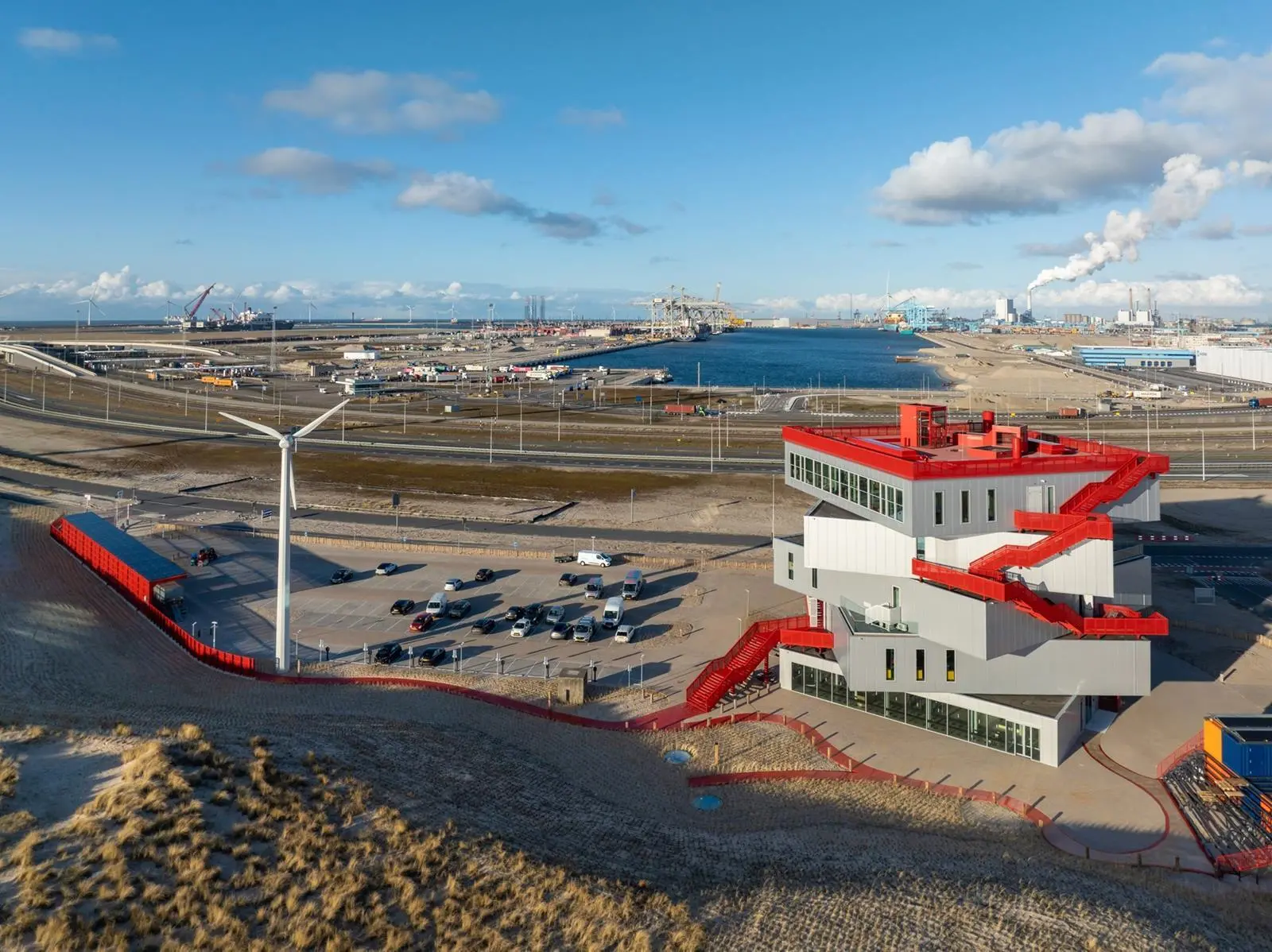
When FutureLand first opened it was on the coast, its galleries overlooking dredgers winning new land from the sea. Eventually it found itself around 3km inland, the sea view obscured by container terminals and Maasvlakte 2’s perimeter sea defences.
Portlantis is on the new shoreline, the country’s maps redrawn after Maasvlakte 2 extended the coast further into the North Sea. There is early talk about a potential Maasvlakte 3, so time will tell if Portlantis retains its sea views longer than its predecessor.
Investment in Portlantis was a bold decision, lacking usual income from the tenants’ ground rent. However it has kept local communities onside, not to mention taxpayers, who partly fund the port. PRA always has to respect local communities who wish for the delicate balance between opportunity and intrusion to be maintained.
Different comparison
“Portlantis is a state-of-the-art experience centre located on Maasvlakte 2, designed to showcase the complex and dynamic world of the Port of Rotterdam,” says Bezemer. “Spanning 3,500 square metres across five floors around a central atrium, it offers an interactive and educational environment where visitors can explore the economic, technological and environmental significance of Europe’s largest port.”
With a ‘start-from-scratch’ approach, very little from FutureLand made the short journey to Portlantis, but any early misgivings evaporate when experiencing how modern information presentation technology allows a vastly increased amount of knowledge to be passed on.
It is the subtle and detailed insight into human involvement in the marine industry that quickly becomes apparent, as Bezemer explains: “One of the many features is exploration of career opportunities in the Port of Rotterdam.
“Visitors can engage with displays that highlight port operations, logistics, sustainability and innovation, the centre providing insights into various maritime professions, helping students and job seekers discover career opportunities.”
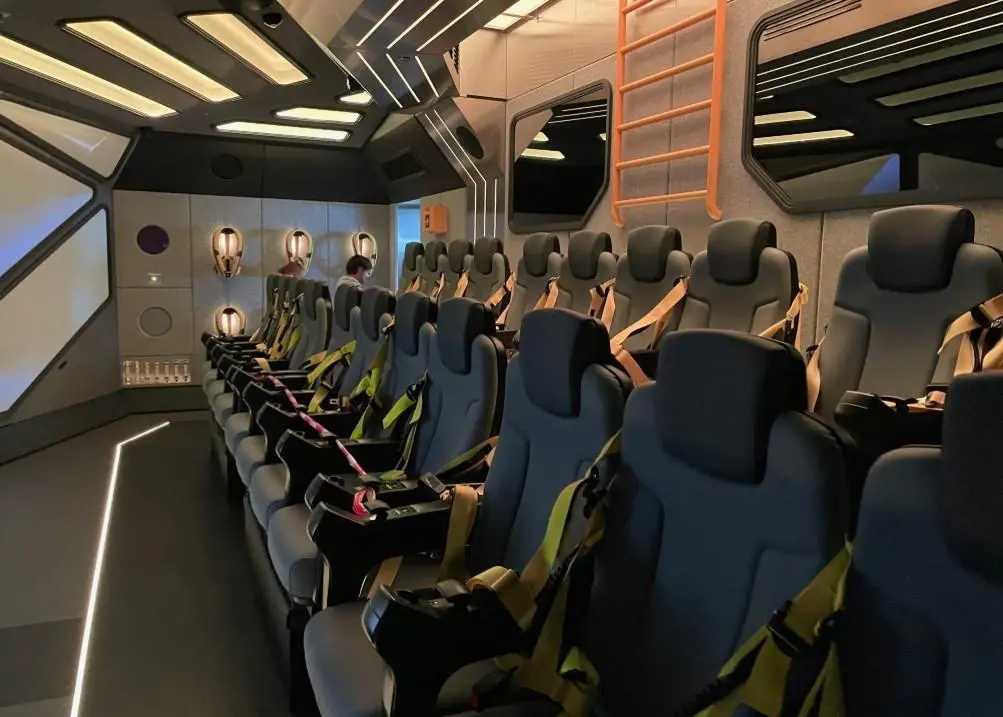
Portlantis uses modern storytelling formats including simulators, games and 360-degree VR headsets showcasing, as Bezemer says, ‘how rich and diverse the world of the port is’ and that it is ‘an exciting and rewarding place to work’.
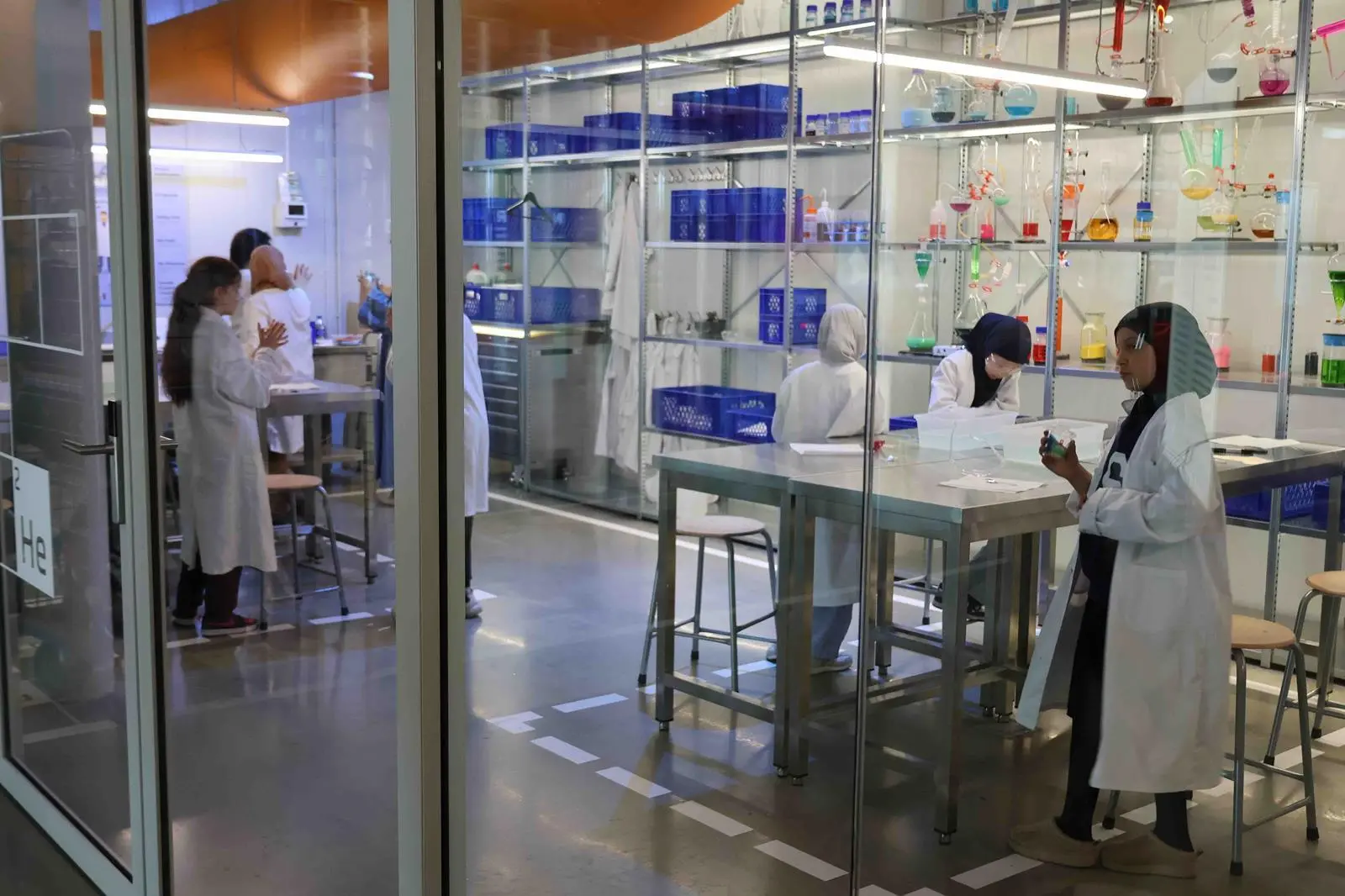
Examples of where youngsters’ imaginations can be sparked include a glass-fronted laboratory where, supervised by specialist staff, (very) young students mix chemicals to produce super-bouncy balls reflecting the work of the petrochemical sector within the port. Another similar workshop sees students building scale model wind turbines.
At FutureLand, a container gantry crane simulator involved a seat with a glass display screen in the floor that reacts as visitors transfer a container from a truck to the ship.
The modern version at Portlantis has large, simulated CCTV screens with controls reflecting the now largely automated process, operators only ‘manually’ controlling certain phases from a nearby building and not visually from on the crane itself.
There is a charge for the actual exhibition spaces but access to the ground floor, fourth floor well-appointed café/restaurant and panoramic roof area are free. Visitors can take coach and boat tours of Maasvlakte 2. Portlantis also caters for group visits from private family gatherings, to local community visits through to corporate and international governmental groups.
“By showcasing real-world job profiles, Portlantis aims to bridge the gap between education and employment, making maritime careers more accessible,” Bezemer concludes.
“With hands-on learning experiences, visitors can engage with simulations, company visits and boat tours, providing a first-hand look at port operations and logistics. While addressing workforce shortages, Portlantis plays a crucial role in attracting new talent to the industry by increasing interest in maritime professions.”