![MaritimeJournal[Seawork]](https://www.maritimejournal.com/wp-content/uploads/2026/09/MaritimeJournalSeawork.svg)


Insurance crisis looms for Europes inland waterways
European inland waterways could be facing an insurance crisis as operation licence extension ends, placing more than 7,900 vessels at risk, warns Armand Lans, senior broker at FDR.
There is an escalating insurance crisis looming for Dutch-flagged inland waterway vessel owners and operators, representing approximately 70% of the European inland waterway market.
This applies to all kinds of commercial vessels that operate on the waterways.
The bubbling crisis could result in insurance coverage being cancelled and even the prospect of losing licences to operate.
What’s gone wrong?
To operate a commercial inland vessel, which includes passenger and cargo ships registered with the Dutch Flag – amounting to 7,900 vessels – proof of a ship’s classification in the form of a certificate of trade must be issued by the Netherlands Bureau for Inland Shipping Inspection (NBKB).
These inspections were predominantly conducted by individuals working for private companies on behalf of the NBKB.
However, the NBKB, which typically had conducted approximately two thirds of these inspections, had its licence to issue certificates suddenly revoked by the Dutch government in December 2023. This proved to be the touchpaper moment that set off a series of events leading to the current backlog of inspections, severely impacting commercial vessels.
When its licence was rescinded, the contracted surveyors, who conducted the surveys and issued the certificates on behalf of the NBKB, also lost out.
The knock-on effect was that even after the NBKB resolved its issue with the Dutch government, a number of independent surveyors became wary of working with the NBKB.
With the surveyors’ withdrawal of support, shipowners have been forced to seek alternative inspection bodies, but there are simply not enough of them to manage the backlog waiting for renewal, creating a bottleneck that remains unresolved.
A helping hand that has since expired
In an effort to mitigate the crisis, the Dutch Human Environment and Transport Inspectorate (ILT) provided a one-off renewal of 117 certificates in December 2023 and extended a further 108 certificates for six months up until May 1, 2024.
This initial helping hand offered a temporary reprieve for many shipowners. However, the grace period has expired, heightening the threat of a serious backlog of new licence issuances, with neither the Dutch government nor ILT currently acknowledging and addressing the issue.
Vessels that have not secured new inspection certificates are now at immediate risk of being unable to operate legally, raising the risk of additional strain on the already pressured market.
Without valid certification, vessels are deemed not ‘seaworthy’ and marine insurers are likely to withdraw coverage.
This creates a precarious situation for shipowners and operators, who face the prospect of operating without insurance. The implications are severe.
What are the consequences of this backlog?
In the event of an accident or casualty, the financial and legal repercussions could be catastrophic, potentially leading to bankruptcy and severe financial distress for those involved.
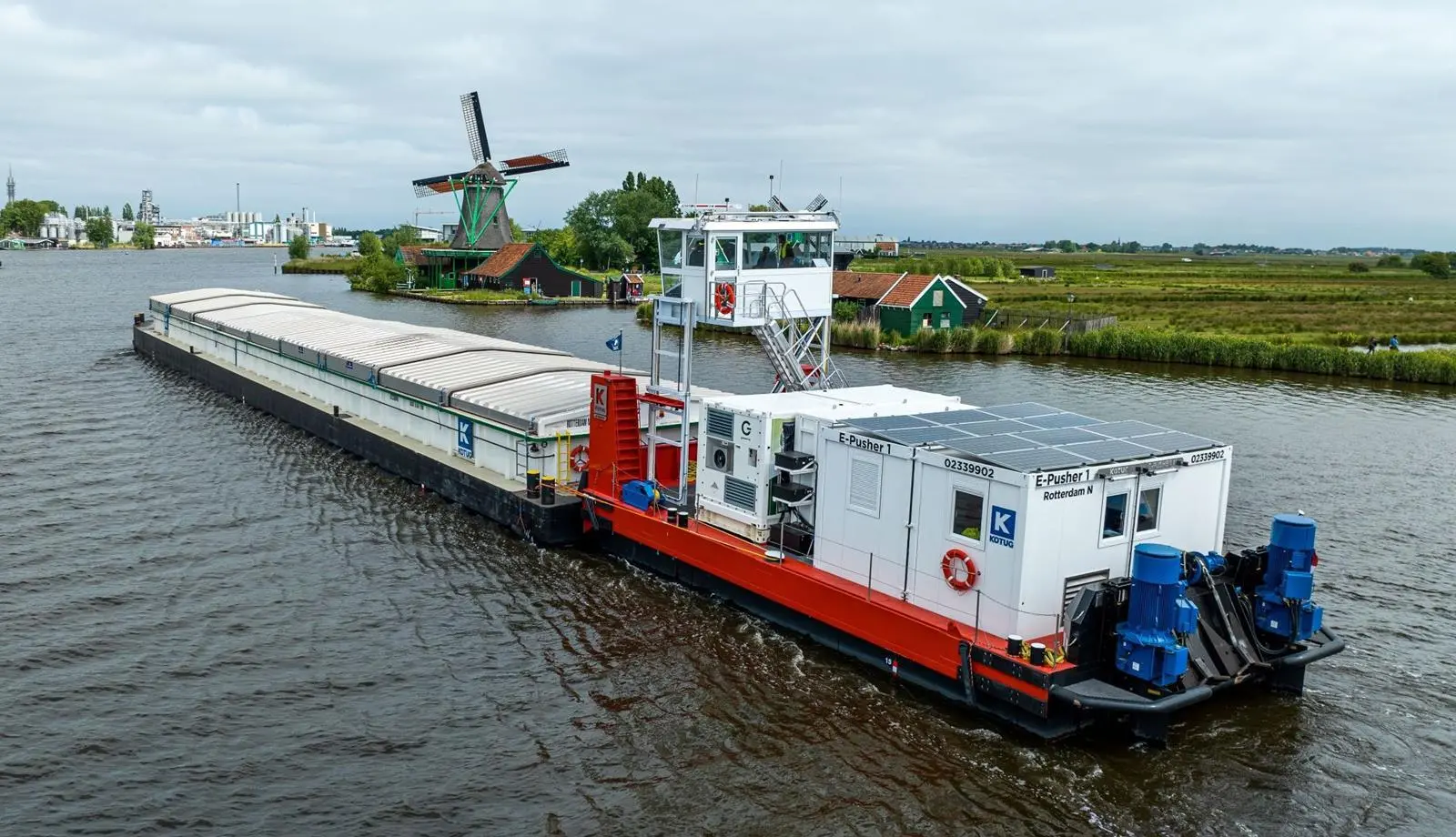
Kotug’s pusher tug operating along Dutch inland waterways
Kotug’s pusher tug operating along Dutch inland waterways
The certification impasse is not just a concern for individual shipowners: it has far-reaching consequences for the entire inland maritime trade network.
With so many European inland waterway vessels sailing under the Dutch flag and certificate renewals pending, a significant number of vessels could be left idle.
This inactivity disrupts the inland water trade, causing logistical challenges for cargo-owning companies, port operators, and terminal schedulers. The knock-on effects could include delayed shipments, increased operational costs, and a ripple effect throughout the supply chain, ultimately impacting consumers and businesses reliant on the timely delivery of goods.
Being proactive could minimise any potential risk
As the crisis deepens, it is clear that immediate and coordinated action is required. Throughout Europe, there are vessel owners still awaiting clarification on the issue.
The first step must come from the Dutch Government and ILT, to get a grip on the issue and work together to lead on a solution, which could come in the form of another temporary reprieve while the backlog begins to get cleared.
Following that, shipowners and operators who find themselves at risk should engage in early and open communication with insurance brokers to help understand the risks and develop contingency plans.
At FDR, we also strongly advise owners to secure surveyors for inspections well in advance of their vessel’s certificate expiry date to avoid falling into the backlog.