![MaritimeJournal[Seawork]](https://www.maritimejournal.com/wp-content/uploads/2026/09/MaritimeJournalSeawork.svg)






Rescuers save oil tanker from crashing into wind turbine
Disaster was averted when rescuers stepped in to save a rudderless oil tanker from crashing into a North Sea wind turbine during a weekend storm.
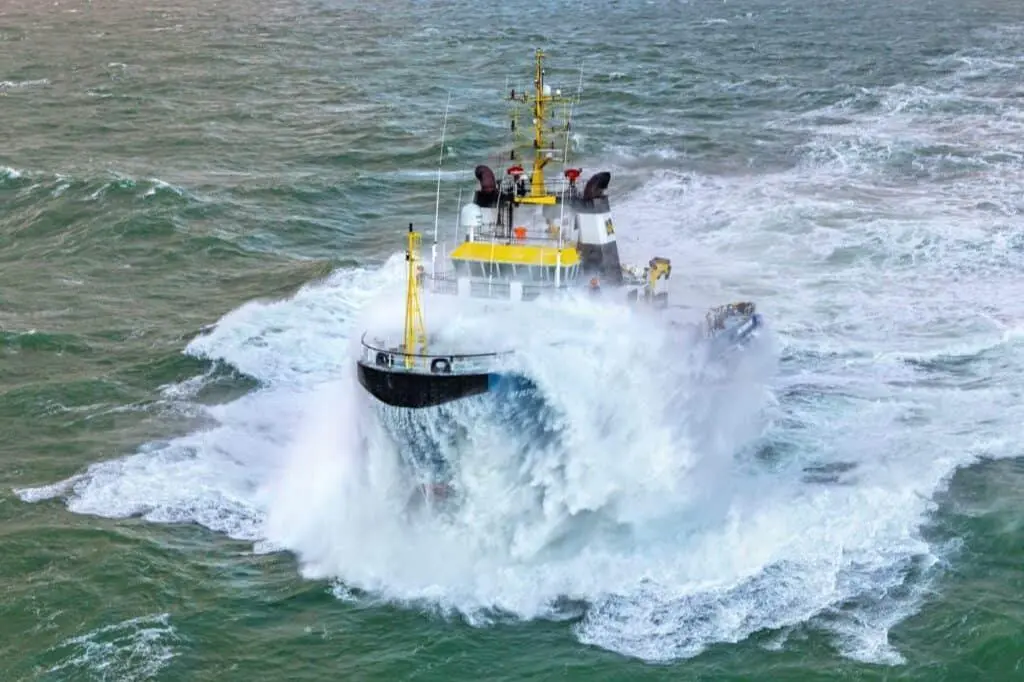
On Saturday evening, 21 crew aboard the 11,200GT Eva Schulte told the Dutch Coast Guard that problems with the main engine had left the vessel adrift just 1km from Vattenfall’s Hollandse Kust Zuid wind farm.
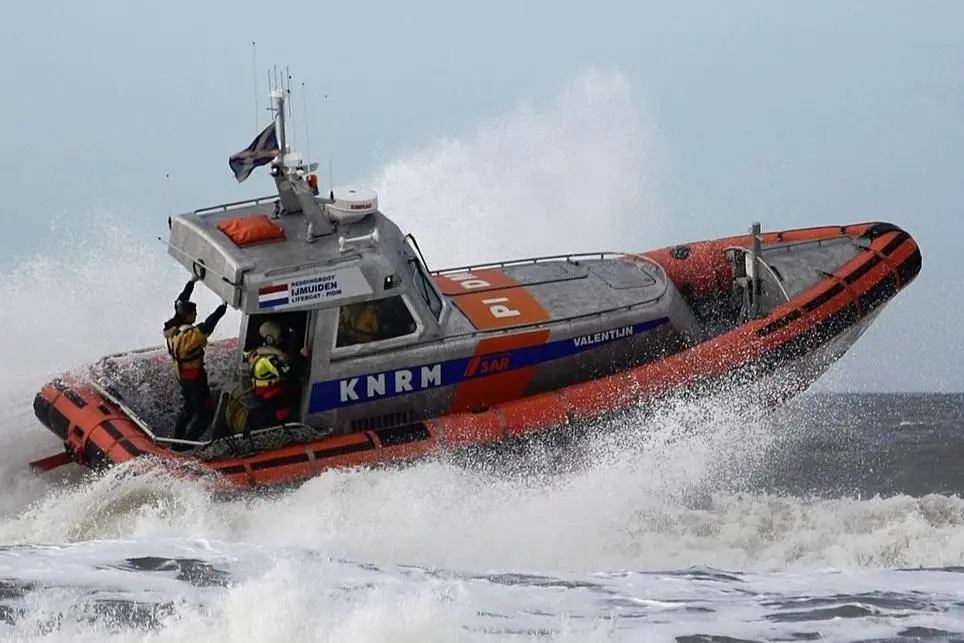
Luckily, the emergency tug Multraship Protector was in the vicinity at the time, said the coast guard, and immediately arrived at the scene with a KNRM (Royal Dutch Rescue Society) lifeboat and two helicopters on standby.
With the tanker unable to anchor and with the vessel drifting towards the wind farm, a towing connection was essential to stop the tanker, which was loaded with fuel oil, crashing into one of the turbines.
In a live blog, the Dutch Coast Guard said Multraship Protector was having difficulties making the towage connection before of a wind force of 8 and 5m waves.
“The tanker is located about one kilometre from the Hollandse Kust Zuid wind farm and is drifting towards the wind farm,” it said. “There are 21 people on board.” It said no request for evacuation had been received.
By 11.30pm a towage connection had been made with the help of the KNRM lifeboat Kitty Roosmale Neoveu and the tanker was towed to a safe place before crew repaired the engine and the vessel continued under her own power.
Increasing offshore risks
With 2.5GW of offshore wind ordered in Europe in the first half of this year alone, according to WindEurope, the seas are becoming more congested but as yet there are no obvious policies in place to address the growing risks of incidents like the one in April, when two injured crew were evacuated from a guard vessel that crasbed into a wind turbine also in the Dutch North Sea.
And this is a drop in the ocean – S&P Global has reported that today’s offshore wind target of 31GW by 2030 has ballooned to about 125GW, with the main proponents Denmark, France, Germany, Netherlands, Norway and the United Kingdom.
“This incident is a reminder of the growing complexity and risks on the North Sea,” said Martin ter Braak, strategic communication Advisor with Vattenfall. “With increasing maritime traffic, expanding offshore infrastructure, and more frequent extreme weather events, the margin for error is shrinking.
“This weekend, the North Sea reminded us just how fragile safety at sea can be. With 21 crew members on board and waves reaching five metres in storm-force winds (Beaufort 8–9), the situation was tense. A failed anchoring attempt left the vessel just one kilometre from the wind turbines. Thanks to the swift and courageous response of the Kustwacht Nederland and the KNRM, a towing connection was successfully established around 23:15, stabilizing the vessel and preventing a potential disaster.”