![MaritimeJournal[Seawork]](https://www.maritimejournal.com/wp-content/uploads/2026/09/MaritimeJournalSeawork.svg)

Single loose wire caused ‘Dali’ fatal bridge crash
A single loose wire caused the blackout that led to the Dali container ship crashing into the Francis Scott Key Bridge in Baltimore last year, an investigation has revealed.
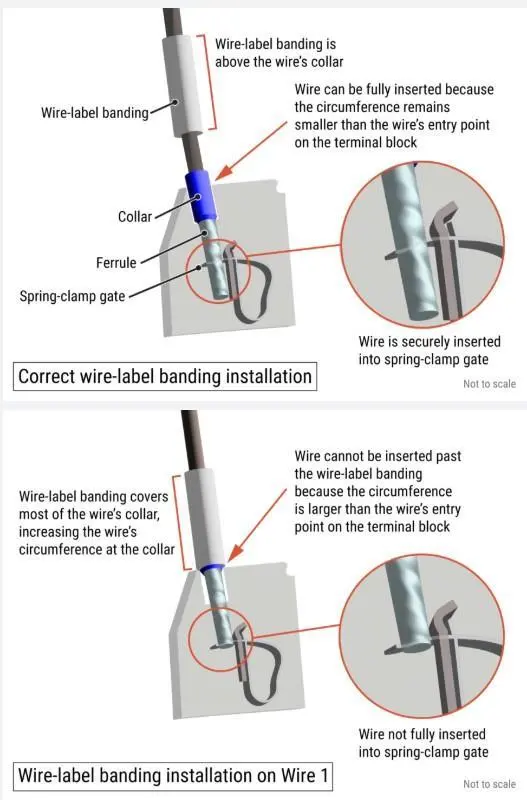
At a meeting of the National Transportation Safety Board (NTSB) in Washington on Tuesday, investigators said the loose wire in the ship’s electrical system caused a breaker to unexpectedly open, sparking a string of events that led to two vessel blackouts and a loss of propulsion and steering.
Investigators said the wire-label banding prevented the wire from being fully inserted into a terminal block spring clamp gate, causing an ’inadequate connection’.
On March 26, the container ship lost power and propulsion and struck the bridge’s southern pier, causing a major collapse.
A crew warning stopped traffic, but six construction workers who were maintaining the road on the bridge were killed.
The NTSB report found that quick actions of the Dali pilots, shoreside dispatchers and Maryland Transportation Authority saved further loss of life.
Discovering the loose wire was a major achievement: the Dali is as long as the Eiffel Tower is tall, with miles of wiring and thousands of electrical components, said NTSB chairwoman Jennifer Homendy.
“Finding this loose wire was like hunting for a loose rivet on the Eiffel Tower,” she said. “Our investigators routinely accomplish the impossible, and this investigation is no different.
“But like all of the accidents we investigate, this was preventable. Implementing NTSB recommendations will prevent similar tragedies in the future.”
The collapse of the Key Bridge was partly due to the absence of protective countermeasures against impacts from increasingly large ocean-going vessels, the report says.
Since the bridge opened in 1977, ship size has grown dramatically. In 1980, the 119m Blue Nagoya struck the bridge, but only caused minor damage. The Dali is roughly 10 times as big.
Shortly after the Dali tragedy the NTSB released an initial report on nationwide bridge vulnerability, which found that the Maryland Transportation Authority and many other bridge owners were unaware of the risks posed by vessel collisions. The NTSB urged 30 identified owners to assess and mitigate these hazards.
Recovering the Dali
Explosives were later used to clear wreckage from Dali’s foredeck, and seabed debris was removed to reopen port access. Freeing the ship, pinned to the bottom, was complex. Of its 4,680 containers, 56 held dangerous goods, including 14 near the bow that may have been damaged.
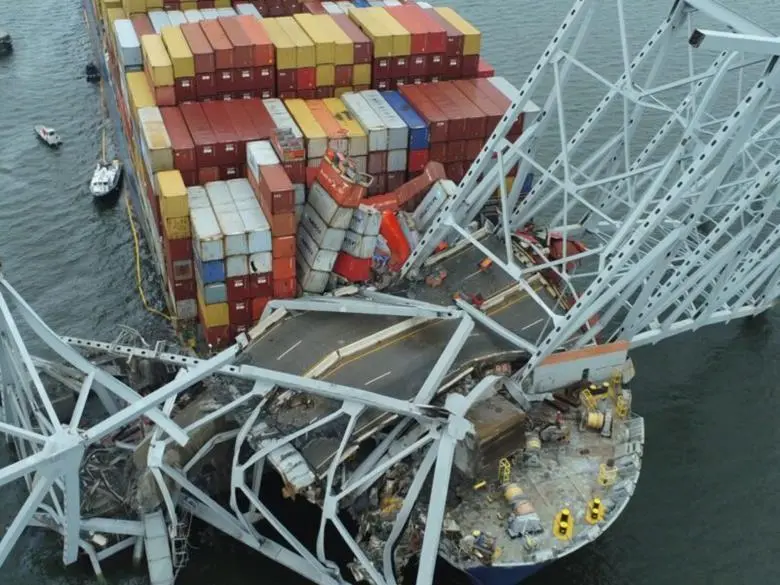
While floating cranes removed most wreckage, debris on Dali’s foredeck required a controlled explosive demolition. Once confirmed successful, preparations began to move the vessel.
Refloating started about 18 hours earlier and involved releasing anchors and moorings, de-ballasting more than a million gallons of water added during earlier operations, and dive inspections ensuring all port-side obstructions were cleared.
Responders including Resolve Marine as salvor and the Marine Spill Response Corporation for oil-spill duties were supported by USCG’s Atlantic Strike Team and Salvage Engineering Response Team.
The US Army Corps of Engineers and the US Navy Supervisor of Salvage and Diving also played key roles.