![MaritimeJournal[Seawork]](https://www.maritimejournal.com/wp-content/uploads/2026/09/MaritimeJournalSeawork.svg)



Africa-Europe subsea tunnel plan resurrected
The Spanish government last month announced it would put up €2.3 million to fund a design study on a subsea tunnel that would connect Europe with Africa.
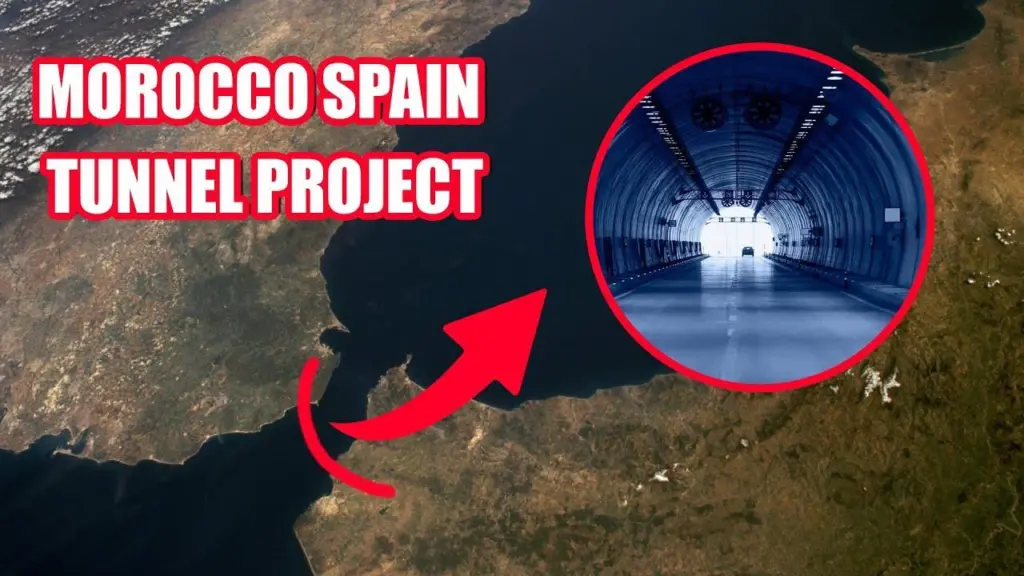
The Fixed Link Project through the Strait of Gibraltar was first discussed in 1979, says Sociedad Española de Estudios para la Comunicación Fija a través del Estrecho de Gibraltar, S.A. (SECEGSA), the Spanish Society for Fixed Communication Studies through the Strait of Gibraltar.
SECEGSA is co-operating with its counterpart in Morocco, ‘Société Nationale d’Études du Détroit de Gibraltar’ (SNED), to work on the tunnel, which would be about 34 kilometres in length, 27.8 kilometres of it under the sea.
“The Fixed Link through the Strait of Gibraltar will be decisive for the greater integration of two continents, Europe and Africa, in the social, economic and human spheres,” says SECEGSA.
“The Strait of Gibraltar is a key place for maritime transport and global trade, East-West, whose possibilities will increase if the complementary route that would be the Fixed, North-South Link is executed. An infrastructure that complements and does not exclude maritime routes, which will take advantage of all the opportunities offered by the railway interconnections of Europe and Africa, promoting a balanced and comprehensive development of both sides of the Strait, of both countries: Spain and Morocco, of the two shores of the Mediterranean and also of both continents: Europe and Africa.”
The tunnel will open in Tangier in Morocco and Punta Paloma in Spain, and consist of two single-track railway tunnels with a circular sectrion of 7.9m in diameter and a service/safety gallery between them every 340 metres.
Estimates of the costs of building the tunnel, which will be 475 metres at its maximum depth, vary from €6 billion to €9 billion, and reports say the intention is for the tunnel to open in time for the 2030 Football World Cup, which is being hosted by Morocco, Spain and Portugal.
Related Articles
 INDUSTRY NEWS
 MARINE CIVILS
 MARINE CIVILS