![MaritimeJournal[Seawork]](https://www.maritimejournal.com/wp-content/uploads/2026/09/MaritimeJournalSeawork.svg)




Aquaculture innovation drives record reef build
Four million oysters will soon be deployed off the North Norfolk coast as part of the UK’s largest oyster reef restoration project.
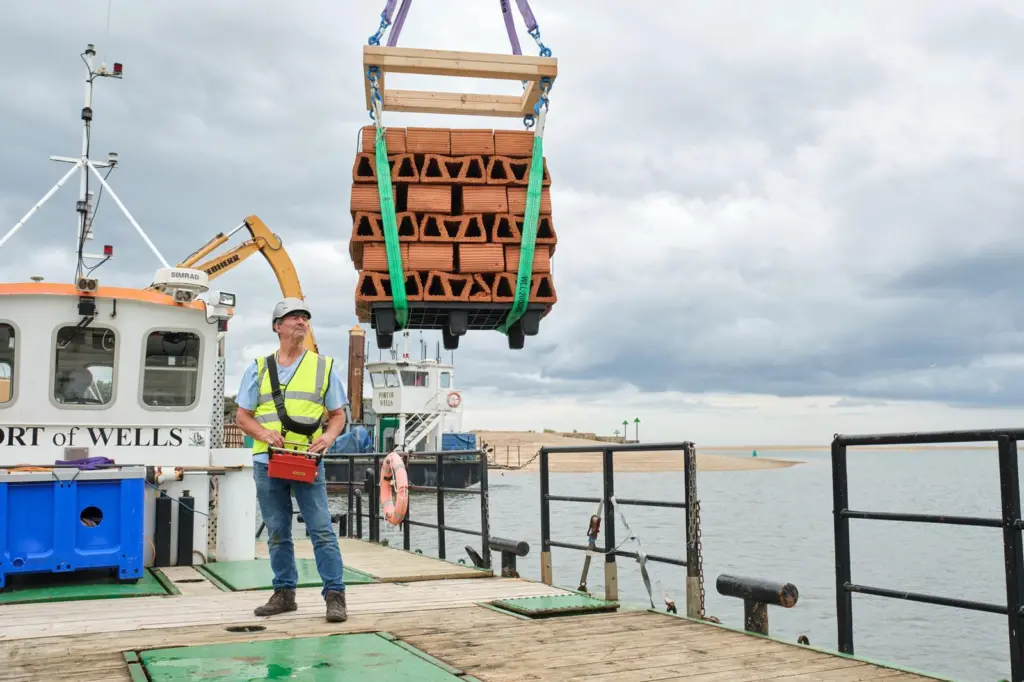
Petcare company Purina has announced its support for a major reef construction project led by conservation group Oyster Heaven – the third reef regeneration project MJ has reported on in so many months.
“We are thrilled to be working with Oyster Heaven, marking an important step towards improving marine restoration along the Norfolk coastline and a first for Purina in the UK,” said Kerstin Schmeiduch, director of sustainability at Purina Europe.
”As marine biodiversity faces significant challenges, it is essential we come together for collective restoration efforts.”
Restoration efforts
Native European oysters, once abundant in UK waters, are key to marine health. Oyster reefs act as natural water filters, removing pollutants such as excess nitrogen while providing habitats for fish, crabs, and other marine species.
Their decline over the past century has left a significant gap in coastal ecosystems.
The project will see new oyster reefs embedded with a minimum of four million oysters, helping to restore vital ecosystems, boost biodiversity and improve water quality in the region.
This large-scale reef restoration effort will begin with the installation of “Mother Reefs” – clay bricks designed to house juvenile oysters.
Each unit is seeded with hundreds of baby oysters, or spat, before being carefully placed on the seabed. By the end of 2026, more than 40,000 Mother Reefs are expected to be deployed.
The work is being carried out in collaboration with Oyster Heaven’s partner, Norfolk Seaweed, a family-run aquaculture business that brings local expertise in managing the marine environment. Together, the partners aim to create thriving oyster habitats that will transform the seafloor into a biodiverse oasis.
Part of Purina’s broader Ocean Restoration Programme, the Norfolk project is one of several initiatives already across Europe.
By 2030, the company aims to restore 1,500 hectares of marine habitat, equivalent to 3,700 football pitches.
Other reef regeneration projects include the BELREEFS project, led by Jan de Nul, which aims to influence the nature-inclusive design of offshore infrastructure such as windfarms and subsea cable protection.
And Van Oord is using oysters to mitigate the damage caused to the North Sea bed by the growing scale of windfarms, cables and other infrastructure.
Related Articles
 INDUSTRY NEWS
 MARINE CIVILS
 MARINE CIVILS