![MaritimeJournal[Seawork]](https://www.maritimejournal.com/wp-content/uploads/2026/09/MaritimeJournalSeawork.svg)





Bristol Port lays out plans for wind terminal
The UK’s Bristol Port Company (BPC) has confirmed plans to develop a Bristol Wind Terminal at its Avonmouth Docks.
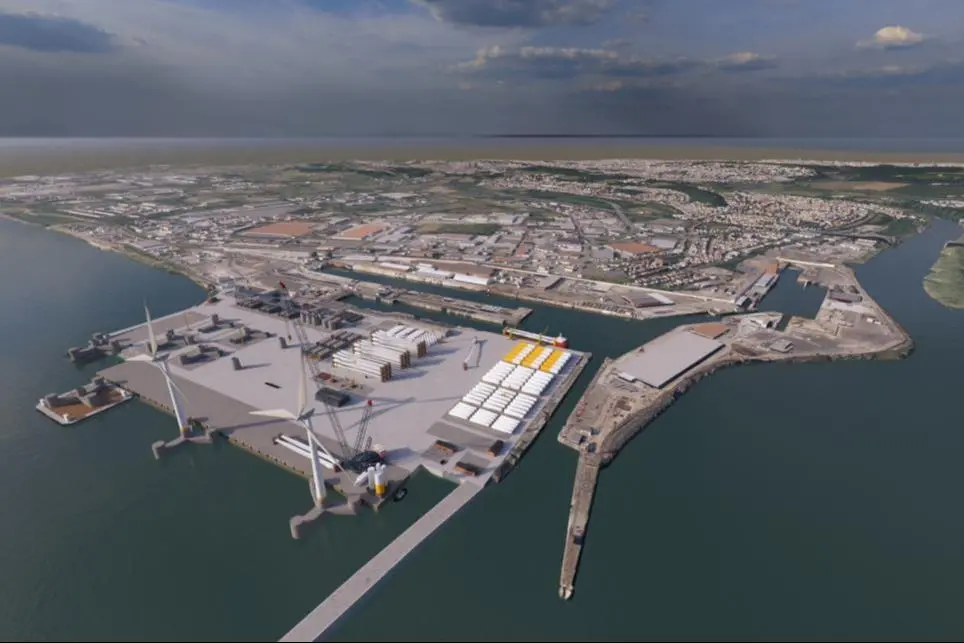
New port infrastructure essential for the production, marshalling, integration and deployment of floating offshore wind turbine units will be carried out for full operation in 2030, the port says.
The facility will have the capacity to handle the assembly or manufacture of sub-structure bases, the port says, along with the integration of towers, blades and nacelles.
Completed floating structures will then be deployed from the port to deep-water sites in the Celtic Sea.
The work has materialised after the UK’s Crown Estate’s Offshore Wind Leasing Round 5, which focused on expanding specifically floating wind projects.
The new deep-water terminal will include a new quay wall, slipway for launching floating sub-structures and extended breakwater.
Activities at the port will also include wet storage, a station keeping system with anchors and mooring lines and inter array cables.
Building is slated to begin in 2027.
New dredger
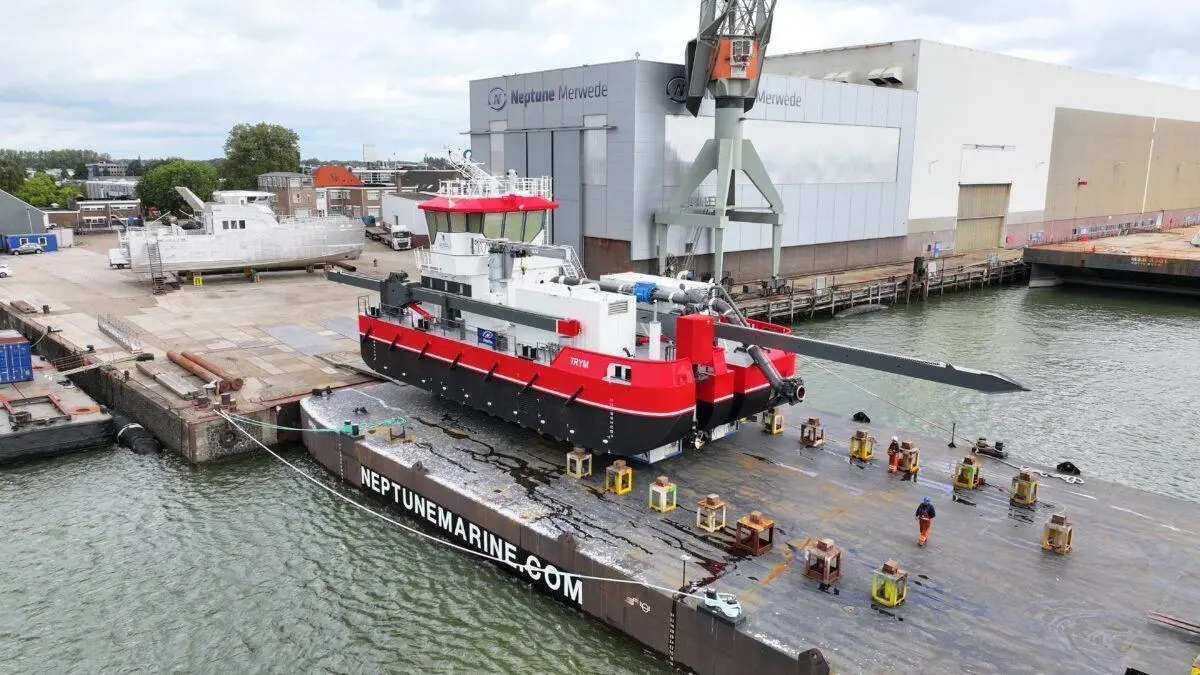
Bristol Port is also expecting a new vessel to the port, a Cutter Suction Swing Arm Dredger 500, named TRYM, courtesy of Dutch shipyard Neptune Marine.
The vessel, says Neptune, ’has been designed specifically to meet the unique demands of the Bristol Port dredging projects and keeping the dock waterways navigable’.
“This powerful vessel will significantly enhance the port’s dredging capabilities in the UK. The design has also been made to allow for future green technologies to be incorporates and upgraded to continuously improve the vessel’s systems and support the port’s environmental goals.”
Bristol is one of the largest ports in the UK for cargo tonnage, handling cars, bulk cargo and other goods.
The floating wind farms to be built from Bristol Port are slated to have a generation capacity of up to 4.5GW – enough to power four million households, the port says.
Related Articles
 INDUSTRY NEWS
 MARINE CIVILS
 MARINE CIVILS