![MaritimeJournal[Seawork]](https://www.maritimejournal.com/wp-content/uploads/2026/09/MaritimeJournalSeawork.svg)






Engineers create world-first fish migration river
A fish migration river is being built in the Netherlands that will allow migratory fish to swim between fresh and sea waterways.
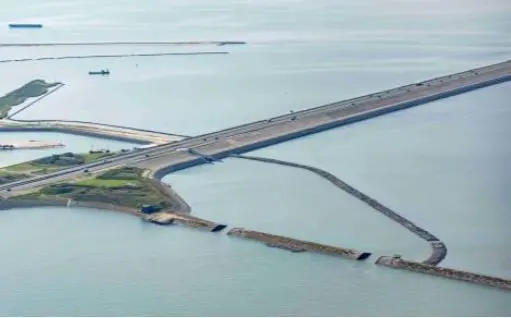
Gaps are being put in the Afsluitdijk, a 32km dyke in the Netherlands that was built between 1927 and 1932 in one of the most ambitious hydraulic engineering projects ofthe time.
It was built to protect densely populated areas surrounding the inland sea Zuiderzee, which was directly connected to the North Sea, from flooding, and also to enable large tracts of land to be reclaimed and turned into farmland.
However, by separating the Zuiderzee’s brackish waters into the freshwater IJsselmeer and salt-water Wadden Sea, the natural migration of fish was disrupted and species like salmon and eels, which could no longer move between fresh and salt water to spawn, suffered a decline in their populations.
For this reason, the Dutch water and infrastructure ministry (Rijkswaterstaat) and Afsluitdijk operators decided to restore the ecological connection between the Waddenzee and the IJsselmeer and the fish river was created between both waters.
The 4km winding, artificially tidal river will offer a gradual transition to fish from salt to fresh water, and Dutch marine civils contractor Van Oord, working with BAM and Rebel in a consortium named The Levvel, has reported that it has completed the works involved in creating the estuary for the river.
Rubble from the Afsluitdijk dam, which is also being reinforced, dredged sand and transplanted vegetation have been used in the project, with large rocks embedded in the riverbed in concrete to provide resting areas and stimulate natural habitat for the fish.
Although the gaps in the dam will be open all the time for fish to travel to and from their breeding grounds, there is a fail safe in that the dam can be closed in the event of flooding risk.
Van Oord says the fish migration river is the only one in the world.
Related Articles
 INDUSTRY NEWS
 MARINE CIVILS
 MARINE CIVILS