![MaritimeJournal[Seawork]](https://www.maritimejournal.com/wp-content/uploads/2026/09/MaritimeJournalSeawork.svg)






First energy island building block built
The world’s first energy island is looking more like a reality as the building of its massive foundation get under way.
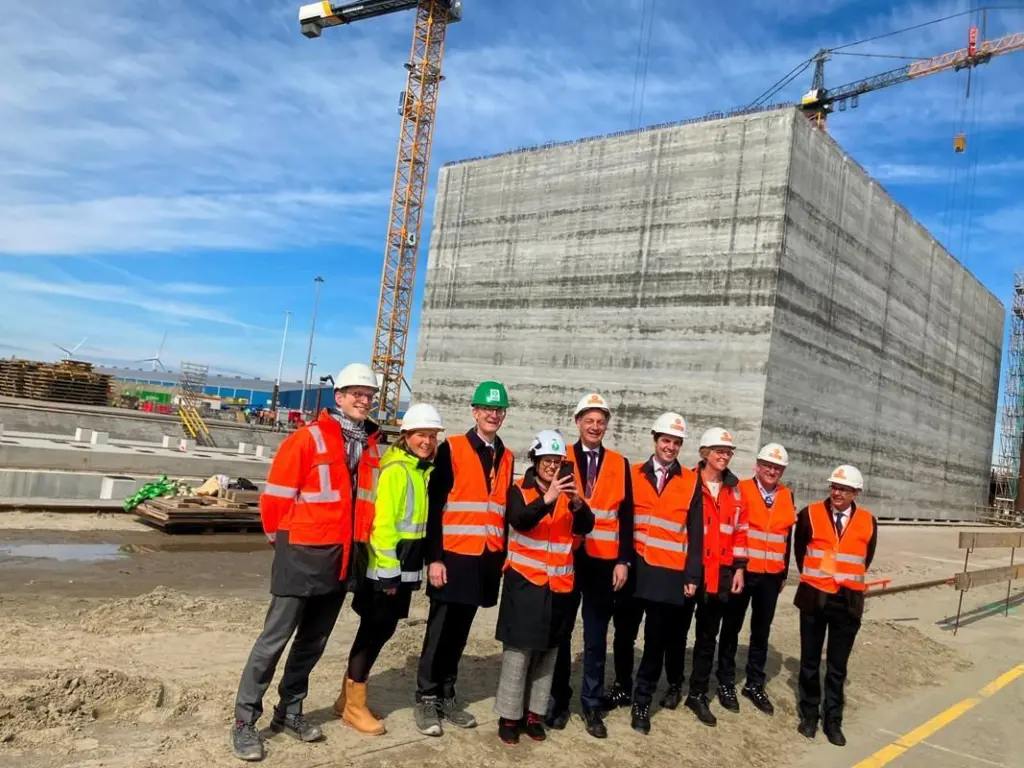
Twenty-three 57m x 30m x 30m concrete caissons are to be built at a wharf dedicated to constructing the Princess Elisabeth Island, which will be installed in the North Sea 45km off the Belgian coast.
Each one will weigh 23,000 tonnes, take three months to build and then transported by semi-submersible vessel to another part of the port to be lowered into the water and stored until all are built.
The caissons will form the outer walls of the energy island, which will then have 2.3 million cubic metres of sand pumped into the centre.
The caissons will be filled with water to keep them in place when they are taken to their final destination in the North Sea.
Belgian officials, including prime minister Alexander De Croo, visited the wharf last week to see the first caisson as it was completed.
“The North Sea is set to become the powerhouse of our energy independence, and Princess Elisabeth Island will be a crucial part of this process,” said De Croo. “Belgium has long been a pioneer in offshore wind, and by continuing to innovate, we are further consolidating our position for the future.
“This gives our Belgian companies more opportunity to do ground-breaking work, both here and abroad, as well as guaranteeing sustainable, competitively priced energy for our citizens and businesses. Once again, we are putting Belgium on the map.”
The island is timetabled to be finished in late 2026, when the mammoth task of installing the electrical equipment will begin, tenders for which have not yet been published.
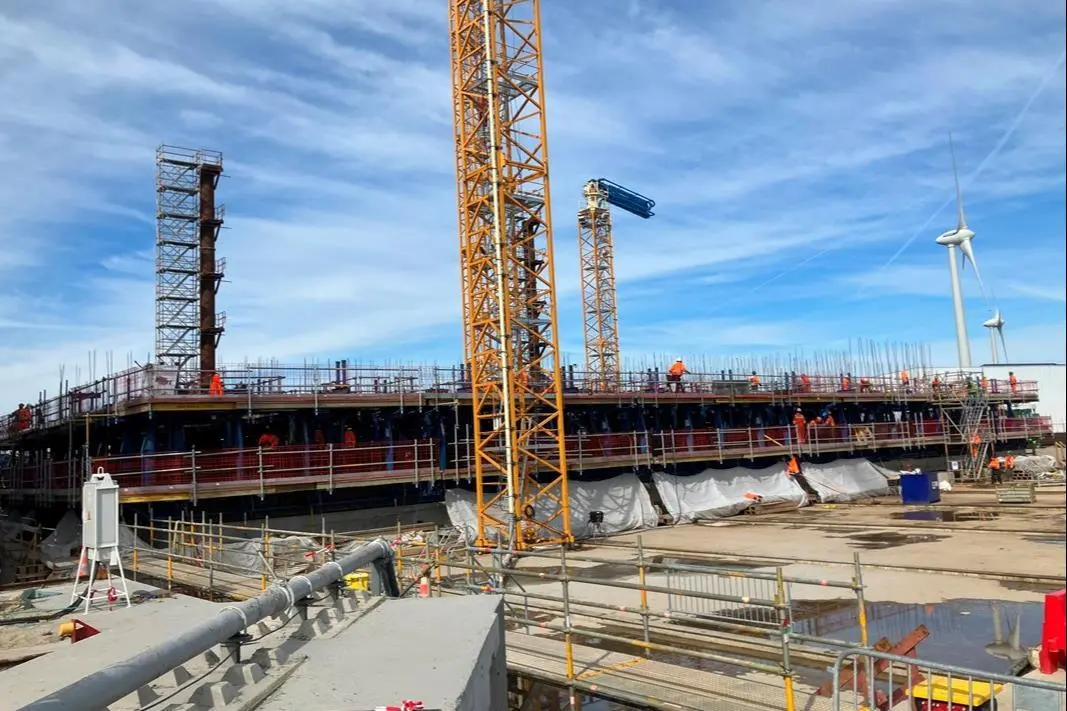
The energy island is being partly financed by the EU’s Covid-19 recovery fund, having been awarded a grant of around €100 million, in consultation with the Belgian government.
Contractors DEME and Jan De Nul are spearheading the works at the port, a 60km stretch running from Vlissingen in the Netherlands to Ghent in Belgium.
“The energy island is a great example of cooperation between Belgium and the Netherlands, with European support,” said North Sea Port CEO Daan Schlack. “Major Belgian companies have chosen Vlissingen, in the Dutch part of our port, as the location to construct the world’s first energy island of this kind.
“This choice was prompted by our strategy of backing the energy transition. As a result, a complete cluster for the offshore industry has been developing in Vlissingen for several years, for example offshore wind farm construction.”
Related Articles
 INDUSTRY NEWS
 MARINE CIVILS
 MARINE CIVILS