![MaritimeJournal[Seawork]](https://www.maritimejournal.com/wp-content/uploads/2026/09/MaritimeJournalSeawork.svg)



London’s Super Sewer opens for business
The UK water industry’s largest ever infrastructure work is now open for business.
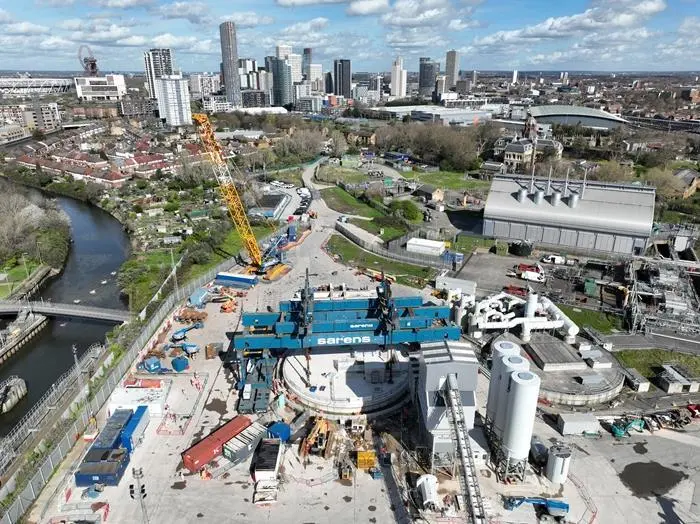
London’s 25km ‘Super Sewer’, officially known as the Thames Tideway Tunnel, prevented 219,000m3 of sewage entering the river by capturing half a million cubic metres of rainwater within 24 hours, the project managers say.
Four of 21 sites have been switched on, which means valves are now operating to prevent sewage from leaking into the iconic River Thames. Once fully operational, Tideway believes sewage will be virtually eliminated from the capital’s artery.
“The Thames Tideway Tunnel, a £4.5bn (€5.4bn) investment made by our customers, is nearing completion,” said Thames Water CEO Chris Weston. “We are already seeing the benefits of our £700m investment in Lee Tunnel in 2016, and the Channelsea River and River Lea now have ‘good to excellent’ water quality as a result – showing how the Thames Tideway Tunnel is set to bring further improvements in central London.”
The project, which began as far back as 2011, has been quite a feat of engineering.
“More than 20 shafts, some as wide as the dome of St Paul’s cathedral, were built across London to divert sewage flows and lower tunnelling machines into the ground,” Tideway says. “The first of these giant machines started work deep beneath London in 2018, with primary tunnelling on the 25km main tunnel and two smaller connection tunnels fully completed in 2022.
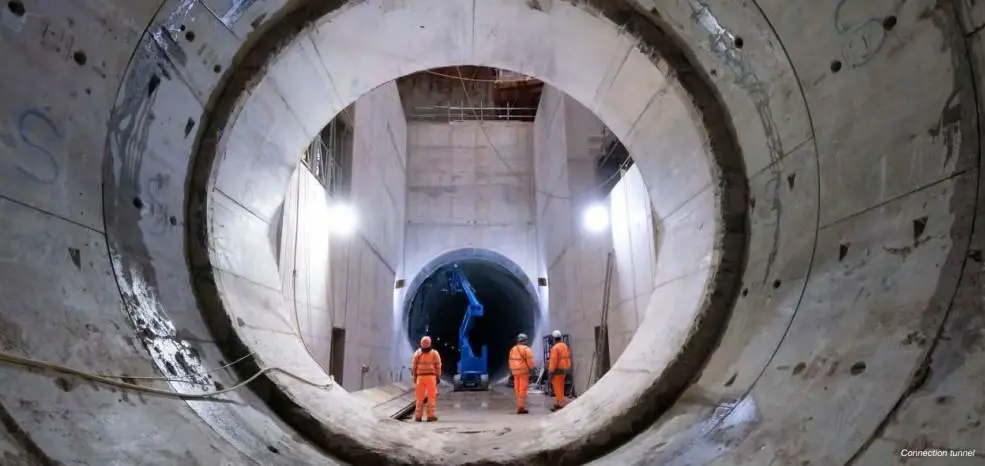
“By the autumn of 2023, secondary lining was fully complete on all the tunnels, with the heavy civil engineering work then completed in the spring of 2024.”
To carry out ground investigations, jack -up rigs were deployed by Red7Marine along the river, which were moved around the waterway by the company’s own tug, Haven Supporter, and other vessels supplied by General Marine.
Millions of tons of underground material were removed by waterway on a range of barges from central London and deposited on a site in Rainham that could be the largest habitat-creation scheme inside the metropolis, already providing a home for wild birds. Clay is being used to line pits and create wetlands on Rainham Marshes and chalk laid on top.
A number of big industrial names have been involved in the sewer works – such as BAM Nuttall, Morgan Sindall Infrastructure, Balfour Beatty, Ferrovial Agroman UK, Laing O’Rourke, Costain, Land and Water, Vinci Construction Grands Projets and Bachy Soletanche, all integrated by Amey, which looks after process control, communication equipment and software systems for operation, maintenance and reporting.
Full operation is expected to begin next year.
Related Articles
 INDUSTRY NEWS
 MARINE CIVILS
 MARINE CIVILS