![MaritimeJournal[Seawork]](https://www.maritimejournal.com/wp-content/uploads/2026/09/MaritimeJournalSeawork.svg)


WATCH: Giant tunnel element arrives in Antwerp
The first of eight giant elements that will eventually make up a tunnel connecting parts of Antwerp underneath the River Scheldt has arrived in the city.
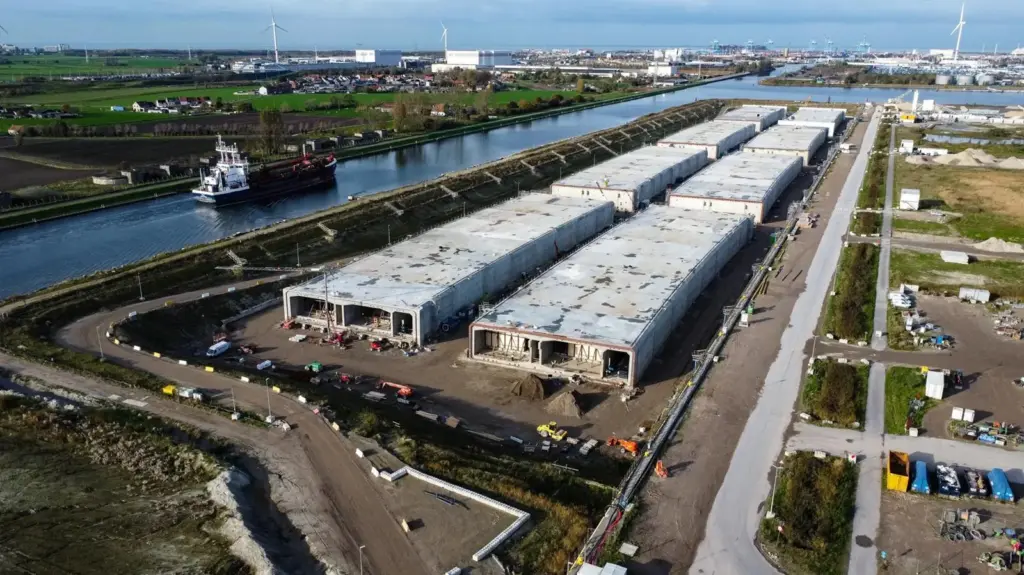
The concrete elements each measure 160 metres in length by 42 metres in width and 10 metres in height. They weigh 60,000 tonnes each. For towage, they were lowered into the water with a draft of 8.6 metres, leaving just 140 centimetres above the water.
The first concrete was poured for the elements in the Zeebrugge dry dock some 18 months ago, in January 2023. Now complete, the rest of the tunnel elements will be waterproofed, prepared for transport and towed to Antwerp one by one with tugs and push boats assisting and ballast tanks used all the way.
On arrival they will be submerged and assembled, creating a 1.8km subsea tunnel connecting different parts of Antwerp.
The Scheldt Tunnel will be 1.8 kilometres long and will contain three lanes for cars on each side and a special tunnel for bikes. There will also be an escape shaft.
Since January 2023, TM COTU has overseen the project, using approximately 200,000m³ of concrete and 50,000 tonnes of steel.
TM COTU stands for Tijdelijke Maatschap Combinatie Oosterweeltunnel in Dutch, and is a consortium comprising the Belgian construction companies BESIX, DEME, Stadsbader Contractors and Jan De Nul.
Before the elements are immersed a slack tide is essential in a river as precision is vital, and there is a small opportunity between ebb and flow only twice a month. The tunnel will be placed in a dredged trench at an angle across the river bed.
This tunnel will form part of the Antwerp Ring Road project, the Oosterweel Link, which is aimed at improving the traffic flow around this strategic port and city. The project developer is the public development company LANTIS, which stands for Leefbaar Antwerpen door Innovatie en Samenwerken”, Dutch for “Liveable Antwerp through Innovation and Cooperation”).
The tunnel should be completed for bicycles in 2028 and cars in 2030.
Related Articles
 INDUSTRY NEWS
 MARINE CIVILS
 MARINE CIVILS