![MaritimeJournal[Seawork]](https://www.maritimejournal.com/wp-content/uploads/2026/09/MaritimeJournalSeawork.svg)






WATCH: Major decommissioning engineering complete
Decommissioning of a massive BP oil platform has finally been completed with the removal of the largest SSIV in the North Sea.
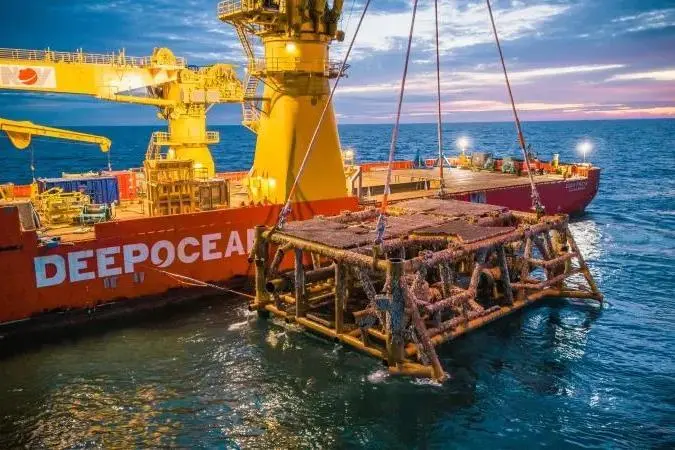
The final piece of the puzzle was the removal of the Subsea Isolation Valve (SSIV) by DeepOcean’s Edda Freya vessel, a Construction Support Vessel (CSV).
The SSIV, an important safety device used in subsea oil and gas production designed to isolate and shut off oil and gas flow in case of emergency, had been installed by Heerema’s crane vessel Thialf, which was then named DB102.
Weighing 400 tons, this particular SSIV was the largest in the North Sea and was installed at BP’s Miller oil and gas drilling, production, processing and accommodation platform installed in the North Sea1991.
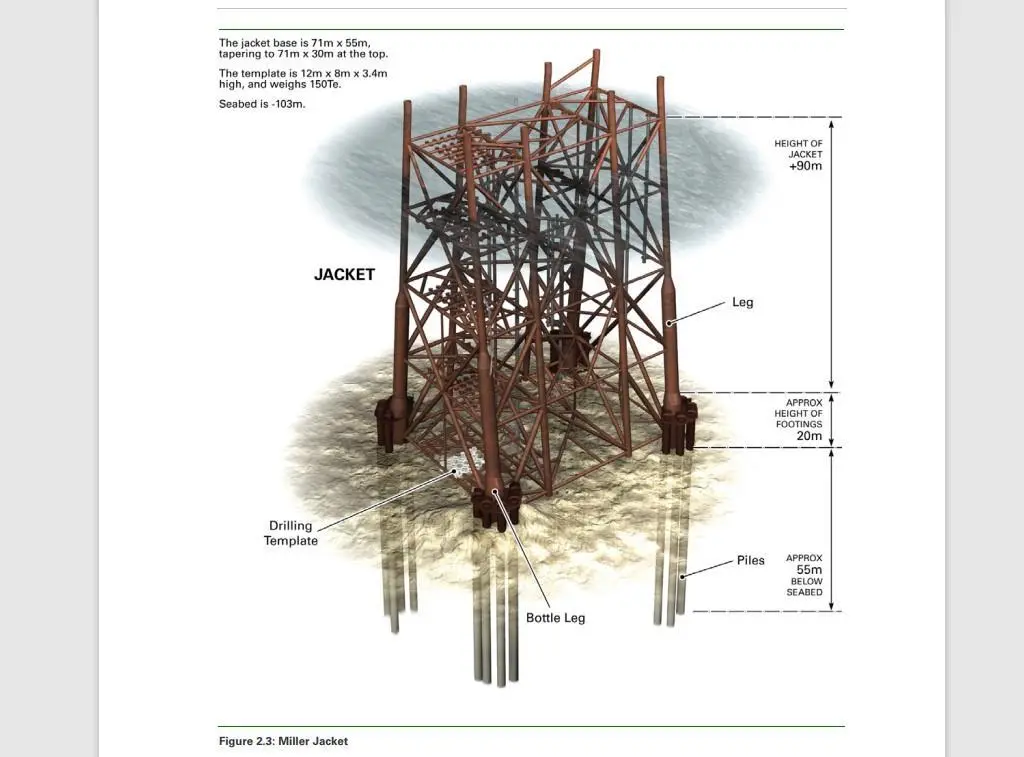
The topsides, supported by an eight-legged steel jacket, consisted of a Module Support Frame (MSF) supporting a number of modules, with an installed weight of approximately 30,000 tons.
Much of the platform, such as the topsides and jacket, were removed and returned to shore for re-use, recycling or disposal.
Old oil wells are plugged with cement deep inside and sealed off, and at Miller these were 500m and 2,000m deep.
Cuttings were left on the seabed to degrade, and after decommissioning, seabed surveys are carried out to identify any oil-related debris in the zone.
The pipelines have been flushed clear of hydrocarbons and left in situ for possible re-use.
Because the jacket was so large – one of the heaviest in the North Sea – not even the largest heavy-lift vessels could safely remove it in a single lift, so it had to be cut into a number of sections involving 200-300 subsea cuts.
Lifted sections were back loaded and sea fastened onto cargo barges or transit vessels.
Saipem 7000 called in
To assist with the decommissioning, the Saipem 7000 heavy-lift vessel was deployed to remove the Miller platform, which had the highest flare in the North Sea at 163 metres, and was connected to one of the heaviest modules.
“To avoid working at height, the flare was removed together with the module,” says Saipem. “Because it was too heavy to be set down and transported on the deck of the S7000, the module, along with its flare tower, was carried to shore still hooked to the cranes. It is in fact one of the first extended topside lifts in the world.
“This type of operation – the lifting of such a large structure (module plus flare) and carrying it to shore without part of it being immersed in water – had never been done before. The most critical aspects were the type of lifting system and the transport conditions, together with the extremely tight tolerances between the flare and the S7000 crane. We also had to allow for a long safe time window for the 60-hour transit to ensure the success of the operation.”
To overcome the challenges, scale models were built and tested in a test tank and motion monitoring systems were developed to predict critical motion during transit as well as planning and agreeing offshore operations between all parties.
DeepOcean’s Edda Freya has a diesel-electric hybrid propulsion system and she was designed with a focus on cable laying, offshore constructions and inspections and maintenance operations. She has an LOA of 150 metres, beam of 27 metres and can accommodate 140 persons.
Related Articles
 INDUSTRY NEWS
 MARINE CIVILS
 MARINE CIVILS