![MaritimeJournal[Seawork]](https://www.maritimejournal.com/wp-content/uploads/2026/09/MaritimeJournalSeawork.svg)





WATCH: unique 130m pontoon ordered for Fehmarnbelt Link
A specialised giant multi-purpose pontoon (MPP) will be built to lay a gravel bed under the tunnel element of the Fehmarnbelt project connecting Germany to Denmark.
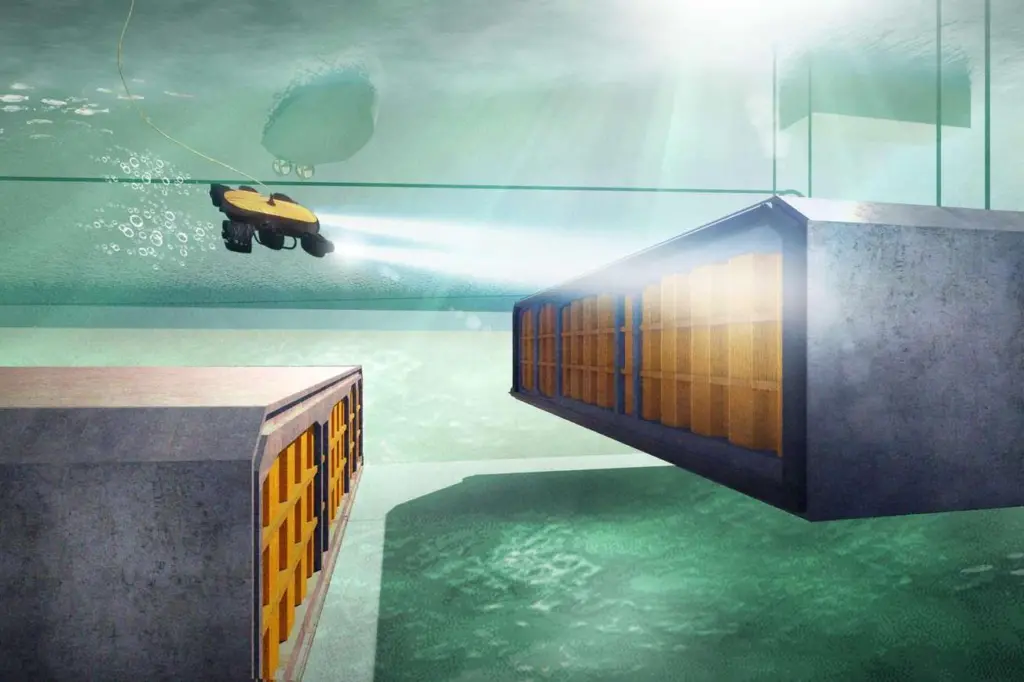
Ordered from Polish marine construction firm CRIST, in Gdynia, the 130.2m pontoon will have a remotely operated submersible dumping tool (SDT) that will be used to lay the bed.
This will be lowered from up to 46 metres under the water surface from underneath the MPP to install gravel berms – ridges or barriers of compacted gravel – that will become the foundation of the submerged tunnel.
“The combination of a high level of automation and state-of-the-art positioning technologies will ensure the accurate placement of the gravel foundations,” says CRIST.
The gravel will be carried in two bunkers, each carrying up to 7,000 tonnes of gravel, on the pontoon, which will have a width of 48 metres.
The pontoon is in two parts – the bottom 46 metres underwater and the hull, to which it is connected by just two cables.
The project managers say a completely unique vessel had to be designed and built because of the specifics of the project, which is also completely unique.
The new vessel, which will weigh about 17,500 tonnes, should be delivered next year.
The Fehnmarnbelt Link connects Fehmarn in Germany to Lolland in Denmark by an 18km subsea tunnel, made up of 89 elements that will be lowered onto this gravel cushion and fitted together in a sort of vacuum, with layers of stone and rock on top.
Road and a railway track will pass through the tunnel.
Related Articles
 INDUSTRY NEWS
 MARINE CIVILS
 MARINE CIVILS