![MaritimeJournal[Seawork]](https://www.maritimejournal.com/wp-content/uploads/2026/09/MaritimeJournalSeawork.svg)




Make or break time for offshore wind
An industry wide survey into the offshore wind industry describes the coming few years as a ‘make or break’ time.
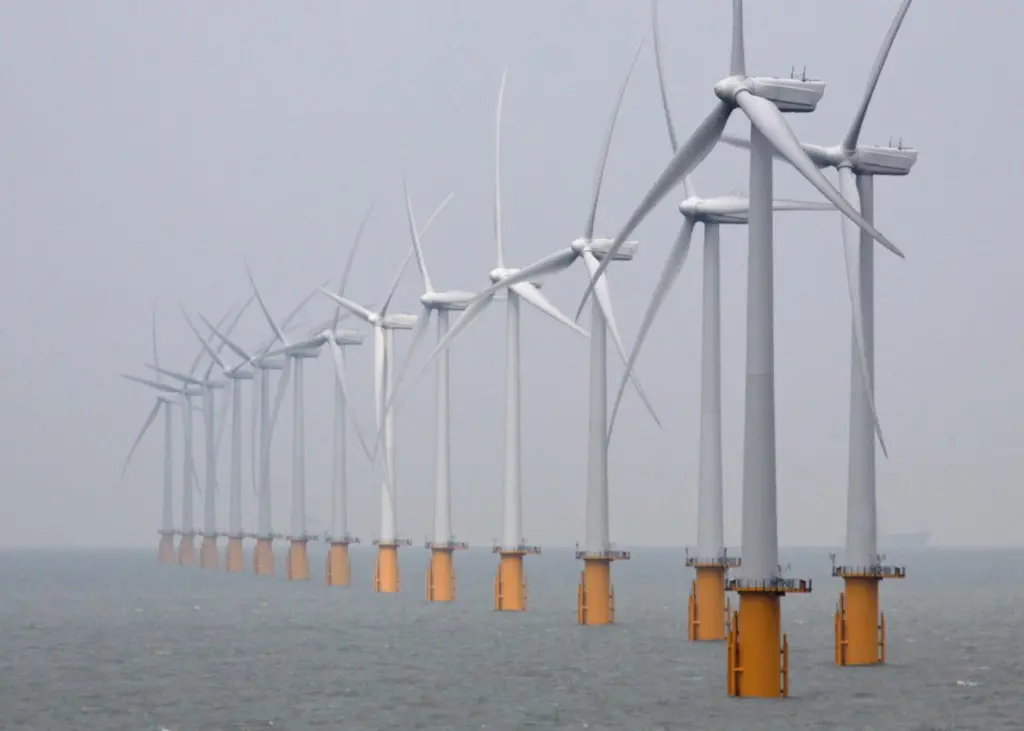
It will decide if the industry can get on track to reach the efficiencies and cost levels required to become competitive in the energy mix, and finds cause for optimism along with a note of caution.
You can get statistics to say anything or so the saying goes, but this survey, ‘Turning windpower promise into performance’ by PricewaterhouseCoopers (PwC), based on field research by GBI Research, involved 57 interviews with executives from across the industry in 12 countries in a format which provides interesting food for thought.
Wide ranging areas of the subject were covered, not only the practical aspects, with developers, contractors/original equipment manufacturers (OEMs), utility companies, government bodies and financial institutions consulted. Mention of these below, refers to those who responded to the survey.
Promise & Performance
Three quarters of government respondents were reasonably confident that offshore wind will play an enduring part in the energy mix in the coming 20 years with, interestingly, three fifths expecting it to be economic without subsidies within 15 years. Over a third believed there to be a high or very high chance of technological breakthroughs supporting offshore wind development. A cautious note was added, however, with three fifths feeling there to be a medium chance of offshore wind being eclipsed by other renewable technologies.
It is seen as important that the performance of offshore turbines matches that of onshore, and here there was a positive response from European developers, who reported comparable levels of availability between the two. Availability downtime (for offshore wind) was in line with pre-project expectations for 82% of developers, the remainder reporting downtime being a greater problem than expected. All the European developers expressed confidence in performance, reporting availability rates in the 90% to 97% range, translating into a robust return on investment.
Controlling Costs
The importance of controlling construction and turbine costs is recognised, prompting a mixed outlook from European contractors/OEMs. Forty two percent expect cost decreases in real terms although many do not foresee any reduction, with a quarter forecasting cost increases. Around half of developers reported high capital expenditure a significant or major problem, although significant variations in construction costs were reported, influenced by specific project circumstances. Control of capex is seen as critical, given there is little room for cost overrun recovery due to subsidy mechanisms.
Three quarters of developers considered that the risk of a seller’s market in the supply chain was being created through capacity constraints, caused by the imbalance between suppliers and developers, something viewed as unavoidable as the market develops. The majority held the view that supply chain risks were likely to increase in the future. The report suggests the complexity of projects has resulted in multi-contracting, involving three to four suppliers, rather than turnkey contracts which have been slow to develop. On the positive side, two thirds were satisfied with how they had managed such risks so far. Seventy five percent of European contractors/OEMs forecast real term construction costs and turbine prices either decreasing or remaining the same in the next five years.
Construction Risk and Financing
Although construction and technological risk is seen as a significant barrier to investment, nearly two thirds of financial institutions reported offshore wind power investment risk reducing, with only 9% stating risks had increased in the past two years. A reduction in financing facilities at the time of the credit crisis led to public funding becoming more common. There are signs now, that with more projects completed and construction experience increasing, financiers are becoming more comfortable with the industry, although UK government reviews of the subsidy regimes are seen as an area of uncertainty among financiers. Importantly, 91% of financial institutions said risks were either reducing or had stayed the same.
Perhaps unsurprisingly, there was a mismatch between industry and government body perceptions of subsidy arrangements. Discussions about financing and subsidy was an area that 90% of European utility companies felt still required improvement, a view shared by none of the government bodies, although there was considerable consensus on the need to improve grid access and transmission capacity
Asked before the nuclear emergency in Japan, investors favoured nuclear over offshore wind power. Asked again however, six weeks after the event, three quarters said their investment sentiment had shifted negatively against nuclear. Mention is made of US and French nuclear power generators diversifying through buying into the wind and solar sector with the suggestion that ‘While it [the Fukushima emergency] won’t raise a red flag to investment in nuclear, it could spur further moves by nuclear companies into renewables’. It would be interesting to gauge investors’ sentiments once again, following Germany’s recent decision to phase out nuclear power generation.
The above is just a brief summary of the survey which can be viewed at http://www.pwc.co.uk/index.html
By Peter Barker
Related Articles
 OTHER NEWS
 FEATURES & VIDEOS
 MARINE CIVILS