![MaritimeJournal[Seawork]](https://www.maritimejournal.com/wp-content/uploads/2026/09/MaritimeJournalSeawork.svg)


Coral biodiversity researchAddressing the challenge to coral biodiversity
The research schooner Tara has begun a new expedition in the Asian Pacific to examine the biodiversity of coral reefs and their evolution in response to climate change and human activities.
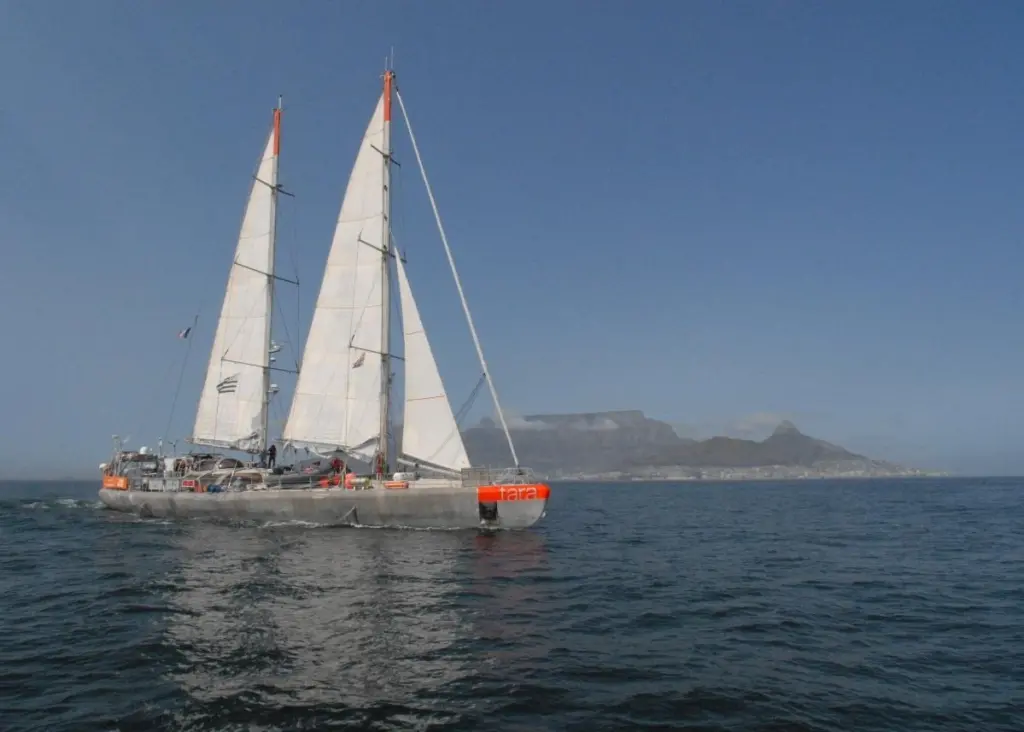
During the expedition, which is coordinated by the CNRS and the Scientific Centre of Monaco (CSM), Tara will sail nearly 100,000 km around the Pacific Ocean over a period of two years.
Serge Planes, CNRS researcher and scientific director of the expedition, said: “Tara Pacific will explore each reef ‘s hidden biodiversity – genomic, genetic, viral and bacterial – in order to compare it with the biodiversity of the surrounding body of water. Our goal is to get a real idea of the overall diversity of a coral colony.”
He said that this new approach should give the scientists new information concerning the still-unknown role of biological, chemical and physical parameters in the life of coral colonies and their ability to adapt to environmental change.
Coral reefs cover less than 0.2% of the oceans’ surface, yet they include nearly 30% of known marine biodiversity. Their health is crucial to the diversity of many species and it is becoming more of a priority since a large number of reefs have been disappearing in recent years.
This expedition is unique in that it will cover such a huge geographical area – the Pacific Ocean – where over 40% of the world’s coral reefs are concentrated.
During the expedition, 40 different archipelagos will be studied, each in exactly the same way, so as to detect variations in the presence of three reef species: – two corals andone1 small invertebrate in the hydroid family.
Besides the state of health of each reef and its biodiversity at different levels, the scientific team will focus on the potential applications of coral biology to medical research.
By Anne-Marie Causer

Related Articles
 ACCESSORIES & EQUIPMENT
 ENVIRONMENT
 MARINE CONSTRUCTION