![MaritimeJournal[Seawork]](https://www.maritimejournal.com/wp-content/uploads/2026/09/MaritimeJournalSeawork.svg)



Effective security for workboats
From French luxury yachts to freighters, it seems that no vessel is immune from the scourge of modern day piracy attacks, writes Stuart Flynn of Securewest International.

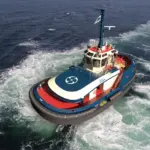
In March a $700,000 ransom was reportedly paid for the release of the 115 foot tug
Svitzer Korsakov
and its crew off the coast of Somalia. More recently, militants in the oil producing Niger Delta region attacked a Swedish tug working on behalf of Italian oil services company Saipem SpA.
As piracy and terrorist attacks have increased over the years, the IMO has defined a set of mandatory requirements in the SOLAS Resolution XI-2/6 to improve security for ships. Offshore drilling units, passenger ships and the bigger ocean going vessels (500 gross tonnage and over) have been covered by the SOLAS regulated Ship Security Alert System (SSAS) from as far back as 2004. But many workboats operating in such dangerous areas are not subject to the same compliance rules or protection.
The majority of attacks reported do take place on ‘smaller vessels’, as they are often easier to board. One solution would be to spread the wings of SSAS to include smaller working vessels, but some contention remains as to exactly how much assistance this would provide.
When assessing the usefulness of SSAS for workboats it is worth taking into consideration the potentially serious procedural shortcomings highlighted recently by former BIMCO head of security, Thomas Timlen, in a report that directly questioned the overall value to any ship of SSAS technology.
Timlen concluded that, amongst other worrying issues, SSAS does not alert anyone in the near vicinity of an imminent attack (nor anyone onboard) and that the alert information is instead forwarded to the ship’s owner/manager (CSO), who is likely to be a long distance from the vessel itself. Once the alert has been verified, the flag state concerned then has to be alerted and then contact details plus any requests for assistance have to be sought in liaison with the nearest relevant coastal authority.
The study then surmises that any attack would have taken place by the time this procedure has been acted out. The findings of the report are giving cause for concern amongst ship owners but, emphasis should be placed on Timlen’s conclusions that ‘fault’ lies not necessarily with SSAS itself, but the way it is managed at present. A metaphor for maritime security in general perhaps?
When studying the conclusions that the report throws up, it should be remembered the alerts themselves are designed to provide the authorities ashore with detailed knowledge that the security of a vessel has been compromised and also to then provide both its current position, track and heading for as long as possible thereafter.
Understandably, what most people want to see is immediate action. However, launching an immediate counter attack against pirates is not realistic and so no alert system that claims to provide such a solution is valid. To begin with, many states just don’t have the resources for direct action and flag states are often unable to unilaterally take any direct action where a vessel is taken by pirates.
Amongst his recommendations, Timlen states that response to an alert can be quick and advice given immediately to crew if the company concerned employs a competent authority for manned 24 hour tracking and management. If, as many owners choose to do, they fail to employ such a service then reaction times to any SSAS alert (and many are false alarms) will be slow. This is undoubtedly true for, no matter what the alert system, it will only be effective if alerts are properly monitored. Many alerts may be transferred to an automated system with a machine taking the vital call rather than experienced personnel.
Securewest International operates a 24 hour permanently manned Maritime Assistance Centre for clients. It is a recognized competent authority (MCA approved), monitoring over 16m tons of shipping. In the process it has frequently found vessels that still do not operate SSAS to a satisfactory level or that do not employ enough additional, often simple defensive measures to guard against attack in the first place. Effective security for vessels should be about employing a range of measures, including the delivery, by an experienced maritime security provider, of a carefully crafted and tested security plan. SSAS is not (nor any single security device) the ‘cure all’ solution for vessels of any size, and should be used in conjunction with other security initiatives.
If any vessel is operating in regions where boarding is likely then there are other simple preventative measures that can be employed first. Better use of radar, Automatic Identification System (AIS), and non-lethal devices such as LRAD, video cameras, thermal imaging technology, electrical fencing, and high intensity directional lighting are all important methods of achieving the same result. A visible deterrent such as regular deck security patrols day and night has been proven time and again to work. Such preventative measures should always go hand in hand with training of key personnel and regular drills to maintain effectiveness.
Ultimately, those vessel owners (regardless of the size of the vessel) who move beyond the line of compliance, and who create a range of barriers to potential attacks may be the ones who don’t end up paying huge ransoms. Maritime security is all about creating barriers. Who can say exactly how many attacks may have been suppressed by the introduction of new regulations (including ISPS and SSAS) in the first place, and if workboats continue to be a target, they too should be brought into the SSAS remit provided every effort is made by operators to realize its full potential.