![MaritimeJournal[Seawork]](https://www.maritimejournal.com/wp-content/uploads/2026/09/MaritimeJournalSeawork.svg)






Norway signs Baltic subsea protection pact
A declaration signed by Norway ‘in the presence of Poland’ is being hailed as a first step towards regional states working together to protect vital subsea infrastructure in the Baltic Sea region.
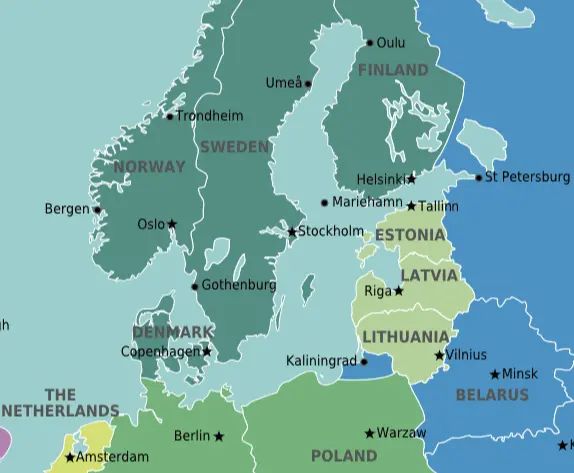
The ‘Joint Declaration of Baltic Sea Security’, signed on November 20, is designed to strengthen deterrence ‘by demonstrating unified resolve among the Baltic Sea nations’.
The declaration, signed in Warsaw by representatives of Norway and Poland, outlines a framework for closer cooperation across the Baltic Sea region. While the full text has not yet been published by defence ministries, officials from both countries said the agreement focuses on improving preparedness against threats to offshore energy assets, subsea communication cables, and other key infrastructure that has increasingly been viewed as vulnerable following a series of suspected sabotage incidents in recent years.
Regional governments have been reassessing the security of the Baltic Sea following Russia’s invasion of Ukraine in 2022, the explosions that damaged the Nord Stream gas pipelines, and separate disruptions to telecommunications cables between Baltic and Nordic countries. Authorities and defence analysts have warned that the region’s dense network of pipelines, power links and data cables represents a strategic target during periods of heightened tension.
The declaration is intended to provide a shared basis for information-exchange, joint monitoring activities, and improved coordination of national responses to incidents at sea. It is also expected to complement ongoing NATO cooperation, particularly after the accession of Finland and Sweden, which has transformed the Baltic Sea into an area almost entirely bordered by Alliance members.
Officials involved in the signing emphasised that the declaration does not create new legal obligations but commits the signatories to develop practical mechanisms for cooperation. These may include joint assessments of underwater infrastructure, closer alignment of surveillance capabilities, and regular exercises aimed at improving readiness for hybrid or physical threats.
Further details, including whether additional Baltic Sea states will join the initiative, are expected to be released once the full text of the declaration is published by participating governments.
Overall, the Joint Declaration of Baltic Sea Security symbolises the region’s shift toward tighter military cooperation, collective resilience and a unified approach to securing one of Europe’s most strategically important waterways.