![MaritimeJournal[Seawork]](https://www.maritimejournal.com/wp-content/uploads/2026/09/MaritimeJournalSeawork.svg)






Isle of Wight Ro-Ro Rollout
The first two new Wight Class ferry designs went into service last month. The two flat bottomed Ro-Ro vessels, Wight Light and Wight Sky are part of a £ 26m investment programme for ferry operator Wightlink.
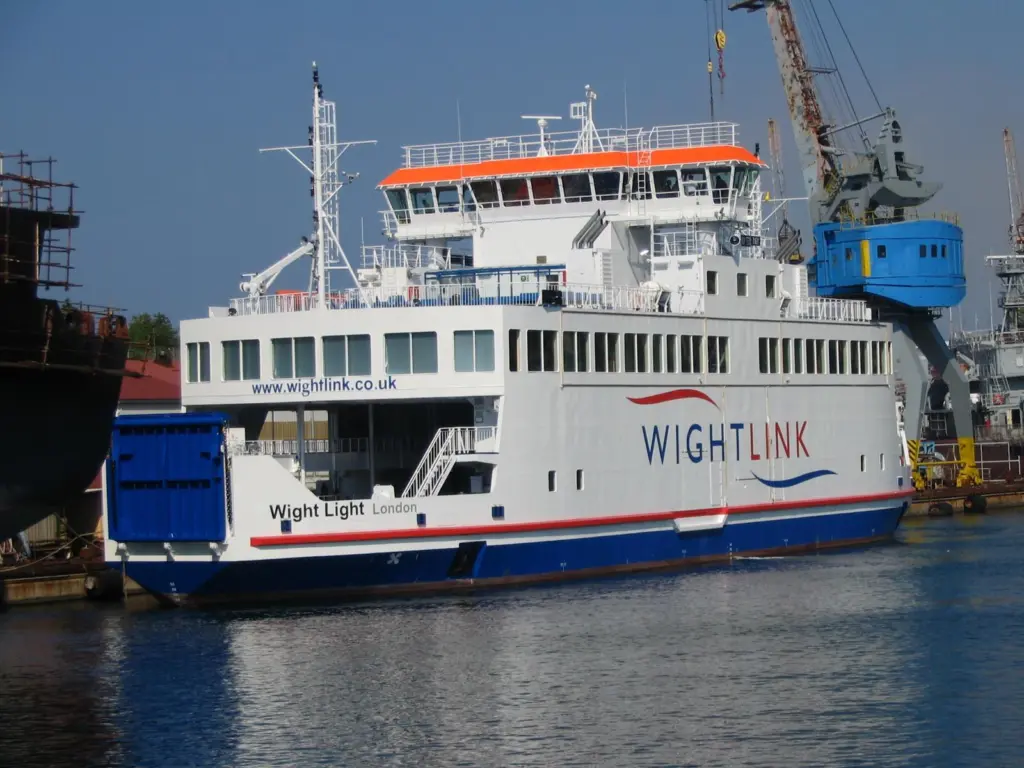
The newbuilds replace the 35 year old C-Class vessels on the Isle of Wight’s most westerly ferry route, between Lymington on the mainland and Yarmouth on the Isle of Wight.Naval architects and marine engineers Hart, Fenton & Company of Portsmouth UK designed the vessels to operate specifically on the Lymington River.
At 62m LOA and 16m wide the ferries are slightly larger than their predecessors. They also provide enhanced manoeuvrability, improved passenger facilities and higher car carrying capacity. Specific consideration has also been given to their fuel efficiency and achieving the latest EU emissions standards. The engines can be shut down when the ship is alongside for example and cooling water is circulated internally rather than discharged.
The initial concept design work involved Hart Fenton’s architects working closely with Wightlink’s operational and management teams. This ensured a complete requirement was captured. As well as design, the Hart Fenton team provided technical support during the build phase at the Brodogradiliste Kraljevica shipyard in Croatia. They were also able to advise on new shore based infrastructure.
The project will help secure the long term viability of the route, which has been in operation since 1830. A third vessel to the same design, Wight Sun is due to join its sisters later this year.
The newbuilds’ arrival has not been without controversy, with critics claiming the vessels will create a greater wash which could damage the Lymington River. A report by Natural England says, ‘The introduction of the W class ferries can be expected to prolong ferry induced impacts on intertidal habitats and consequently further losses are likely to be attributable to ferry operations, even when mitigated by recent reductions in speed.’
Wightlink’s environmental consultants ABPmer disagree with Natural England’s conclusions. A Wightlink statement said, ‘On the basis of clear advice from ABPmer, Wightlink is confident that the new ferries will not have an adverse effect on the integrity of the mud and salt marshes in the Lymingtom estuary.’